Heated jackets genuinely solve real problems for the right person, and they're a frustrating waste of money for the wrong one. The difference usually comes down to a few practical factors that rarely show up in the sales pitch: realistic battery life, what happens when you toss it in the wash, and whether the heat actually reaches the parts of you that get cold first.
This guide covers the honest tradeoffs so you can figure out which camp you're in before you buy.
What Are the Real Advantages of a Heated Jacket?
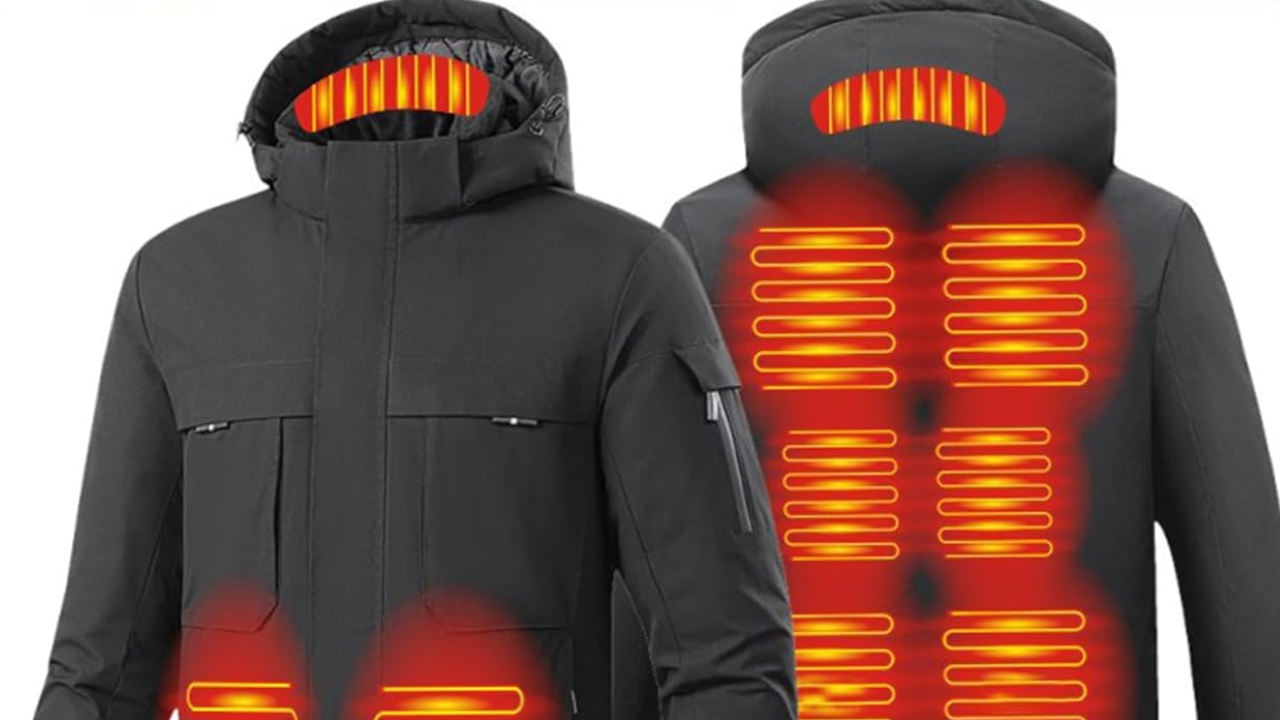
Heated jackets keep your core warm. Most battery heated jackets concentrate heat in your upper back, chest, and collar rather than your entire torso. Once your core stays warm, your body stops constricting blood vessels in your hands and feet to protect vital organs. That means a warmer core and warmer extremities without heating elements everywhere.
Where the heat goes:
- Upper back (between shoulder blades): 1.5–2.0W, targeting 40–55°C
- Chest panels: 1.0–1.5W
- Most models offer three heat settings: low (100–115°F), medium (115°F), and high (130–147°F)
Low setting works for all-day wear during commutes or errands in 30–45°F weather. Medium handles static work like hunting, fishing, or construction breaks in 15–30°F conditions. High setting is for quick warm-ups before standing still in genuinely brutal cold (0–15°F). At that point, you'll still want a base layer underneath. The jacket supplements your insulation layers, it doesn't replace them.
Less Bulk, More Movement
Electric heated jackets beat traditional winter coats here. Heat replaces insulation rather than adding to it, so you get warmth without the marshmallow-suit effect of thick down or triple-layered fleece. Users consistently report better arm mobility, easier reaching and bending, and less fatigue from wearing bulky layers all day. That matters if you're working outdoors, using tools, or just tired of feeling like the Michelin Man every winter.
Circulation and Chronic Conditions
For people with Raynaud's phenomenon, localized heat near the elbows, neck, and upper arms has clinical backing. One study on heated interventions showed average symptom scores dropping 1.51 points, attack frequency falling by 0.64 episodes, and episode duration shrinking by 37 minutes. That's not jacket-specific data, but it confirms heat therapy measurably reduces cold-triggered vascular spasms.
Similar logic applies to arthritis and chronic joint pain. Sustained heat reduces stiffness and improves hand function, based on comparable heated-glove research.
The real strength of heated clothing is core efficiency, circulation support, adjustable comfort, and reduced bulk. It's most valuable for people who move around outside, stand still in the cold for long stretches, or deal with circulation issues that make ordinary cold intolerable.
What Are the Common Disadvantages of a Heated Jacket?
None of this is a dealbreaker on its own. But stack enough of these together and you'll understand why heated jackets aren't for everyone.
Battery Life Falls Short of the Marketing
Battery life is the biggest practical drawback, full stop. Real-world testing shows most units run 2–5.5 hours on the highest setting. Field guidance breaks it down further: 2–4 hours on high, 4–7 hours on medium, 6–10 hours on low. Cold weather makes it worse. One test clocked just 3–4 hours at 32°F on medium, dropping to 1.5–2 hours at 0°F on high. Another review measured a 20–40% battery performance loss in freezing conditions. If you're doing outdoor work or a long commute on high heat, the advertised runtime probably won't match your actual experience.
The Price Tag Is Real
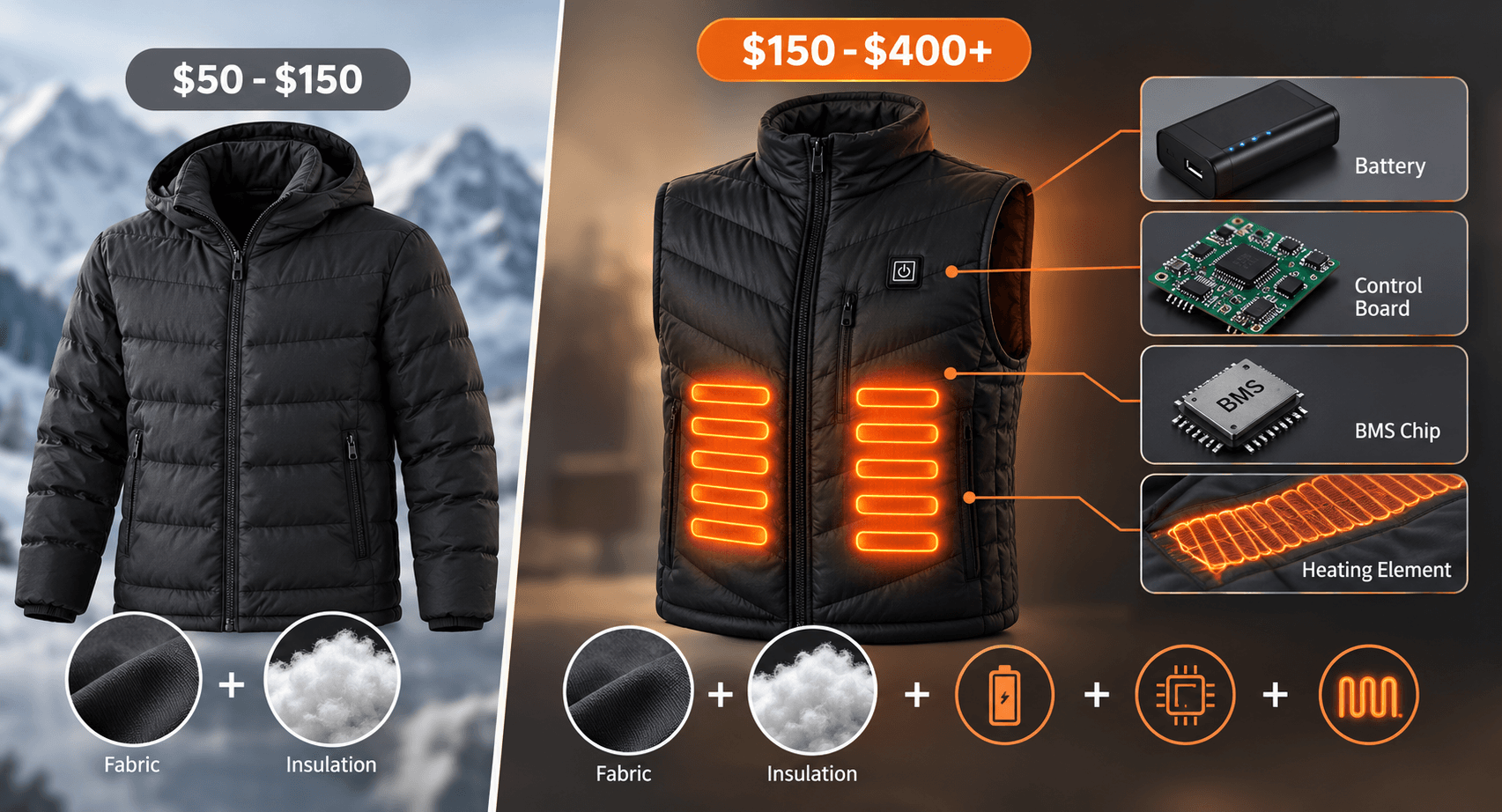
Heated jacket cost typically runs $100–$250+, sometimes higher for premium outdoor or work models. A comparable regular winter jacket runs $50–$150. That's a $50–$100+ premium just for the heating tech. Standard battery packs (5,000–6,000mAh, 37–44Wh) come with most jackets. Extended packs (7,500–10,000mAh) cost more and add bulk. Need all-day coverage? Some models require a second battery to hit 22 hours—another cost on top of the jacket itself.
You're Tethered to a Charger
No outlet, no heat—eventually. Anyone working 8–12 hour shifts outdoors needs spare batteries or a dual-battery setup. Otherwise, you're rationing heat settings to stretch runtime.
Extra Weight, Extra Maintenance
Battery packs add noticeable weight—one jacket alone weighs 185g (6.53 oz) before the battery goes in. Wiring and heating elements can fail over time; battery packs degrade ~20% after 500+ cycles. Washing means removing the battery first, often with a mesh bag recommended. It's not a toss-in-the-machine situation like your old parka.
Is a Heated Jacket Worth It for Your Specific Use Case?
Whether a heated jacket pays off depends on how your routine lines up with how they actually perform.
Cost Breaks Down by Usage, Not Price Tag
Heated jacket cost runs $80–$350 upfront, but that number doesn't tell you much on its own. Run it across multiple winters and cost-per-wear drops to $0.50–$1.00. Hit 100+ days across three winters, and you're down to $0.40–$0.60 per use—cheaper than a coffee. The break-even point is roughly 30 days per winter or 2+ hours of daily cold exposure. Below that, you're paying premium prices for a jacket that mostly sits in the closet.
Match the Jacket to the Job
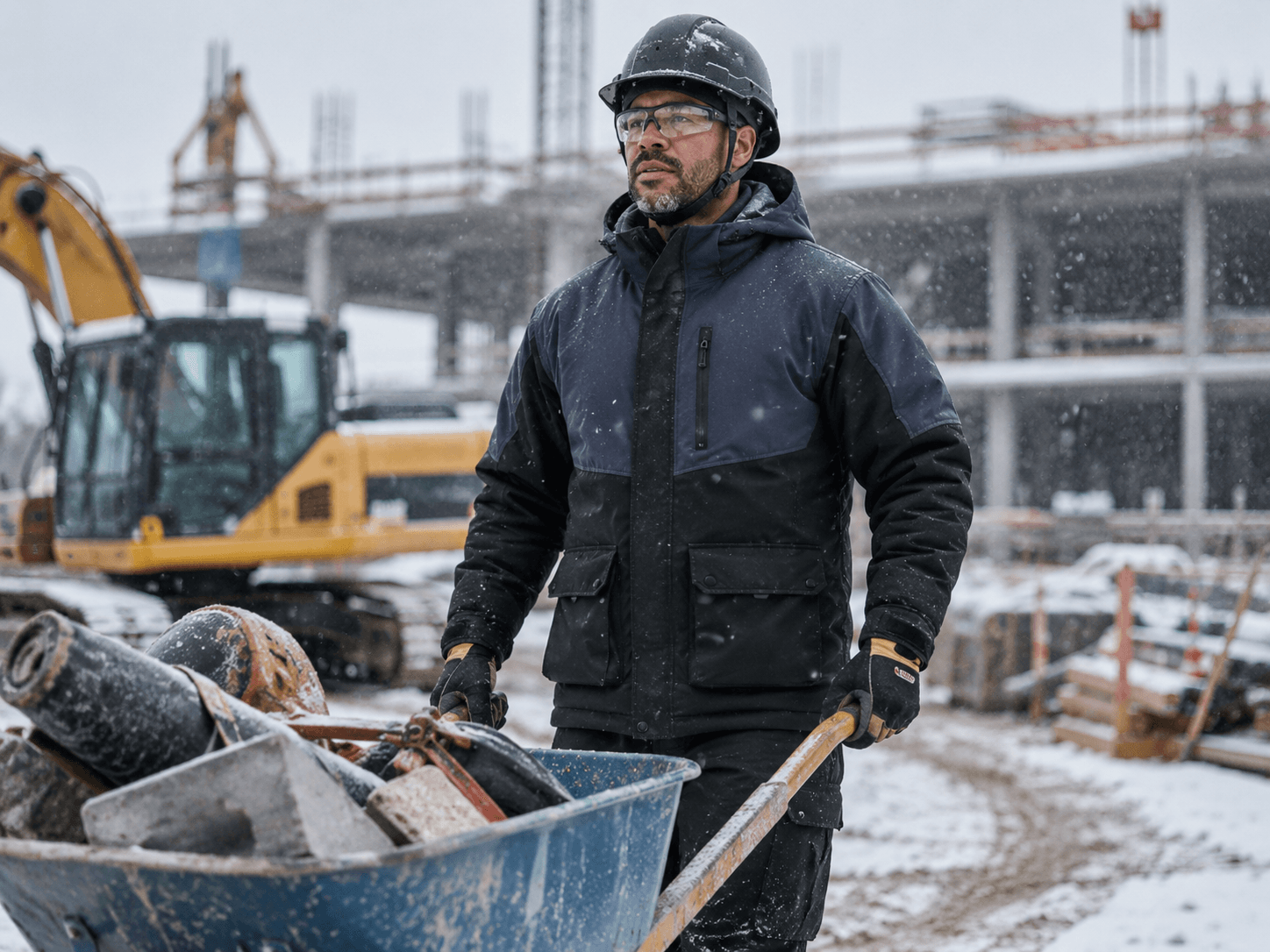
Construction/logistics workers: Great for low-intensity standing, loading breaks, night patrols. Bad fit for heavy lifting. Sweat and moisture cancel out the heating benefit.
Motorcycle riders: Wind chill at speed with minimal body heat production makes this a strong match, especially heated liners paired with riding gear.
Hikers: Works during rest stops and scenic breaks. Overheats fast during steep climbs. Layering flexibility wins here.
Hunters/ice fishermen: The best-case scenario. Long stationary periods with low heat output from your own body is exactly what these jackets are built for.
Older adults or those with Raynaud's/arthritis: Core heat reduces cold-triggered discomfort during short outings, errands, or porch sitting. Battery limits matter more here. Expect 2–3 hours on high, dropping another 25–40% in extreme cold.
Bottom line: Worth buying if you fall into any high-exposure, low-output category above and use it 30+ days a season. Think twice if you're doing intense physical labor or only need occasional warmth.
How Does a Heated Jacket Work — And Does It Actually Deliver Warmth?
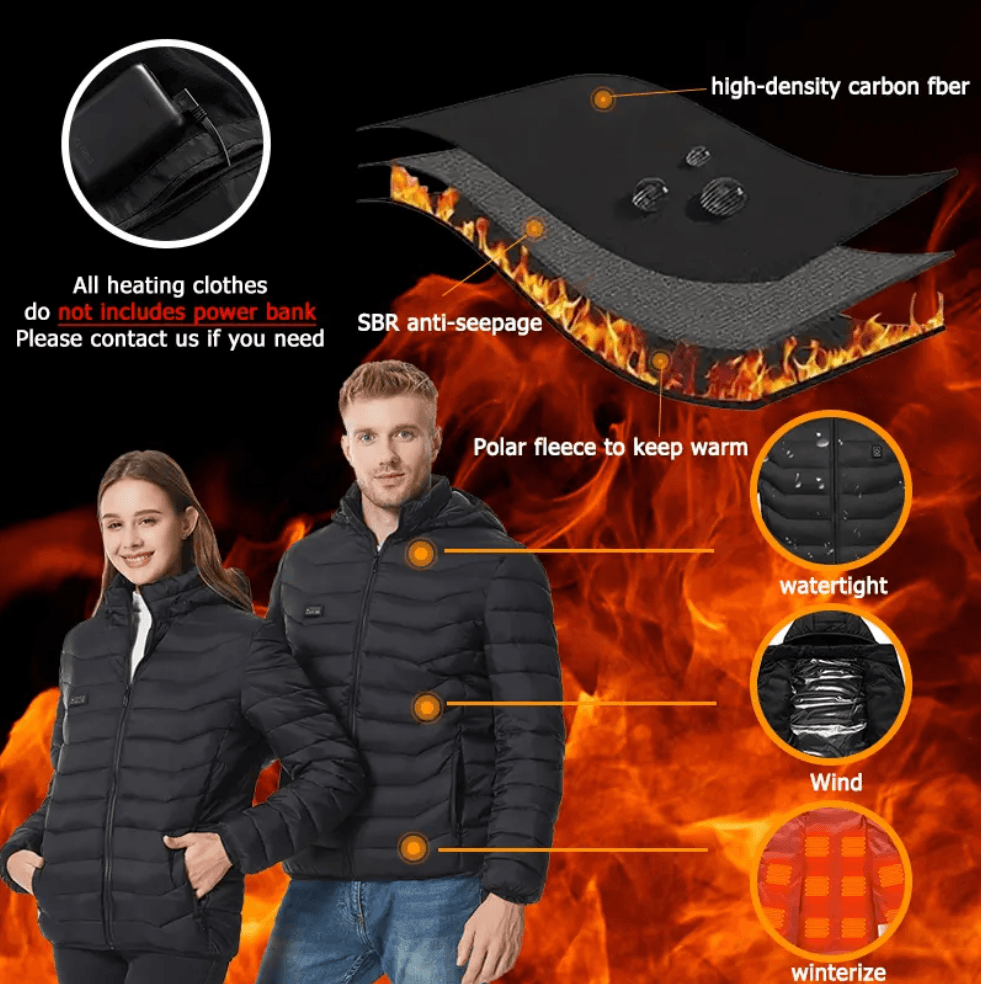
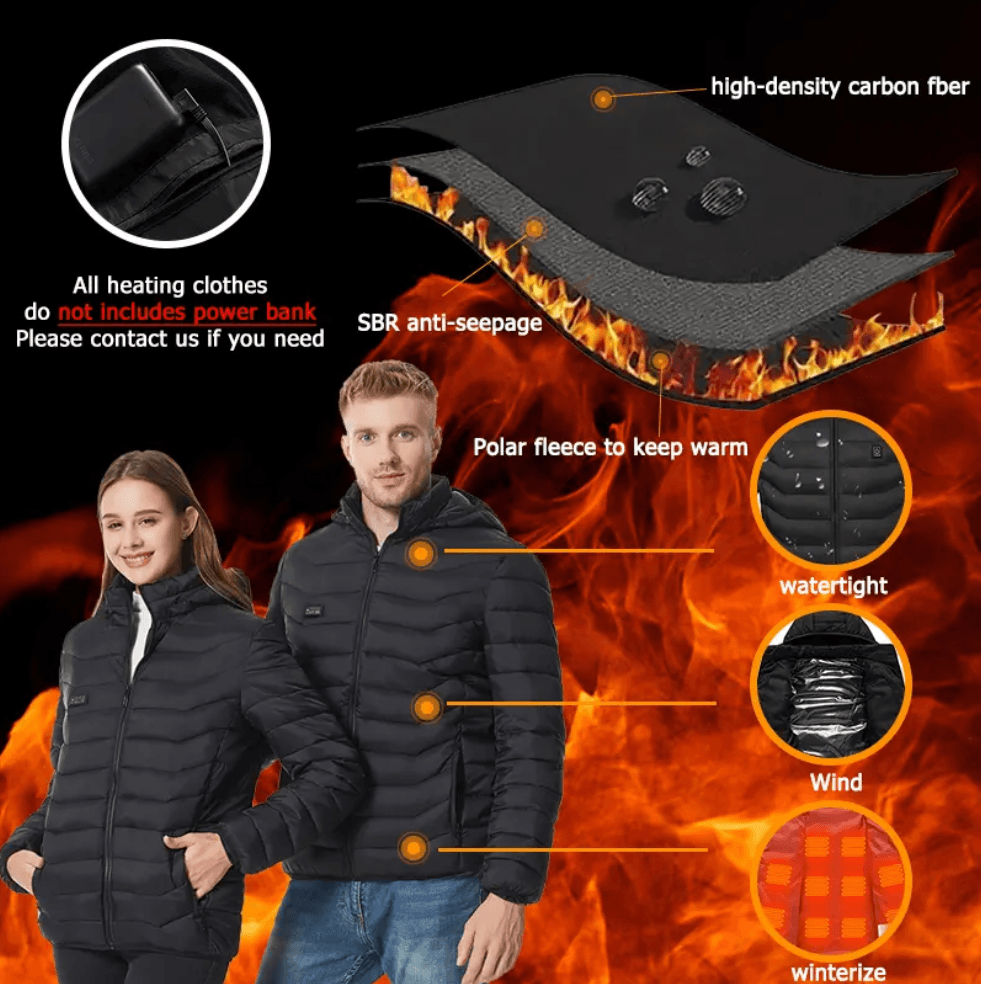
Inside a battery heated jacket, electrical energy flows into carbon-fiber heating zones or flexible wire panels sewn into the fabric, and those elements convert that energy into heat. That's the whole trick behind heated clothing technology.
Placement matters more than most buyers realize. Manufacturers put heating elements in the chest, upper back, lower back, and sometimes the collar or pockets, in concentrated zones rather than full-body coverage. This core-focused heating is the single biggest technical difference between an electric heated jacket and a regular insulated coat. Your hands, feet, and even your arms and sleeves stay dependent on your base layers.
Reviewers report carbon-fiber zones feeling warm in 10–15 seconds, hitting comfortable warmth around the 30-second mark. Independent testing on fleece-style heated jackets clocked "genuinely warm" output at roughly 5 minutes, slower but still faster than waiting for a down jacket to trap your body heat.
Where Performance Actually Holds Up (and Where It Doesn't)
Most jackets run 3–5 heating zones at 95–140°F, depending on setting. In moderate cold, think 10°F to 30°F with light or no wind, the warmth is real and immediate. One test logged 2.5 hours in -5°F wind chill on high; another got 4 hours on a 4°F morning on medium. Low settings can stretch to 10–12 hours on larger batteries.
Below 0°F, though, the math changes. Max element output around 113°F often can't offset thin insulation and heavy wind exposure. In that scenario, the jacket boosts your existing layers rather than replacing them.
Heated jackets do deliver noticeable, torso-centric warmth. Just don't expect them to out-perform heavy insulation in genuinely brutal, windy cold.
Key Factors to Check Before Buying a Heated Jacket
Skip the marketing photos and go straight to the spec sheet. Two numbers matter more than anything else: battery capacity and heating zone count. They trade off against each other in ways that aren't obvious until you're standing in the cold wondering why your "8-hour battery" died in three.
Battery Capacity vs. Heating Zones
A 2026-era baseline looks like this: 8–12 hours on low, 4–6 hours on medium, 2–4 hours on high. Some extended-runtime models push past 12 hours on low. But here's the catch—more heating zones mean less runtime.
A 3-zone system (chest plus upper or lower back) running on a 5,000mAh battery gets you 3–3.5 hours on high. Swap in a 10,000mAh pack and that stretches to 6–7.5 hours. A 5-zone system—adding collar, pockets, or sleeves for more even coverage—typically drops to 2.7–5.5 hours on high, even with the bigger battery.
Match zones to your use case:
- Riding: prioritize windproofing, then fit, then water resistance, then zone count
- Outdoor work: durability and wind resistance first, then runtime, then flexible fit
- Commuting: lightweight design and low-setting battery life matter more than zone count or looks
Most jackets are water-resistant, not waterproof—check the actual fabric rating instead of trusting the word "weatherproof" on the box.
The Hidden Costs Nobody Mentions
Battery platforms aren't universal. Most brands lock you into proprietary connectors, so a jacket from one company won't run on another's battery. Confirm compatibility before buying if you already own a heated glove or vest system.
Budget for a spare battery if you're working long shifts or riding long distances—2–4 hours on high doesn't cover an 8-hour day. Standard batteries run 7.4V, 5,000–10,000mAh. Charging takes about 1.5 hours for a full cycle, though some models take longer.
Quick checklist before you buy:
- Battery: minimum 7.4V/5,000mAh, go 10,000mAh for all-day use
- Runtime: 8+ hours low, 4–6 hours medium, 2–4 hours high
- Zones: 3 minimum, 4–5 for riding or work
- Fabric: windproof with a clear water-resistance rating
- Fit: test arm-raise and bend-over range before purchase
- Compatibility: confirm if you're locked into proprietary batteries only
FAQ: Is a Heated Jacket Safe to Use?
Safety concerns stop plenty of buyers cold, and that's fair—you're putting a battery next to your skin for hours. Here's what matters.
Q: Are heated jackets safe to wear?
Yes, as long as the jacket has overheat protection and certified components. Look for CE, UL, FCC, or RoHS marks on the heating system and battery. A thermal sensor should cut power automatically once the panel hits a safe ceiling—most brands cap surface temperature at 55–60°C (135–140°F). If you don't see certification marks or an automatic shutoff, skip it.
Q: Can it replace my winter coat entirely?
No. Treat it as a performance layer, not a full winter-clothing replacement. In heavy wind, wet snow, or all-day exposure, you still need shell protection over it.
Q: Is a heated jacket waterproof?
Usually not fully. Heating wires typically sit behind a waterproof membrane, so light rain or snow won't fry the electronics. But that's different from submersion-proof. Check the spec sheet for "water-resistant" versus "waterproof"—many models only cover light precipitation.
Q: Can I buy a replacement battery separately?
Often, yes. Confirm voltage, connector type, and mAh/Wh capacity match your jacket before buying—battery platforms aren't universal across brands.
Q: How do I wash a heated jacket safely?
Remove the battery and controller first. Secure the connector pocket. Use cold water, gentle cycle, mild detergent—no bleach, no wringing, no dryer. Air dry fully for 24–48 hours before reconnecting power. Never recharge a battery that got wet; take it to a certified lithium-battery recycling point instead.
Conclusion
A heated jacket gives you instant warmth control, fewer bulky layers, and all-day comfort in freezing conditions. These advantages are genuine, especially if you work outdoors, ride in the cold, or deal with joint pain. The tradeoffs, such as battery limits, higher upfront cost, and extra care when washing, are manageable if you know what you're getting into before you buy.
The smartest move is matching voltage, heating zones, and battery life to how you'll use it. A weekend hiker and a construction worker have very different needs, and now you know the questions to ask.
Compare a few models and check the specs against your own routine.