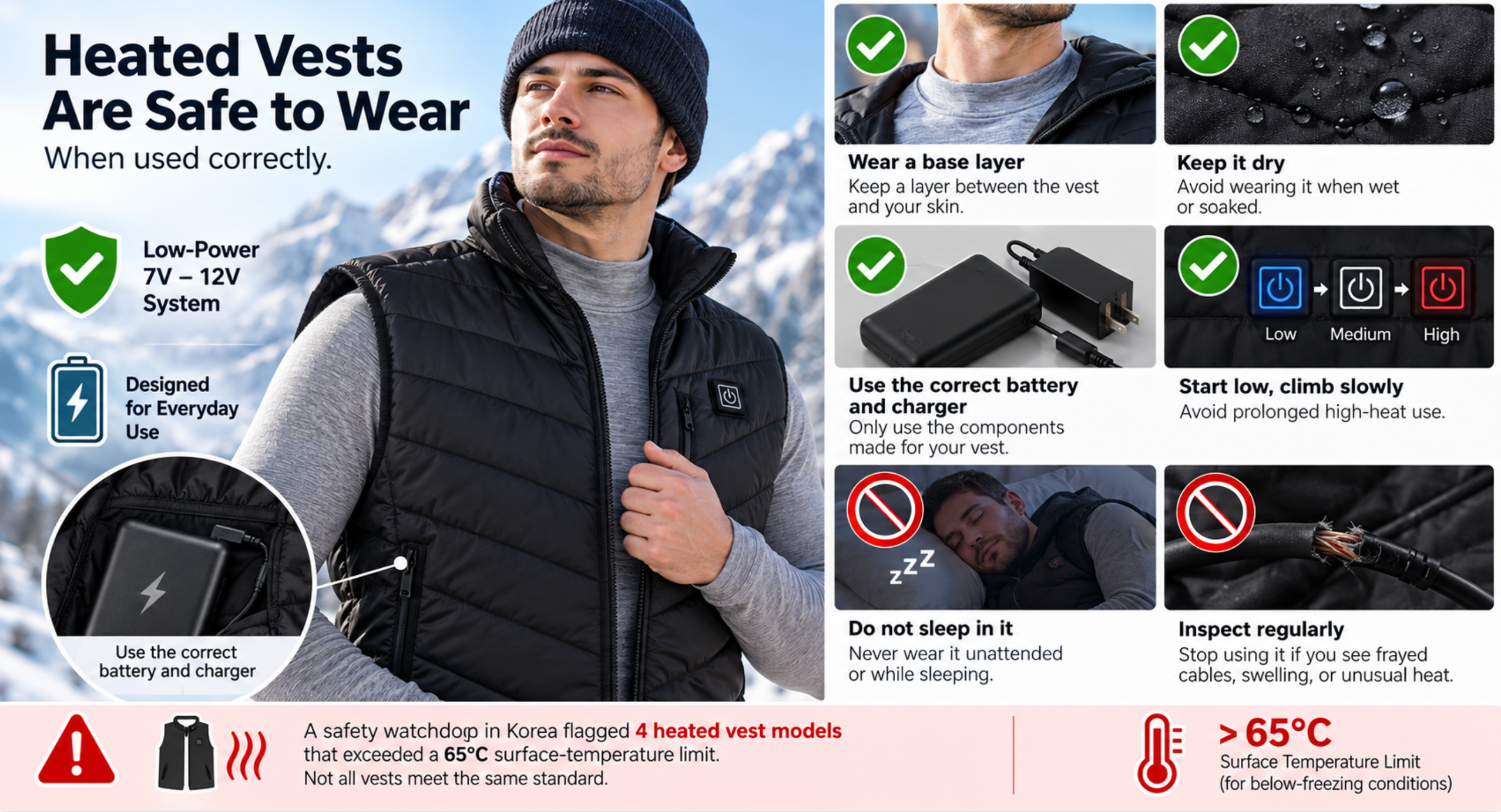
Can heated jackets cause cancer? Many people worry that the internal heating elements, batteries, and electromagnetic fields (EMFs) generated during use—being in close proximity to the body for extended periods—might increase cancer risk.
In reality, determining whether heated jackets pose a cancer risk requires an understanding of their heating mechanisms, the types of EMFs involved, and actual exposure levels; one cannot simply equate "electric heating" with "radiation-induced cancer."
This article examines existing scientific evidence to address the question of whether heated jackets can cause cancer. It analyzes the EMFs, batteries, and heating elements associated with these jackets while highlighting the safety issues that actually require attention during daily use.
The Direct Answer: Do Heated Jackets Cause Cancer?
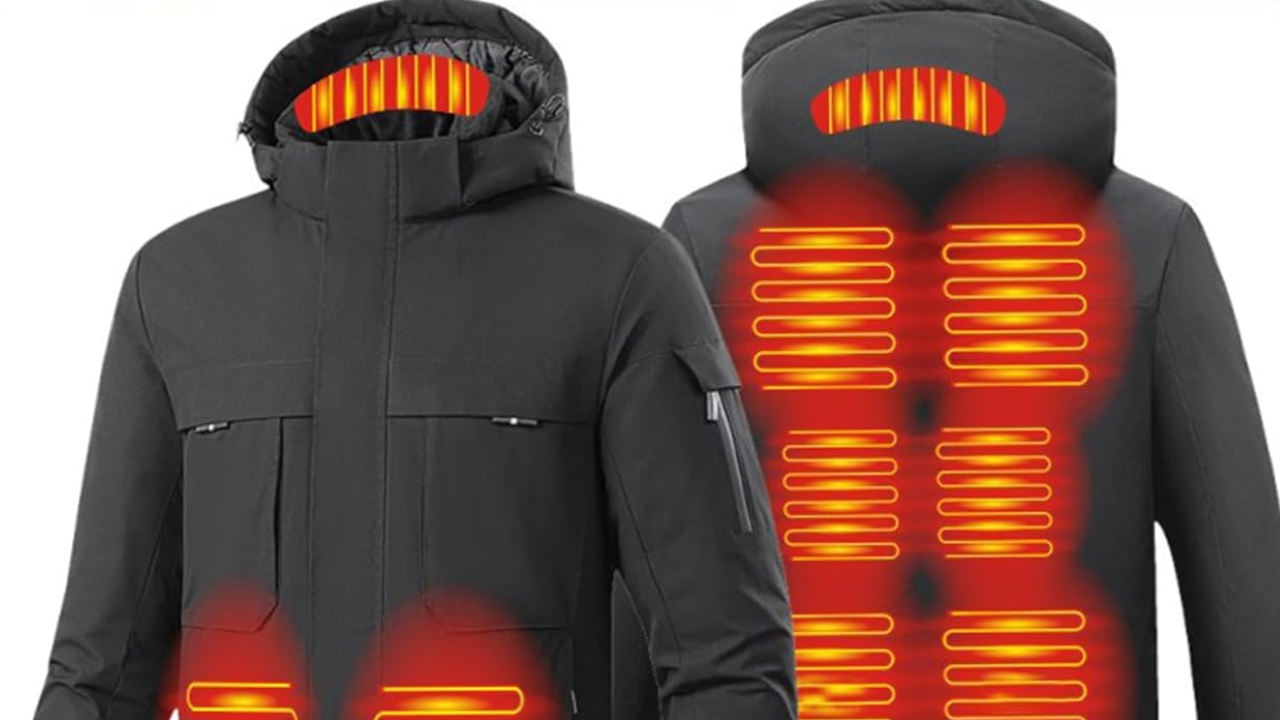
No. Flat out, no. Heated jackets are not known to cause cancer, and the science on this is about as unambiguous as science gets.
Heated clothing gives off non-ionizing electromagnetic fields (EMF). That's the same low-energy category as your microwave and your hairdryer. It's nothing like ionizing radiation — the stuff in X-rays and gamma rays that strips electrons from atoms and damages your DNA. Heated jackets can't do that. They physically can't.
The National Cancer Institute says no mechanism has been identified by which non-ionizing EMF could cause cancer, and no consistent evidence supports a link. The WHO backs this up: current evidence doesn't confirm health consequences from low-level EMF exposure. Even if there's some theoretical risk, it would be extremely small.
Low EMF heated apparel like your jacket sits nowhere near the danger zone. You're fine. Your spine is fine. Wear the jacket.
Understanding Heated Jacket EMF Radiation: The Science Behind the Heat
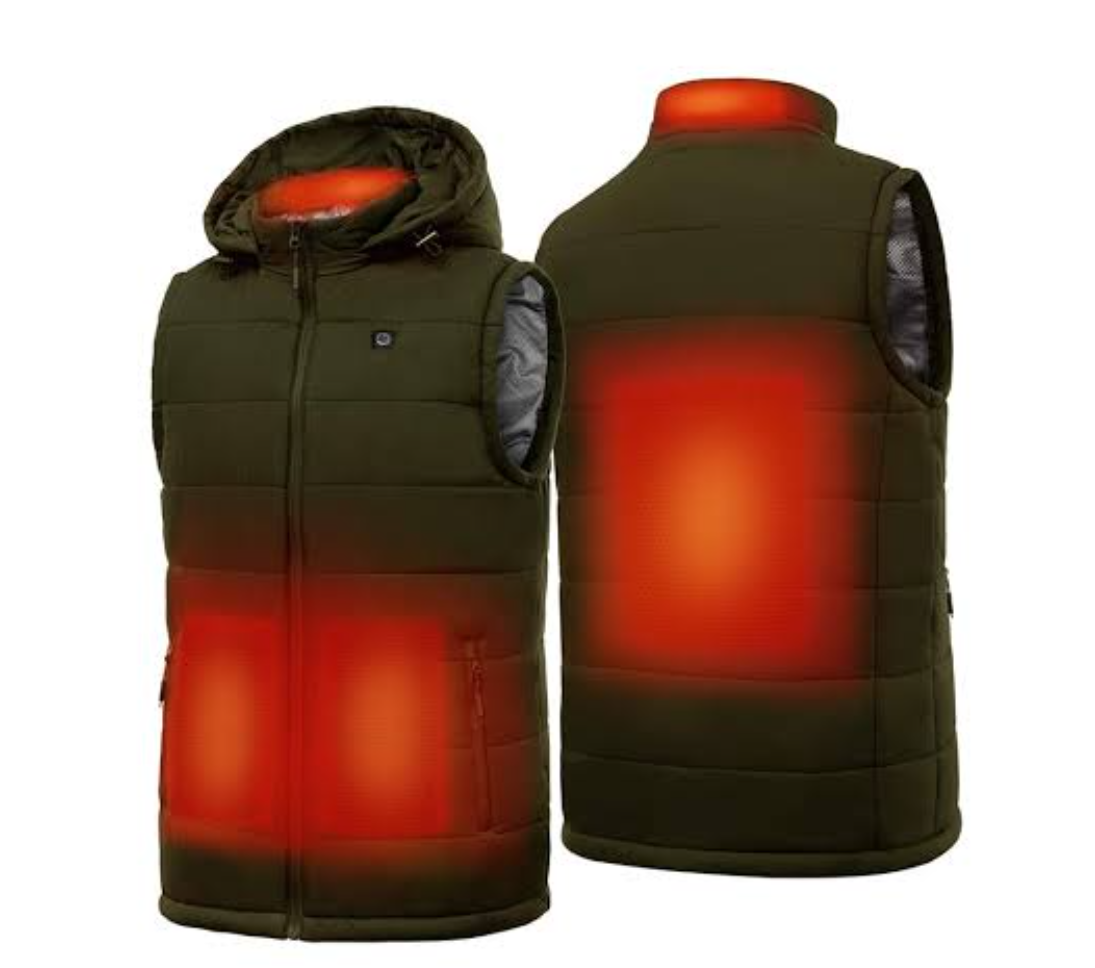
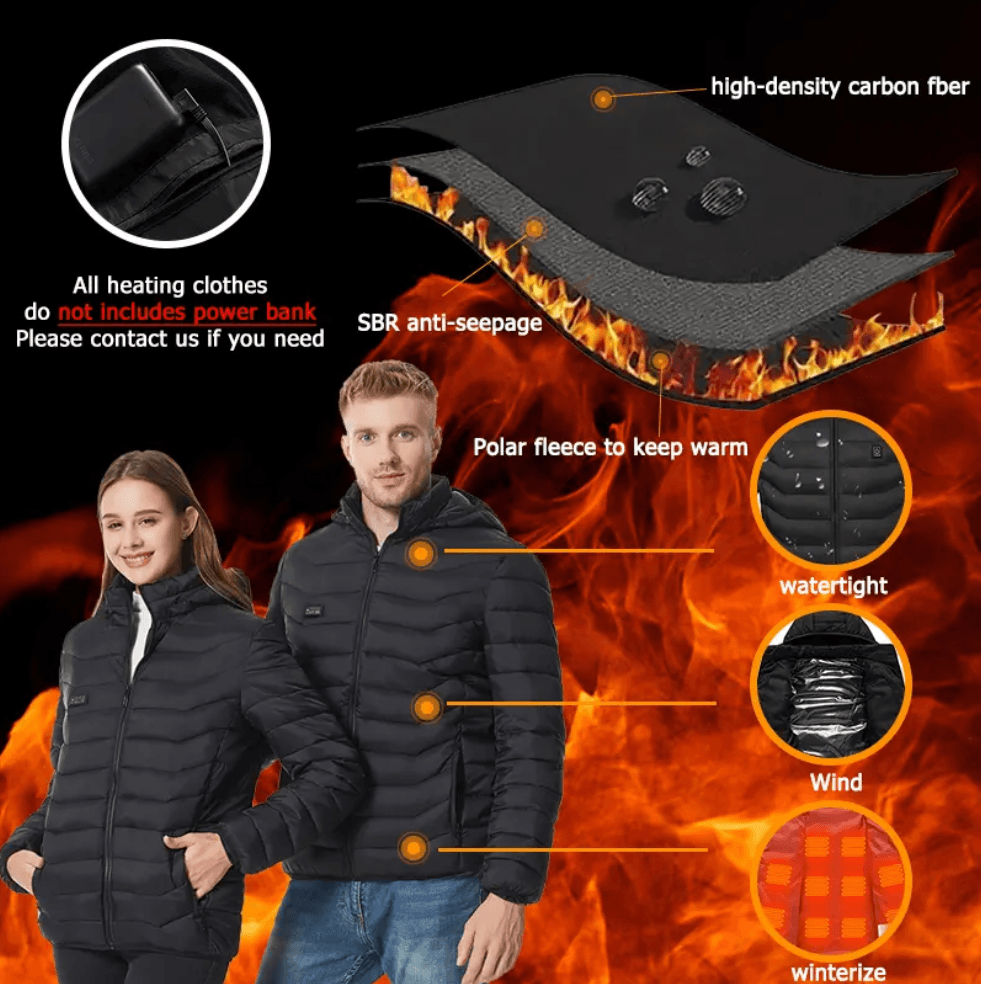
Under that fleece lining, electricity runs through thin resistive wires or heating panels sewn into the fabric. Those wires heat up via Joule heating (you don't need to remember that term for the quiz). As a byproduct of that current flowing, you get a small extremely low‑frequency magnetic field, or ELF‑MF if you want to sound smart at parties. That’s the whole scary mechanism. Battery sends current, current makes heat, heat makes you cozy, and a tiny magnetic field tags along like an uninvited but harmless plus‑one.
How much EMF are we actually talking about?
Consumer heated apparel measures around 1 to 4 milligauss (mG) at the body. The ICNIRP guidance, the international body that sets exposure limits, puts the safety threshold at 1000 mG. Your jacket’s field is about a quarter of one percent of that limit on a bad day. It’s not even in the same zip code as the threshold.
So why does the internet keep bringing up “possible carcinogen” then?
Someone read the words “IARC Group 2B” once and ran screaming into a Facebook group. Group 2B means “possibly carcinogenic,” the same category as pickled vegetables and aloe vera extract. It’s used when evidence in humans is limited and evidence in animals is even weaker. The European Commission’s own glossary says as much. It’s a “we can’t fully rule it out, so we’re flagging it for more study” classification, not a smoking gun.
The 2001 classification for ELF magnetic fields was driven almost entirely by pooled research on childhood leukemia near power lines (kids living for years next to high‑voltage transmission lines, absorbing chronic ambient exposure day after day for their entire childhood). That’s an environmental scenario. Your heated jacket, running on a low‑voltage battery for a few hours during a hike, with intermittent contact against a coat layer, isn’t remotely the same exposure profile.
What Are the REAL Heated Jacket Health Risks?
Burns, battery drama, itchy skin. These are the risks that safety data flags — way more than the EMF panic ever got.
Low-Temperature Burns Are the Real Risk
Modern heated jackets run between 95°F and 130°F (35°C–55°C) across multiple heat settings with built-in overheat protection. Your skin doesn't need scalding temps to get hurt. Low-temperature burns happen when moderate heat sits against the same spot too long — folded fabric creating a hot pocket against your ribs, or falling asleep with the jacket still on.
People with reduced sensation face higher stakes. Diabetic neuropathy, older adults, anyone who sits still for hours — these groups often don't feel the slow burn building. If that's you, set timers, check your skin periodically, and don't nap in a jacket that's still heating.
Battery Overheating: The Actual Fire Hazard
Lithium battery jacket safety is where the real concerns live. Damaged cells, overcharging, short circuits, water exposure, extreme temperature swings — these conditions can trigger thermal runaway. It's the documented failure mode that safety certifications specifically target.
Look for UL 2056, UL 2271, and UN 38.3 on the battery. These tests hammer batteries with short-circuit scenarios, impact stress, overcharge cycles, and thermal abuse to confirm they won't turn into a problem mid-hike. CE compliance (covering EMC and low-voltage safety) and RoHS (limiting hazardous materials) round out the credibility check for the electrical system.
Electric jacket burns from shock are rare because heated apparel runs on low-voltage systems (usually 9–20V). Shock risk stays minimal as long as the battery, wiring, connectors, and controller are intact and undamaged.
Skin Irritation: The Annoying-But-Minor One
Sweat, tight seams, rough fabric, hours of wear — this combo causes redness, itching, or breakout-prone skin. It's heat, friction, and humidity, not chemical toxicity.
Risk | Priority | Trigger | Severity |
|---|---|---|---|
Low-temp burns | Highest | Prolonged contact, folded fabric, thermostat failure | Medium-High |
Battery thermal runaway | Highest | Damage, overcharging, extreme heat/cold | High |
Skin irritation | Moderate | Sweat, tight fit, rough seams | Low-Medium |
Cancer | Very Low | No consistent evidence in current safety data | Low |
Certified products with clear temperature control, low-voltage design, and proper charging protections cut these risks dramatically compared to unbranded, uncertified options.
How to Actually Use a Heated Jacket Without Burning Yourself
Here's the thing nobody tells you at checkout: the jacket doing its job correctly still requires you to not be an idiot about it. Most heated jacket injuries trace back to human error, not defective tech. So let's fix that.
Start Low, Not High
Crank it to the lowest setting first. Let your body catch up before you touch that dial again. Save the highest heat setting for quick bursts — you're standing outside waiting for a bus, not wearing it as your permanent thermostat. If you genuinely need max heat for a while, switch to low or shut it off entirely for 10–15 minutes every hour. Your skin needs that break more than your ego needs to stay toasty on the highest setting.
Watch the Clock
Stick to whatever runtime your manual specifies. No manual? Use 1–2 hours as your check-in window — heat comes off, you inspect your skin, you assess how the jacket's holding up. Shorten that window on higher settings. And never, under any circumstances, fall asleep in it. You can't feel a burn forming while you're unconscious, and neither can your jacket's sensors read your mind.
Never Skin-to-Element
Keep at least one layer of clothing between the heating panels and bare skin. That thin barrier is doing more work than you'd think against low-temperature burns.
Moisture Is the Enemy
Wet jacket, wet battery pack — stop immediately. Confirm everything's fully dry before powering on, especially in rain or snow.
Choosing and Maintaining Gear That Won't Betray You
Look for UL, FCC, RoHS, PSE, or CE marks before buying. No brand name, no model number, no voltage specs, no manual, no customer service line? That's a "三无" product, and it's a red flag for overheating and wiring failures. Confirm battery voltage, wattage, runtime, and charging port type before you commit.
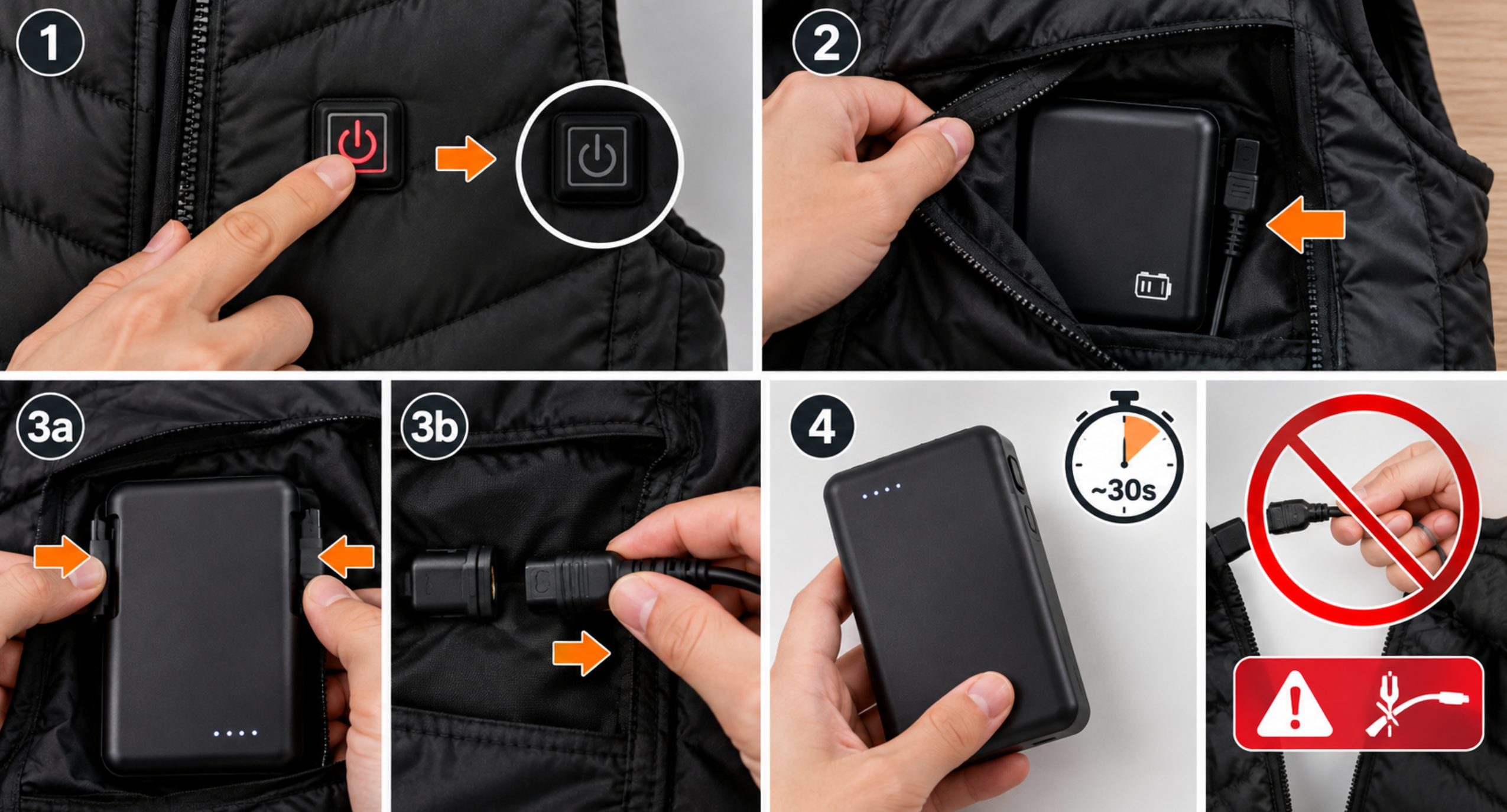
Charge only with the original charger, somewhere fire-safe, ventilated, and room temperature — not on your bed, unsupervised. Storing it long-term? Cool, dry spot, topped off every 3 months.
Inspect wires before every wear: frayed spots, kinks, pinched sections, loose connectors, cracked housing, swelling, weird smells. Any of those, retire the jacket.
Stop Immediately If You Notice
Redness, tingling, numbness, burning, or persistent pain
One zone running noticeably hotter than the rest
Battery swelling, overheating, odd smells, or deformation
Power button failure or exposed wiring
Kids, sleeping people, anyone with poor circulation or low temperature sensitivity — supervise closely, or skip it altogether.
Who Should Take Extra Caution? High-Risk Groups Explained
Three groups need to think twice before using a heated jacket, and cancer isn't the reason.
Pacemaker and ICD Users
If you have an implanted heart device, the real concern is electromagnetic interference (EMI). The battery, heating wires, and control module in a heated jacket could theoretically disrupt your device's signal reading. Talk to your cardiologist first. Then confirm with the device manufacturer whether your specific jacket model has passed EMC (electromagnetic compatibility) testing. Skip any jacket with heating panels near your implant site, especially chest-heavy designs. If you must wear one, choose low-power, low-EMF settings and keep it away from your chest. Dizziness, heart palpitations, or shortness of breath while wearing it? Stop immediately and call your doctor. Those symptoms point to possible EMI effects.
Pregnant Women
The issue here is hyperthermia, not carcinogens. Research treats a core body temperature of 39°C (102.2°F) or higher as the danger threshold, particularly during early pregnancy. A rise of just 1.5–2.0°C above baseline has been linked in studies to neural tube defects, congenital heart defects, and cleft palate. The goal is avoiding sustained high heat settings, especially when combined with exercise or already-warm environments. Heavy sweating, nausea, dizziness, or a racing heart? Cool down immediately.
Children
Kids regulate heat poorly. Their higher surface-area-to-body-mass ratio, immature thermoregulation, and weaker sweat response mean their core temperature climbs faster than adults', and their bodies can't signal the danger in time. Adult supervision is non-negotiable. Stick to the lowest settings, keep sessions short, and avoid concentrating heat on the torso. Watch for flushing, irritability, excessive sweating, or general fussiness.
Frequently Asked Questions About Heated Jacket Safety
Got more questions rattling around? Good. Let's clear them out one by one.
Is it safe to wear a heated jacket every single day?
Yes, assuming you're wearing something certified. A 2026 safety guide says certified heated jackets are fine for daily wear because they're built with low-voltage heating, battery protection, and temperature monitoring baked in. The uncertified knockoff from a sketchy marketplace listing? Different story.
How does heated jacket EMF compare to my phone or the microwave?
Lower. Consistently lower. One heated-clothing safety article puts it bluntly: jacket EMF is "much less" than what your phone or microwave puts out. Most jackets measure 1–4 mG near the body, though some industry sources note certain models can hit 10–20 mG at the spine on max heat. Either way, you're nowhere close to the 1000 mG exposure limit that gets cited as the benchmark.
What about electric blankets? Aren't those the same thing?
Not quite. Electric blankets run 6–8 hours a night while you sleep, measuring 2–20 mG the entire time. That's sustained, unconscious exposure. The UK's IET advises against leaving electric blankets on overnight for this reason. Your heated jacket? You're wearing it intermittently, adjusting the temperature yourself, and you're awake the whole time. Less exposure, more control.
What certifications should I look for before buying?
Ask for UN 38.3 (lithium battery transport safety), IEC 62133 or UL 2054 (battery safety standards), and FCC Part 15B (charger EMI compliance). CE and RoHS marks matter too if you're buying anything sold in the EU. If you're procurement-minded, request the UN 38.3 test summary dated within the last 12 months. That's your proof the battery pack isn't running on outdated safety data.
Conclusion
Heated jackets don't cause cancer. The EMF exposure from your battery-powered jacket is laughably low—closer to your toaster than to anything IARC has flagged as dangerous. The real side effects are overheating skin and the occasional lithium battery safety hiccup if you buy sketchy off-brand garbage, not radiation sneaking into your cells while you shovel snow.
Keep the temperature setting reasonable, don't sleep in the thing, and buy from brands that actually publish safety certifications instead of slapping "low EMF" on a label and hoping nobody asks questions.