A heated vest and a heated jacket run on the same battery-powered tech, but they're built for different things. The vest keeps your core warm and lets you move freely. The jacket covers your whole body for brutal conditions.
Whether you're chasing deer through frost-covered fields, working long hours on a job site, or just want something to throw over a hoodie on your morning walk, the right pick comes down to your climate, how much you move, and your budget. Let's figure out which one belongs in your winter rotation.

What Is a Heated Vest? Core Features & Best Use Cases
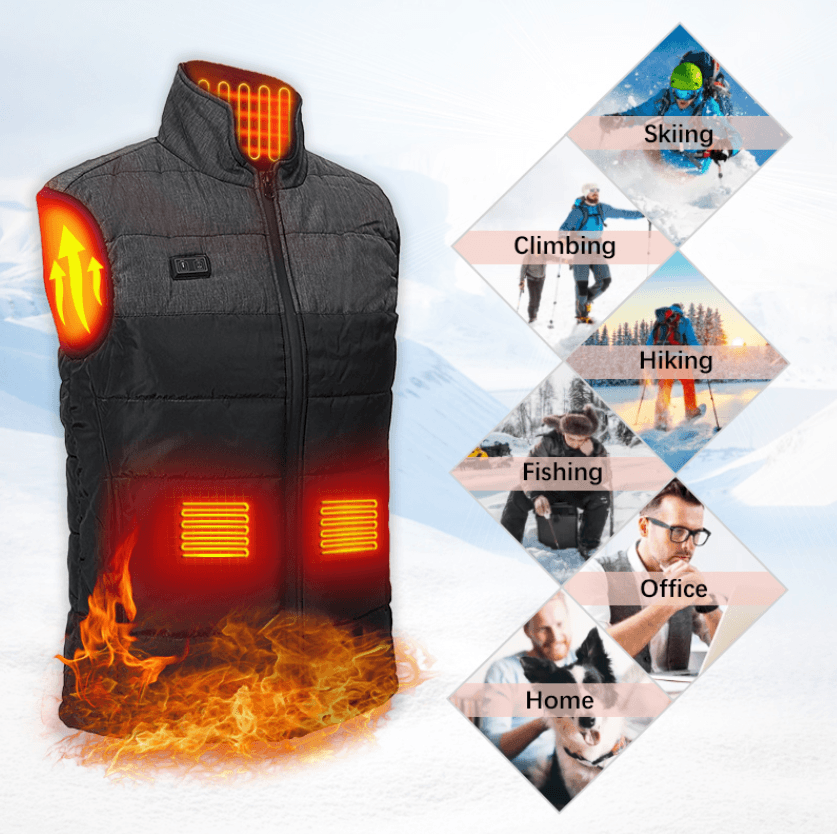
Take off the sleeves, and you get a vest that warms your core and frees your arms. Heat panels sit in the chest, upper back, lower back, pockets, and collar—the spots where cold settles first and mobility matters least.
Under the hood, most quality vests run on a 7.4V, 16000mAh rechargeable battery with three heat settings. You get roughly 4 hours on high, 5–6 hours on medium, and 7–10 hours on low, depending on how many heating zones you're powering and how brutal the weather is outside.
Zone count matters more than you'd think. Entry-level vests offer 4 zones; premium options push to 8 or 9. More zones mean heat spreads evenly instead of pooling in one spot. That's ideal if you're sitting still for long stretches or moving in and out of the cold repeatedly.
Where a Heated Vest Shines
Commuting and everyday layering – Slip it under a coat or hoodie for the subway, the walk to work, those unpredictable shoulder-season mornings.
Light outdoor activity – Hiking, fishing, dog walks, sideline sports. The Ororo Lightweight Heated Vest keeps heat concentrated in the chest, back, and collar for exactly this kind of movement.
Indoor use – Drafty offices, warehouses, chilly home offices. Low or medium settings stretch battery life while keeping you comfortable all day.
What Is a Heated Jacket? Core Features & Best Use Cases
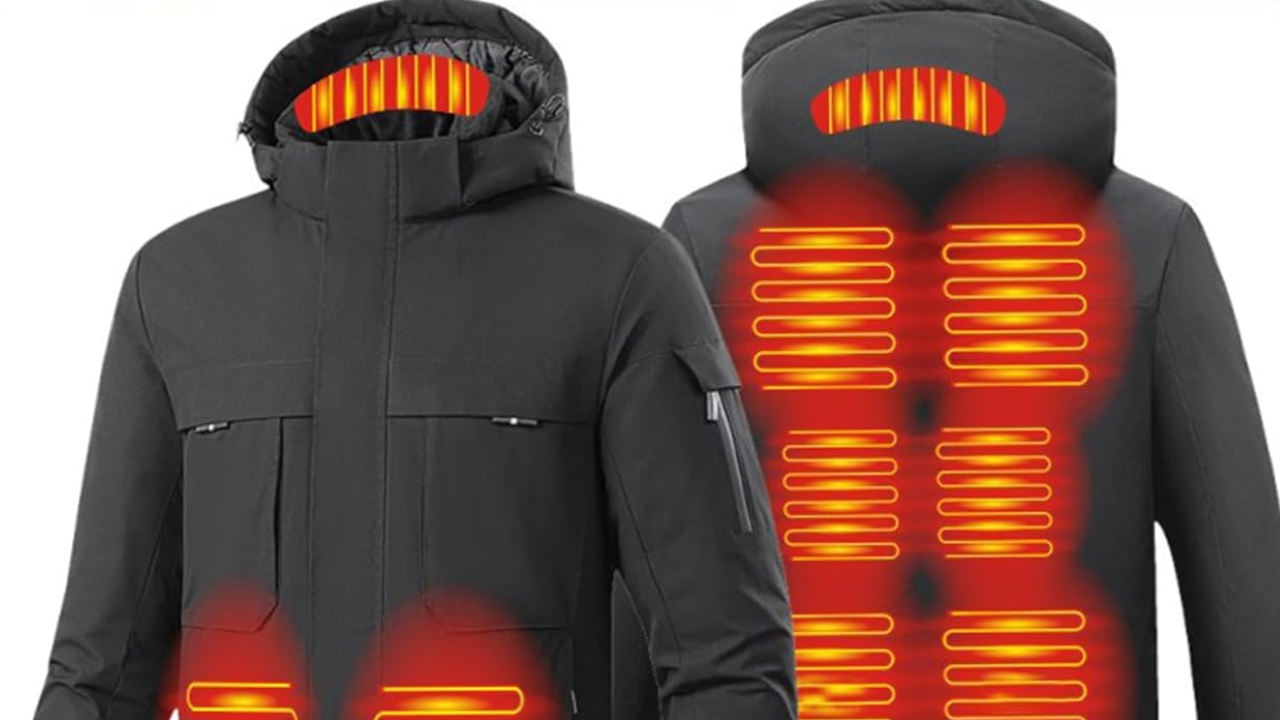
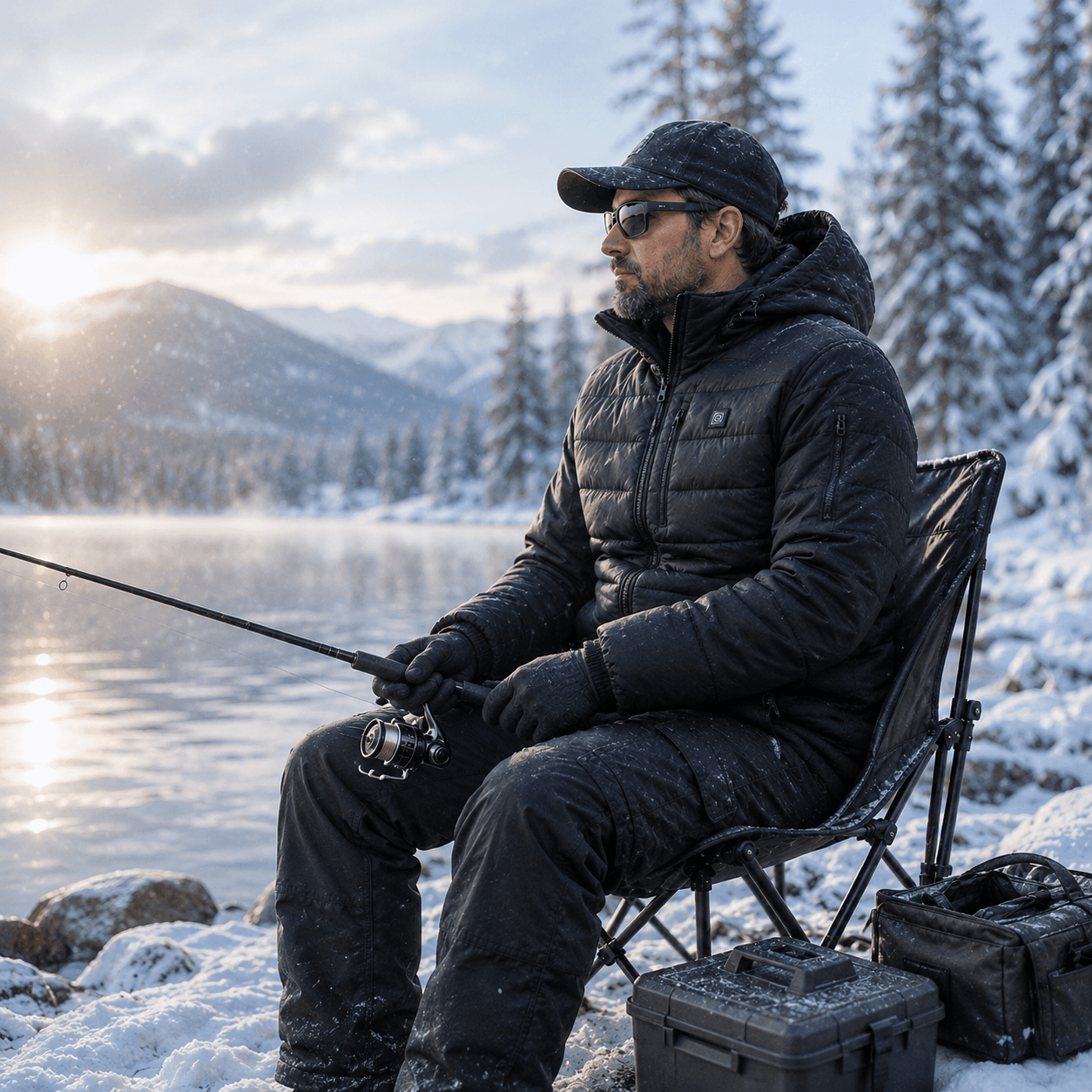
Sleeves change everything. A heated jacket is built as a full outer layer, windproof, often water-resistant, with heating elements woven across the chest, upper back, abdomen, and both arms. Some designs extend warmth to the collar, shoulders, and pockets. A handful even come with detachable hoods for whiteout conditions.
Heating zone layouts vary by brand. Entry-level jackets keep it simple with 3 zones: left chest, right chest, mid-back. Mid-range options bump that to 5, adding shoulder and collar coverage. Top-tier jackets stretch to 8 zones, wrapping heat around your back, neck, abdomen, and both arms.
Temperature control typically spans 3–5 settings, ranging from 95°F to 150°F (35–66°C), with heat kicking in within 30–60 seconds of powering on.
More coverage means less runtime. A 5-zone jacket running arms-only can stretch to 20 hours. Fire up all 5 zones at once, and that number drops to 7.5 hours. Core-zone-only mode lands around 10 hours, a reasonable middle ground.
Where a Heated Jacket Earns Its Price Tag
Winter job sites: Standing outside for hours in freezing temps? Full-body coverage matters more than mobility here.
Hunting and fishing: Sitting motionless in a tree stand or on a frozen lake demands sustained warmth across your entire torso and arms.
Extreme cold, low-activity days: Anything below 10°F (-12°C) with minimal movement pushes vests past their limit; this is jacket territory.
If you're logging full days outdoors, prioritize models with 5,000mAh+ batteries and zone-specific controls to stretch battery life without sacrificing warmth where it counts.
Heated Vest vs Heated Jacket: Side-by-Side Comparison Table
Numbers settle arguments faster than opinions do. Here's the breakdown that matters when you're weighing heated vest vs jacket warmth against price, weight, and how you'll wear the thing.
Dimension | Heated Vest | Heated Jacket |
|---|---|---|
Coverage | Core/torso, heat concentrated in chest and back | Core + arms, some models add collar/shoulder zones |
Flexibility | High—arms move freely, built for activity | Moderate—sleeves limit range of motion |
Layering | Excellent as a mid-layer under a coat | Works best as a standalone outer layer |
Weight | Lighter, often around 1.2 lb | Heavier, typically 1.8–2.8 lb |
Battery Life | 6–12 hours, low setting can stretch past 8–10 | 5–10 hours, low setting up to 12–16 depending on battery |
Price Range | $50–120 (bulk OEM from $90/unit, 500+ MOQ) | $100–349, with premium brands like Milwaukee hitting $279–298 |
Pick the vest for lightweight flexibility and long battery life. Pick the jacket when full-body coverage and wind protection matter more than mobility.
How to Choose: 4 Key Factors Based on Your Needs
Four questions separate the right purchase from an expensive mistake. Answer them, and the vest-versus-jacket debate practically solves itself.
1. How Much Are You Moving?
Jobs that keep your arms swinging—loading trucks, biking to work, hauling gear—call for a vest. It covers your torso and leaves your arms completely free. Standing still for hours, whether that's a construction site or a deer stand, favors the jacket. Full coverage and windproofing matter more than mobility when you're not generating your own body heat through movement.
2. What's the Temperature Doing?
Match voltage to your climate:
35°F and above: 5V is plenty
20–35°F: 7.4V or 7V hits the sweet spot
Below 20°F: 12V becomes necessary
A 7.4V system typically delivers 95°F±5°F on low, 104°F±5°F on medium, and 113°F±5°F on high. Across the broader heated apparel category, high settings often climb to 140–150°F, medium sits around 120–130°F, and low hovers near 100–110°F. Colder environments push you toward jackets and higher voltage almost automatically.
3. Do You Layer or Go Solo?
If this piece slides under an existing coat, a vest layers cleanly without bunching at the shoulders. If you want one garment that works as your entire outer shell—especially in wind—the jacket's sleeves seal in heat your arms would otherwise lose.
4. What's Your Budget Ceiling?
For a tight budget and lightweight gear, a vest + 5V or 7.4V is the practical entry point. If you want maximum warmth regardless of cost, a jacket + 7.4V or 12V delivers it, at a weight and price premium.
You get 7–12 hours on low, 5–8 hours on medium, and 3–6 hours on high, though cold weather shortens all of it. One typical 7.4V/36Wh vest clocks in at 10 hours low, 6 hours medium, 3 hours high, which lines up with what most icebearcare shoppers report in real-world use.
Pros & Cons: Heated Vest vs Heated Jacket
Every winter purchase involves tradeoffs, and heated apparel is no exception. Here's the honest breakdown of what you gain and lose with each option.
Heated Vest
The good side:
The sleeve-free design is genuinely easier to wear under a coat without feeling stuffed. It layers under existing outerwear, so one vest handles multiple weather scenarios. You get full arm mobility — a real advantage if you're hiking, cycling, or working with your hands. Fewer heating zones mean lower power draw, often just 1–2A compared to a jacket's system, so runtime per charge is longer. And there's no bulky jacket silhouette when you wear it as a mid-layer.
The tradeoffs:
Your arms stay cold — that's the obvious cost, and it shows in genuinely low temperatures. Vests aren't built as standalone outer shells, so wind protection is limited. You'll usually need to pair it with a jacket or shell once conditions turn nasty.
Heated Jacket
The good side:
You get coverage across torso, sleeves, and sometimes collar — broader warmth than any vest offers. This is the better call for deep winter or long stretches outdoors without much movement. Many models double as waterproof, windproof outer layers. And you don't need an extra jacket on top.
The tradeoffs:
Extra sleeves and battery load add real weight. Sleeves cut into range of motion compared to a vest. More coverage means less comfort once temperatures climb or you start moving — overheating happens easily in mild weather. Some jacket systems pull up to 6–7A, cutting runtime noticeably compared to vest models.
Bottom line: vest = mobility-first, jacket = warmth-first.
Buying Guide: What to Check Before You Purchase
Marketing copy loves round numbers, and that's exactly where shoppers get burned. The battery life printed on the box is almost always the lowest heat setting, not a realistic average. Here's what actually happens in the field:
Low setting: 8–20 hours
Medium setting: 4–8 hours
High setting: 2–5 hours
Drop the temperature outside, and runtime falls another 15–40%. A standard 10,000mAh power bank delivers 6–10 hours on low or 4–6 hours on medium. That's fine for a commute, tight for a full workday. If you're outdoors half a day or more, budget for a spare battery or external power bank upfront.
Heating Zone Placement Matters More Than Zone Count
A vest with nine zones scattered randomly won't outperform a four-zone design that covers your lower back, kidney area, abdomen, chest, and neck. Those spots lose heat fastest, and cheaper products routinely skip lower-back coverage to cut costs. For jackets, prioritize a back + chest + shoulder/collar combination over single-zone back heating.
Check the Fabric, Not Just the Wattage
Waterproofing and windproofing separate a real outdoor jacket from a glorified sweater. Look for:
5,000–10,000mm HH: light commuting
10,000–15,000mm HH: regular outdoor use
20,000mm+ HH: heavy rain, wet snow, extended exposure
Thick polyester shells with waterproof coating have held up against freezing rain for over an hour in real-world testing. Pair that with sealed seams and zippers before checking heat output. Warmth means nothing if moisture gets in first.
Custom Heated Vest & Jacket Solutions for B2B Buyers
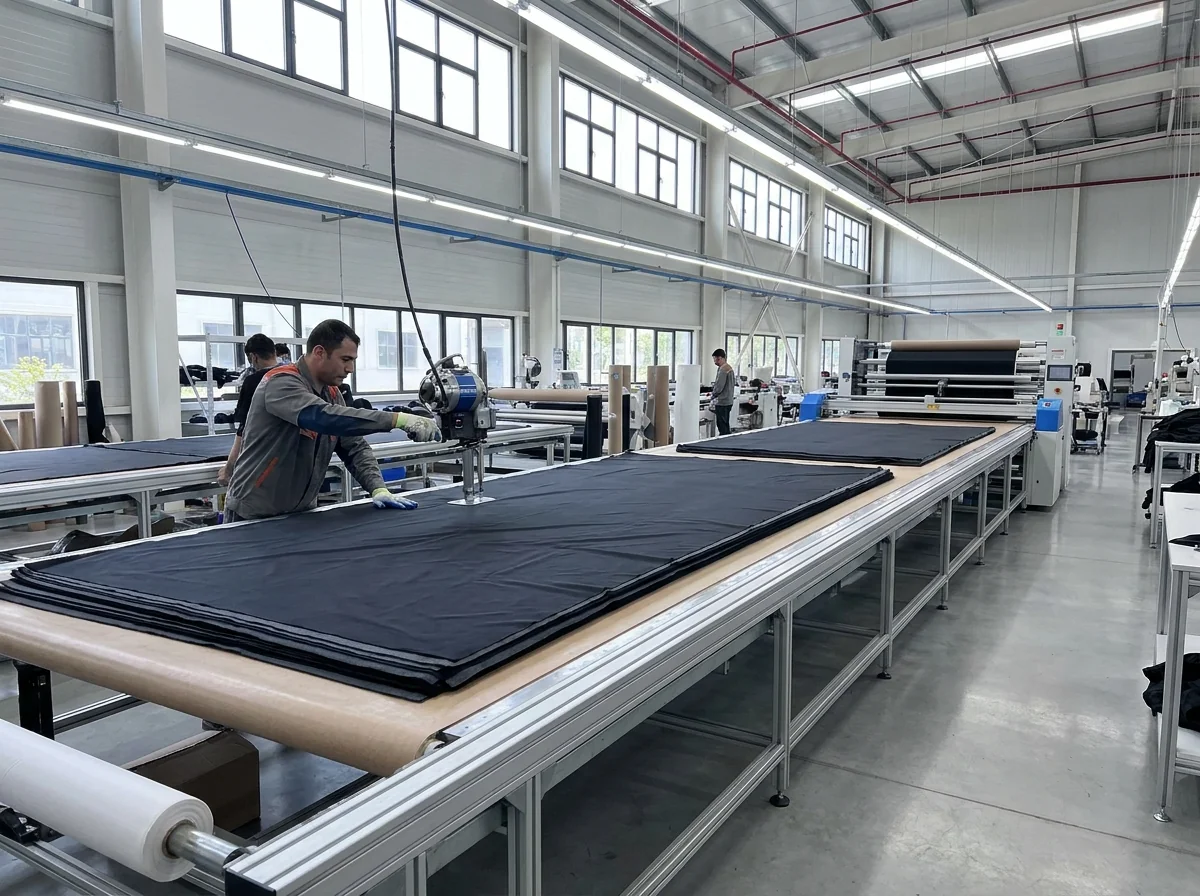
Wholesale buyers need a factory that builds to spec, not another retail comparison. IceBear Care, an OEM/ODM manufacturer in Nanchang, Jiangxi, handles fabric cutting, PCM filling, and electronic heating assembly in-house. You get vests, jackets, gloves, scarves, blankets, and insoles from one supplier.
What you can customize:
Heating zone layout, element type, and power (7.4V or 12V, matching industry benchmarks)
Fabric, fit, and voltage systems for different climate markets
Private label with your logo, packaging, hangtags, barcodes, and country-of-origin marks
Workflow runs brief/spec → sampling → sign-off → bulk production → shipment, with in-line QC at cutting, assembly, and finishing.
Comparable suppliers deliver production samples in 25–45 days at MOQ 500/style. Contact IceBear Care's Tina, Sales Manager, at +86 19970078188 to scope your program.
FAQ: Common Questions About Heated Vests and Jackets
Five questions keep coming up when shoppers compare specs. Here's what the data says.
Is a heated jacket warmer than a heated vest?
Yes—jackets cover your arms and torso for full-body warmth. Vests heat your core and leave your arms free, so they layer better. For static activities like ice fishing, go with a jacket. For high-movement stuff like hiking or snow trekking, a vest works better.
Which one lasts longer on a charge?
Jackets run 4–10 hours on low; vests stretch to 6–12 hours because they cover less area and draw less power. A 5,000mAh battery gives about 3.5 hours on low, 2 hours on medium, and 1 hour on high. A 10,000mAh battery doubles that: roughly 6.5, 4, and 2 hours. Some manuals list a flat 8/6/4-hour breakdown across all settings.
5V, 7.4V, or 12V—which voltage should I pick?
5V is fine for light everyday wear. 7.4V balances heat output with runtime and works for most outdoor use—it's the industry's standard middle ground. 12V is for extreme cold.
Can I machine wash it?
Most vests and jackets can go in the machine or be hand washed. Remove the battery first, zip everything closed, use cold water, and air dry. Skip bleach, dryers, ironing, wringing, and dry cleaning. Brand manuals usually recommend a 30°C fine or gentle cycle.
How do I keep the battery healthy?
During off-season months, store it at 25%–75% charge. Never leave it fully charged or fully dead. After washing, make sure the connector port is completely dry before attaching the battery—moisture and electronics short things out fast. And extreme cold can shave 20–30% off any battery's stated runtime, no matter the capacity.
Conclusion
Choosing between a heated vest and a heated jacket depends on how you move through your world. Need core warmth without bulk for hunting, layering, or quick errands? A battery heated vest keeps you agile and unrestricted. Facing full-shift cold on a job site or long hours outdoors? A heated jacket for winter wraps your arms, torso, and core in complete, consistent heat.
Both deliver on comfort. Match the gear to your lifestyle. Consider your environment, your budget, and how much mobility you need, and the right choice becomes obvious.
Browse icebearcare's full range of rechargeable heated vests and jackets, built for hunters, outdoor workers, and everyday adventurers alike. If you're a bulk buyer or brand looking for tailored solutions, our B2B custom program is ready when you are.