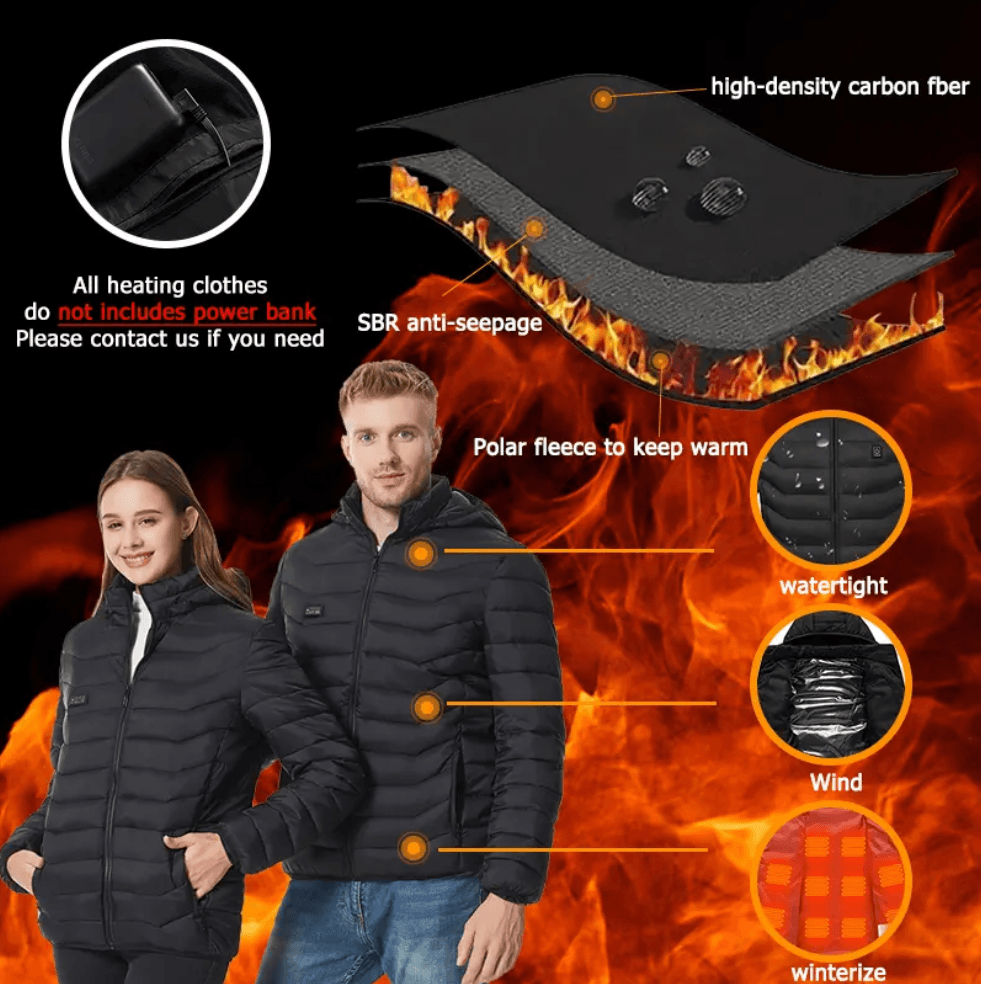
When purchasing a heated vest, you shouldn't focus solely on heating temperature or battery life. The factors that truly impact your user experience include the heating zones, battery longevity, temperature settings, fabric, fit, and intended use cases.
Requirements for a heated vest vary depending on whether it is used for winter commuting, cycling, outdoor work, or hunting. Therefore, before buying, you should clarify the temperatures, activity levels, and duration of use you anticipate.
This article outlines key factors to consider when buying a heated vest, helping you determine which model best suits your actual needs—rather than simply relying on the promotional specifications listed on product pages.
Determine Your Use Case Before Buying A Heated Vest
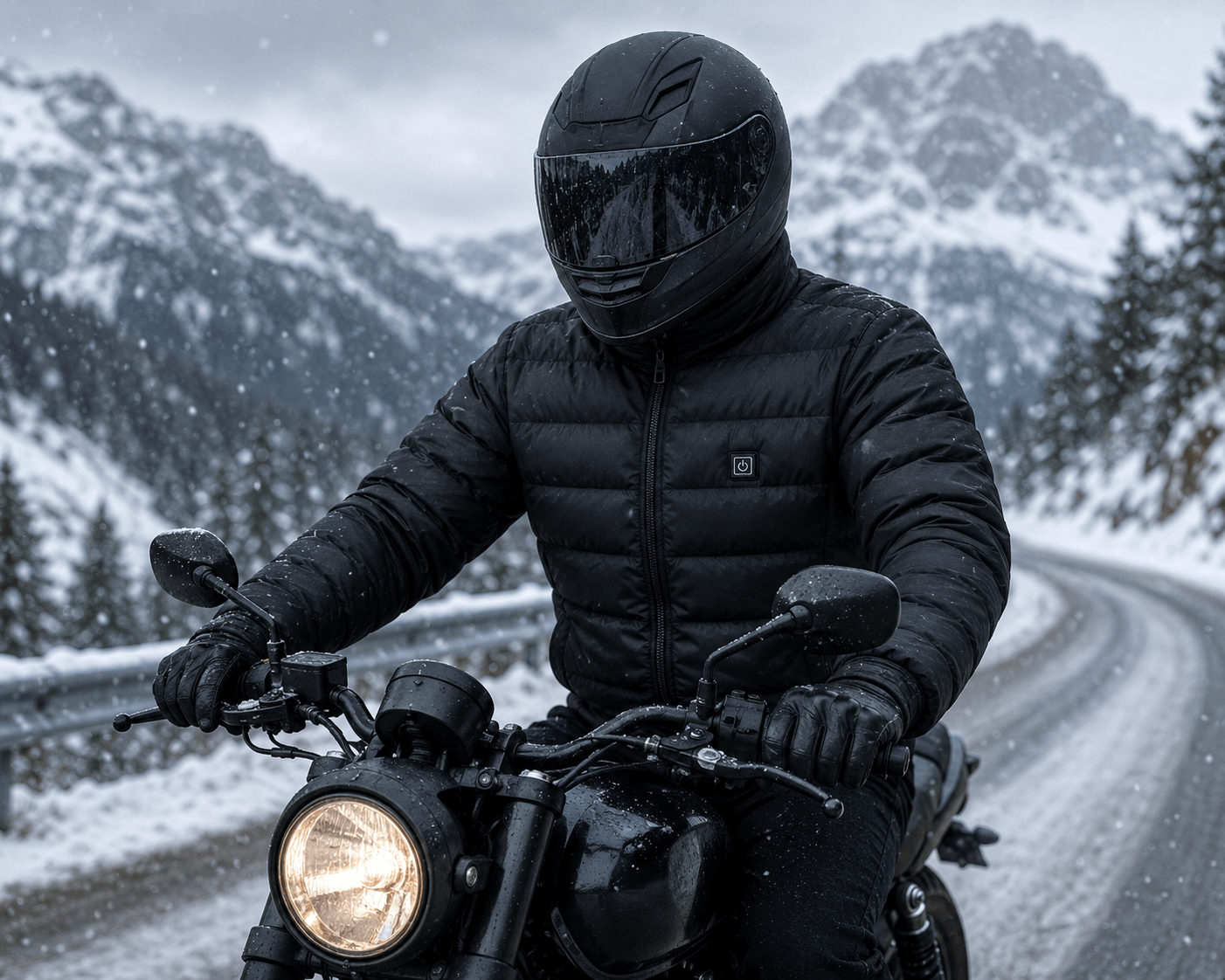
Your daily routine decides the spec sheet. A commuter walking three blocks to a bus stop has completely different heat and battery demands than someone sitting in a deer stand for six hours before sunrise.
Match the vest to how you'll actually wear it:
Daily commuting: A lightweight 7.4V rechargeable heated vest with a 10,000mAh battery hits the sweet spot: 4–6 hours on medium, 6–8 on low.
Outdoor work: Prioritize durability and battery life over style. Look for 7,500–10,000mAh capacity, since cold weather can drain runtime by roughly 20%. A backup power bank is insurance.
Hunting: Silence and layering matter as much as heat. A heated vest for hunting should run 6–8 hours on medium, with 12,000mAh+ packs favored for real cold and long sits.
Motorcycle riding: Wind cuts through fabric fast. 12V systems with higher heat output are the industry standard for vehicle-adjacent gear.
Everyday wear: Comfort wins. A slim 7.4V, 5,000–10,000mAh setup delivers 2–8 hours depending on capacity, without the bulk.
Know your scenario first. Battery size, heat zones, and materials all follow from there.
Heating Zones And Coverage: How Many Do You Need
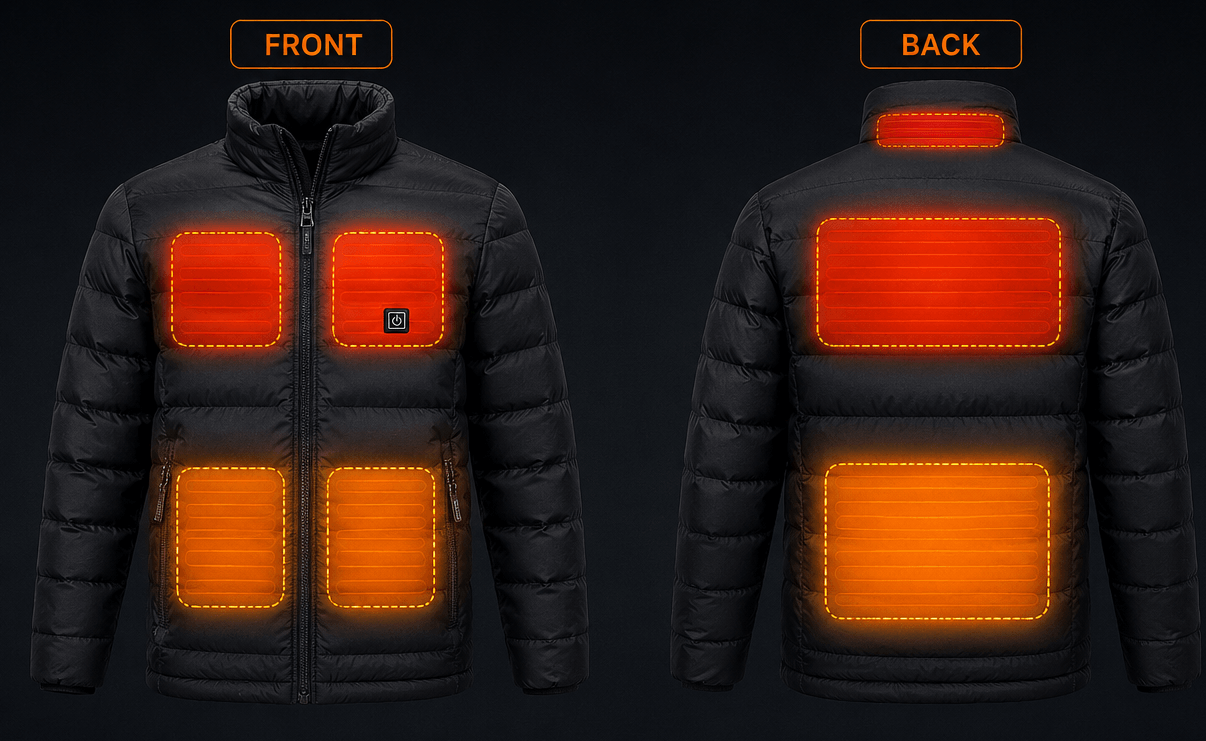
More heating zones sound better on paper. They don't always feel better on your back.
The zone breakdown, from bare-bones to loaded:
2 zones (front chest only): the entry-level floor, roughly $60–$100. Your chest stays warm, your back and neck don't.
3 zones (chest + upper back): pulls core body temp up, common in the $129–$150 range from brands like Ororo and Venustas.
4 zones (chest + back + collar): the sweet spot. Most guides land here, priced $160–$190. The collar cuts wind chill at the neck; the back panel kills the cold spot between shoulder blades. This is the upgrade people actually notice.
5–6 zones: finer segmentation, more even heat, $140–$240+. Great for standing still in brutal cold, but battery drains faster.
8 zones: high-end, heavy-cold territory, sometimes exceeding $300.
Who should pay for more coverage: hunters, riders, and anyone working outdoors for hours. Who shouldn't: short commuters and budget-conscious buyers—2 to 3 zones covers it.
If you're deciding whether it's worth the jump, skip straight to 4 zones. Back and collar coverage deliver more real-world warmth than adding another chest panel ever will.
Heat Settings And Temperature Control Options
Three heat levels dominate this market: low, medium, high. A single button, pressed and held or tapped in sequence, cycles through them. No app required, no menu to dig through with cold fingers.
What each setting delivers
High (55–65°C / 131–149°F): fastest warmth, shortest runtime, typically 2–4 hours. Use it stepping outside or working in brutal wind.
Medium (45–55°C / 113–131°F): the workhorse setting. Runs 4–6 hours and balances heat against sweat.
Low (35–45°C / 95–113°F): built for sitting still: commuting, fishing, office hours. Stretches to 6–10 hours.
Reviewers report actual temps matching the label, and most praise the near-instant response when switching levels. Some vests claim heat-up in as little as 3 seconds. A few premium models add app-based fine-tuning, but three solid settings cover nearly every real-world scenario.
Battery Life: Matching Runtime To Your Activity
Battery capacity is where most heated vest shoppers get burned. The number on the box rarely tells the whole story.
Runtime by battery size, across heat settings:
5,000mAh: 2–4 hours, best suited for compact or lightweight builds.
7,000–8,000mAh: 4–6 hours, the standard for mid-range vest bundles.
10,000mAh: the most-cited baseline. Expect 6–8 hours on medium/low, dropping to 3–6 hours on high.
15,000mAh+: 10+ hours on low, built for extended outdoor stretches.
16,000mAh: reported anywhere from 11–20 hours depending on heat level and test conditions.
20,000mAh: positioned for all-day use, often landing around 11 hours in multi-zone vests.
Cold changes everything. A B2B comparison test showed a 5V/10,000mAh pack falling from 5 hours at 20°C to just 3.5 hours at -10°C, and 2.5 hours at -20°C. That's nearly half the advertised runtime, gone.
As a rule of thumb: 4–6 hours covers commuting and errands. 6–8 hours handles work shifts with intermittent heating. 8–12+ hours is the real target for all-day outdoor work, hunting, or long winter exposure—and that's before the cold takes its cut.
Battery Specs And Whether It's Included In The Price
mAh alone won't tell you what you need to know. Watt-hours (Wh) give the true energy picture, calculated as Wh = mAh × V ÷ 1,000. A 7.4V/5,000mAh battery equals 37Wh—useful for comparing packs across brands with different voltages.
Then check the box contents. Some retailers bundle everything, Costco's 32 Degrees vest ($39.99) includes the battery and charger. Walmart's Venustas listing ($149.99) does too. Others don't. Amazon listings marked "Battery Pack Not Included" run $79.99–$139.99 for the vest alone. Always read "WHAT'S INCLUDED" before comparing prices.
Safety Certifications You Should Never Skip
Lithium batteries catch fire. Not often, but often enough that certification is due diligence. UL listing is the standard to check first. UL 1642 covers lithium cells, UL 2054 covers battery packs, UL 2595 covers battery-powered appliances. NASA's own incident reports flagged uncertified chargers as a root cause in battery failures. That's federal-level evidence.
ETL works as a UL equivalent for North American sales. CE matters if you're buying from EU-facing retailers. FCC only applies if your rechargeable heated vest has Bluetooth or app controls; otherwise skip it.
Before buying, ask the seller for the exact UL file number. "Certified battery" without a standard attached means nothing.
Fit And Sizing: Snug Vs Layered Wearing
Skin contact makes or breaks heat transfer. A heated vest with air gaps between the panels and your body wastes energy warming empty space instead of you. That's why you want a snug fit.
How you wear it decides the size. Against a T-shirt or thin base layer, size down or stay true to size. Tighter contact means faster, more even heat. Over a sweater or fleece for skiing or riding, go up one size. Check chest measurement and length, not just S/M/L—the middle layer needs room.
Men's vests run straighter through the torso, giving more chest and shoulder room for layering. Women's vests have a waist taper, so match bust, waist, and hip together. Checking bust alone can leave the hem too tight.
Material and Fabric: Balancing Warmth, Breathability, and Durability
Fabric choice decides whether your heated vest actually works or just looks warm. Windproof nylon dominates as an outer shell because it's light, abrasion-resistant, and holds up against light rain. Its downside is fabric noise. That matters if you're a hunter trying not to spook anything within earshot.
Softshell fuses a woven face fabric, a membrane layer, and a fleece backing together. Expect breathability in the 10,000–25,000 g/m²/24h MVTR range, waterproofing around 5,000–10,000mm hydrostatic head, and stretch between 15–30%. That flexibility suits hiking, skiing, or any activity where you're moving constantly.
Fleece liners handle warmth without the crinkle. They're soft and quiet, but weak against wind alone. Grid fleece or microfleece linings push sweat out faster, which is why ski-focused vests lean on them.
Match fabric to activity: silent fleece for hunting, windproof softshell for skiing, nylon-and-wicking combos for high-output cold weather work.
Weather Resistance: Do You Need Waterproof Protection
Most heated vests lie about this one spec. They say "waterproof" on the tag and mean "water-resistant" in practice.
Compare the waterproof rating against this scale:
Below 5,000mm: dry snow only, no pressure resistance.
6,000–10,000mm: light rain, average snow, light pressure.
10,000–15,000mm: moderate rain and snow, workable for general winter wear.
16,000–20,000mm: wet snow and moderate to heavy rain, holds up under backpack straps and shoulder pressure.
20,000mm+: storm-level protection for sustained heavy rain and wet snow.
Reviewers keep flagging the gap. One reviewer said the shell "beaded moisture without soaking through" in light rain and wet snow, but admitted heavy rain would eventually penetrate seams. Another shell was explicitly "not designed for full submersion" despite a water-resistant coating.
The more waterproof the shell, the more heat and moisture it traps inside. For a garment already generating warmth, a sealed 20K shell can mean condensation buildup during active use.
Aim for 10,000–15,000mm for mixed rain and snow, and 16,000–20,000mm if wet snow is a given. Check whether "waterproof" covers just the shell, or the seams and battery compartment too.
Controls: Easy Operation With Gloves Or Cold Hands
A physical button beats a touchscreen every time gloves are involved. Capacitive touch relies on skin conductivity, and thick gloves block the signal—you have to strip down to bare fingers in freezing air just to change settings. Cold makes things worse: low temperature and low moisture kill touch responsiveness, while bulky gloves invite accidental taps.
Button and knob controls rank highest for winter usability. Simplified touchscreens with oversized targets come next. App-dependent controls trail last. If a vest uses touch, look for conductive fingertip zones on the index finger and thumb. These outperform full conductive coatings and still work reliably above -15°C. Below that, even quality gloves struggle.
For older users, fewer buttons and larger, high-contrast text matter more than extra features. Simplicity wins here.
Best Heated Vest Picks By Specific Use Case
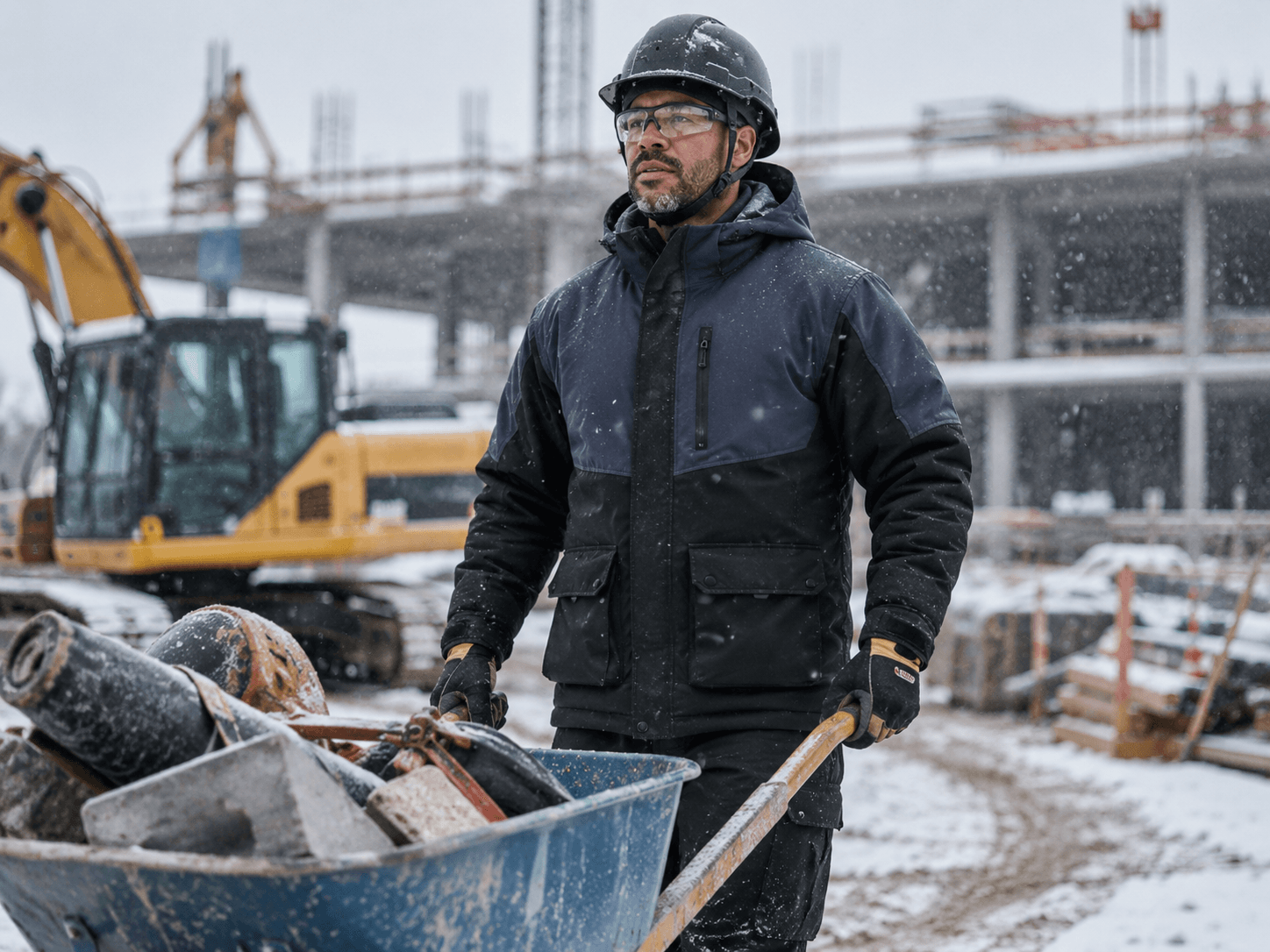
Outdoor work: Go big. You get 5–8 heating zones, a 7.4V/16,000mAh-class battery, machine-washable fabric, and abrasion-resistant material. Long cold exposure eats runtime, so oversize the battery on purpose.
Hunting: Silence and stillness matter more than max heat. A sleeveless design with core chest-and-back heating won't get in the way of a shoulder mount or a quick turn. Skip anything that rustles.
Riding: Thin, tight, and simple. A slim vest with chest-and-back zones layers under a jacket without adding bulk that fights your riding posture.
Everyday wear: Comfort and looks first. Machine-washable, 3 heat settings, a heated collar—easy on, easy off, built for switching from commute to couch.
Older adults: Prioritize safety over specs. One-button control, soft fabric, a stable low setting, and core-area heating beat anything with a menu.
IceBear Care's heated vest line covers all five use cases with core chest-and-back warmth, sleeveless mobility, and rechargeable battery power. You can pair it with their heated jacket for more wind coverage.
Price Vs Value: What's Actually Worth Paying For
A $60 heated vest and a $200 one solve different problems.
There are three price bands. $50–$80 gets you 1–3 zones, shorter runtime, and battery often sold separately. Corners get cut here first. $80–$150 delivers 3–5 zones, better insulation, and battery usually included. This is the value sweet spot for commuting and general outdoor use. $150–$250+ offers 5+ zones, smarter controls, and premium fabric. Some models stretch to 8–20 hours depending on setting.
For battery, 10,000mAh is the common baseline. 14,400mAh shows up in higher-spec vests. 8–12 hours on low is a strong value target; 2–6 hours is typical of cheaper packs.
UL, CE, FCC, and RoHS together signal a serious brand. Budget listings often show RoHS alone, or nothing at all.
Skip any listing that hides the zone count, battery specs, or certifications.
Frequently Asked Questions About Buying A Heated Vest
Questions repeat across every buyer forum. Here are the ones that matter most, answered straight.
How long does the battery actually last? A 5,000mAh pack runs 3.5 hours on low, 2 hours on medium, 1 hour on high. A 10,000mAh pack stretches to 6.5 hours on low, 4 hours on medium, 2 hours on high. Low is the number brands advertise because it's the setting people actually use for hours at a time.
Is higher heat always better? No. High drains the battery fast. Low is the workhorse setting for all-day wear.
Is the battery included? Check first. Buying it separately adds $25–40 to real cost.
Heated vest or heated jacket? Vests layer easier and suit active, mobile use. Jackets cover arms and suit colder, windier conditions, where full coverage matters more than flexibility.
Conclusion
Choosing a heated vest comes down to matching battery life, heating zones, and materials to how you actually spend time in the cold. If you're splitting logs at dawn, sitting through a three-hour hockey practice, or trekking to a deer stand before sunrise, your ideal setup looks nothing like the person who just wants extra warmth on the morning commute.
A good buying guide turns a confusing wall of specs into a handful of decisions you can make with confidence. Think through your use case, check for real safety certifications, and don't skimp on battery capacity if you need all-day heat.
Browse IceBearCare's heated vest lineup and find the one built for how you brave the cold.