Instead of generic supplier directories, we dug into the technical capabilities, certifications, MOQs, and real-world track records of the manufacturers shaping the heated apparel space in 2026. Whether you're hunting for a heated jacket manufacturer with deep OEM flexibility, a battery heated vest supplier that scales with your growth, or a carbon fiber heating vest producer known for R&D muscle, you'll find sourcing clarity backed by side-by-side comparisons.
PASSION OUTERWEAR — The Go-To Choice for Flexible OEM/ODM Partnerships
Quanzhou Passion Clothing Co., Ltd. runs its B2B operations under the brand PASSION OUTERWEAR. The company is built around flexibility. It markets itself as a "Custom Heated Jacket, Outdoor Clothing Manufacturer," with roots tracing back to 1999. That's over two decades of OEM and ODM production experience, backed by annual output exceeding 500,000 jackets and pants. For a heated apparel OEM partner, that scale matters because it signals they can handle both small private-label runs and larger production contracts without breaking stride.
MOQ Tiers That Actually Make Sense
What sets Passion apart is a tiered MOQ structure that maps to different buyer needs:
50–100 pcs/SKU — Private-label orders using existing designs, just swap the logo and packaging.
100–200 pcs/color or SKU — Light ODM customization: new colors, added functional details, adjusted packaging.
200–500 pcs — Full OEM customization: new patterns, new fabrics, custom heating zones, or specific battery specs. Complex workwear projects can climb to 500–800 pcs.
This tiering gives smaller brands a realistic entry point while still supporting complex, fully custom builds for larger buyers.
Certification Coverage
Passion's public documentation lists CE, FCC, RoHS, UN 38.3, OEKO-TEX, BSCI, SMETA, and GRS. Their CE certification covers LVD, EMC, and RoHS at the system level; FCC compliance addresses Part 15 requirements. Battery safety and transport get separate backing through UN 38.3 and UL 2089 references. One caveat: publicly available pages don't break out certificate numbers component-by-component (battery vs. controller vs. finished garment). Buyers who need that level of detail should request it directly during due diligence.
Who They Serve Best
Passion's typical clients skew toward outdoor brands, workwear/PPE labels, retail private-label sellers, and ski or winter sports brands — essentially small-to-mid B2B buyers who need customization without enterprise-level minimums. You won't find a splashy client logo wall on their site, but the industry-scenario approach (construction, ski, women's retail, industrial workwear) tells you where they've built real production experience.
Dr. Warm — Full-Category Integrated Heated Apparel Manufacturer
Founded in 2013, Dr. Warm operates as the heated apparel brand under Dongguan S-KING Limited, running R&D, production, and quality control out of its Dongguan headquarters. What makes it stand out as a heated jacket manufacturer is the breadth of the catalog: heated gloves, socks, insoles, jackets, vests, pants, hats, and neck gaiters. That's a full-body heating system from one supplier.
The One-Stop Sourcing Play
For buyers building a complete winter gear line, you consolidate under one roof instead of juggling five suppliers for gloves, socks, and vests separately. Battery specs match, control logic matches, and certification paperwork stays the same across the whole line. That consistency saves real time when you're launching a multi-SKU brand across outdoor, cycling, hunting, or workwear categories.
Technical Depth
Dr. Warm claims in-house engineering across heating systems, battery integration, and controller design, rather than assembly-line OEM work. Control options span three tiers: manual button, remote, and BLE app control, all supporting multi-level temperature adjustment. Batteries are rechargeable lithium cells built into the finished garment, though public specs on capacity or runtime aren't disclosed.
MOQ and Certifications
There's no fixed MOQ published. The site lists "Flexible MOQ," positioning them as negotiable. Industry benchmark for comparable OEM/ODM heated apparel sits at 100–300 units per style/color, higher for app-controlled builds. Use that as your starting point in negotiations.
Confirmed certifications are CE, UL, RoHS. Buyers targeting EU/US markets should still request UN38.3 battery documentation and FCC compliance for wireless models.
Icebearcare — Low-Minimum Trial Orders + Custom Production
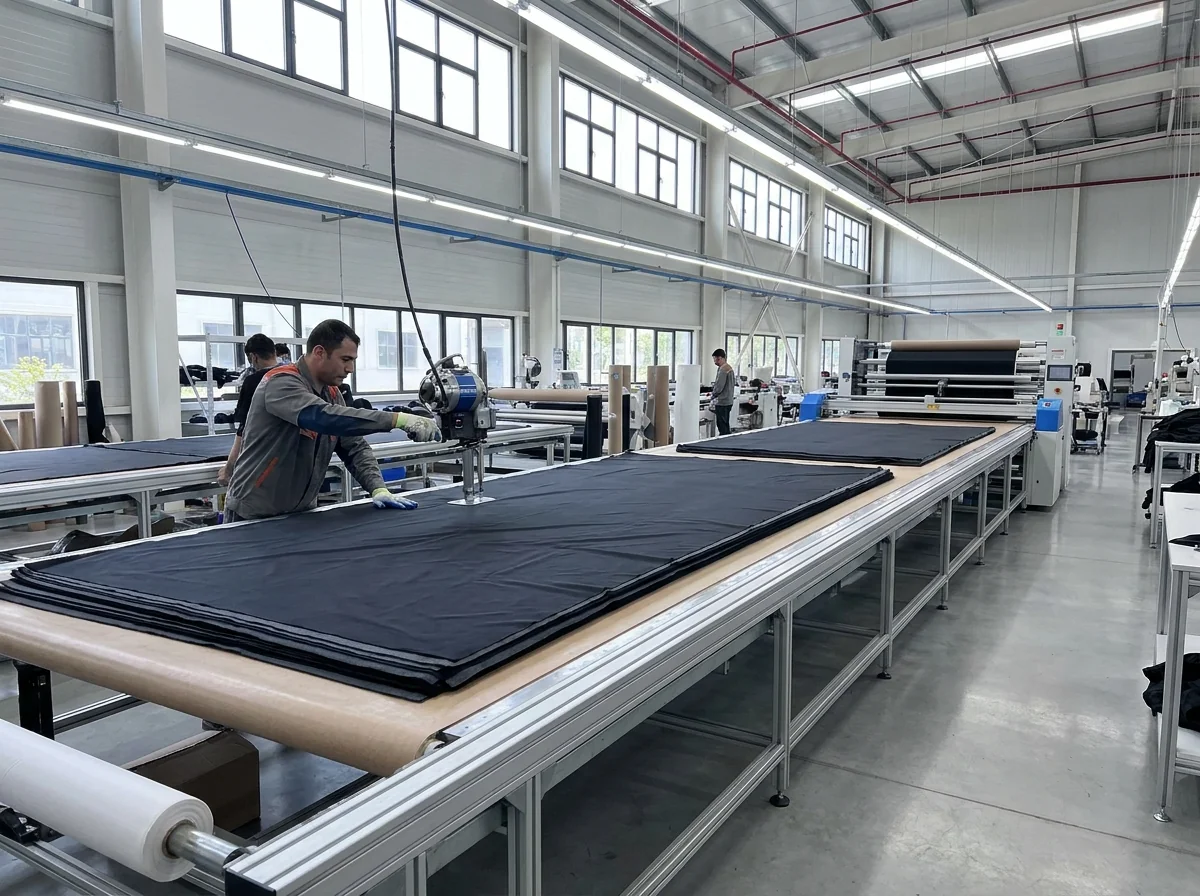
Icebearcare runs its full production line in Nanchang, Jiangxi — and "full" is the operative word. Sewing, PCM filling, and electronic heating assembly all happen in-house, under one roof. That matters more than it sounds. When sampling and mass production share the same facility, you cut the handoff friction that usually stalls first orders for weeks.
The 50pcs/500pcs Split
Most electric heated vest factories in China quote MOQs starting at 1,000+ units. Icebearcare doesn't. Their published structure runs sampling from 50pcs per SKU, production from 500pcs, and their site says they're "open to starting with a smaller quantity" for first orders.
Here's why that matters:
A 50pcs sampling batch functions as a market-validation run. Enough for internal review, product photography, compliance pre-checks, and wear-testing, without eating your entire development budget. And a 500pcs production entry lets new brands launch a single SKU, run DTC test drops, or pilot multiple SKUs in parallel — instead of betting six figures on one unproven design.
The workflow reinforces this: Brief & Specification → Sampling → Sample Review & Sign-off → Bulk Production → Packing & Shipment. No bulk production starts until sign-off is complete. That's your version-lock protection against costly mid-run surprises.
One Factory, Two Climates
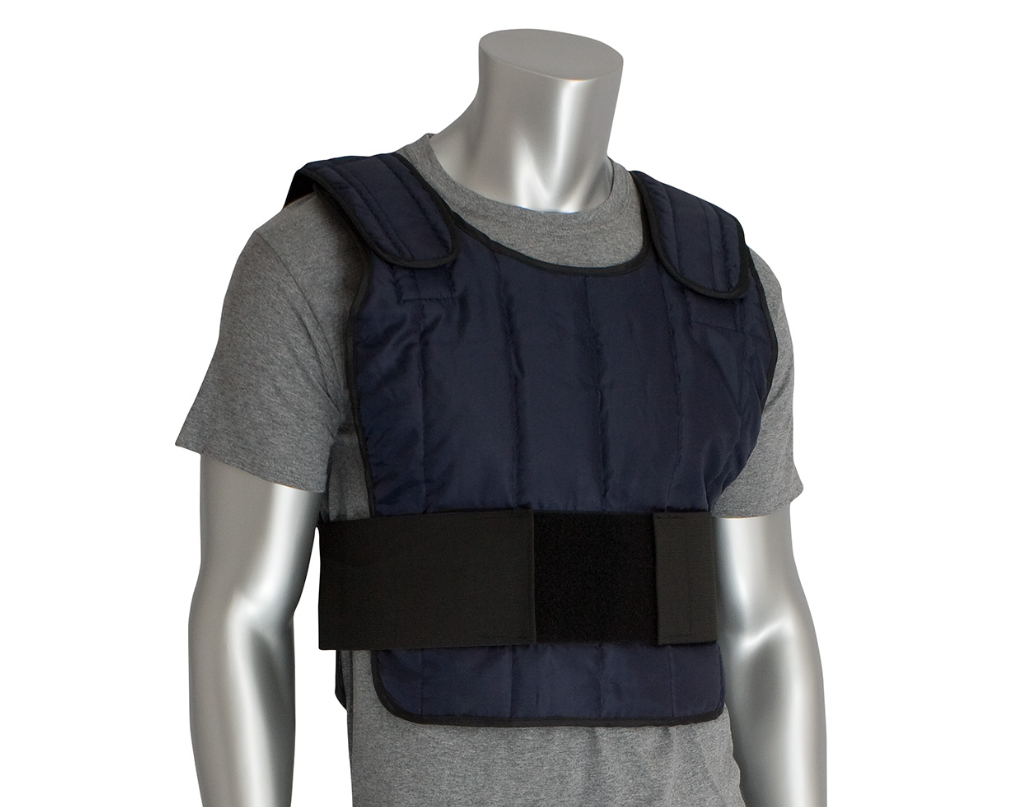
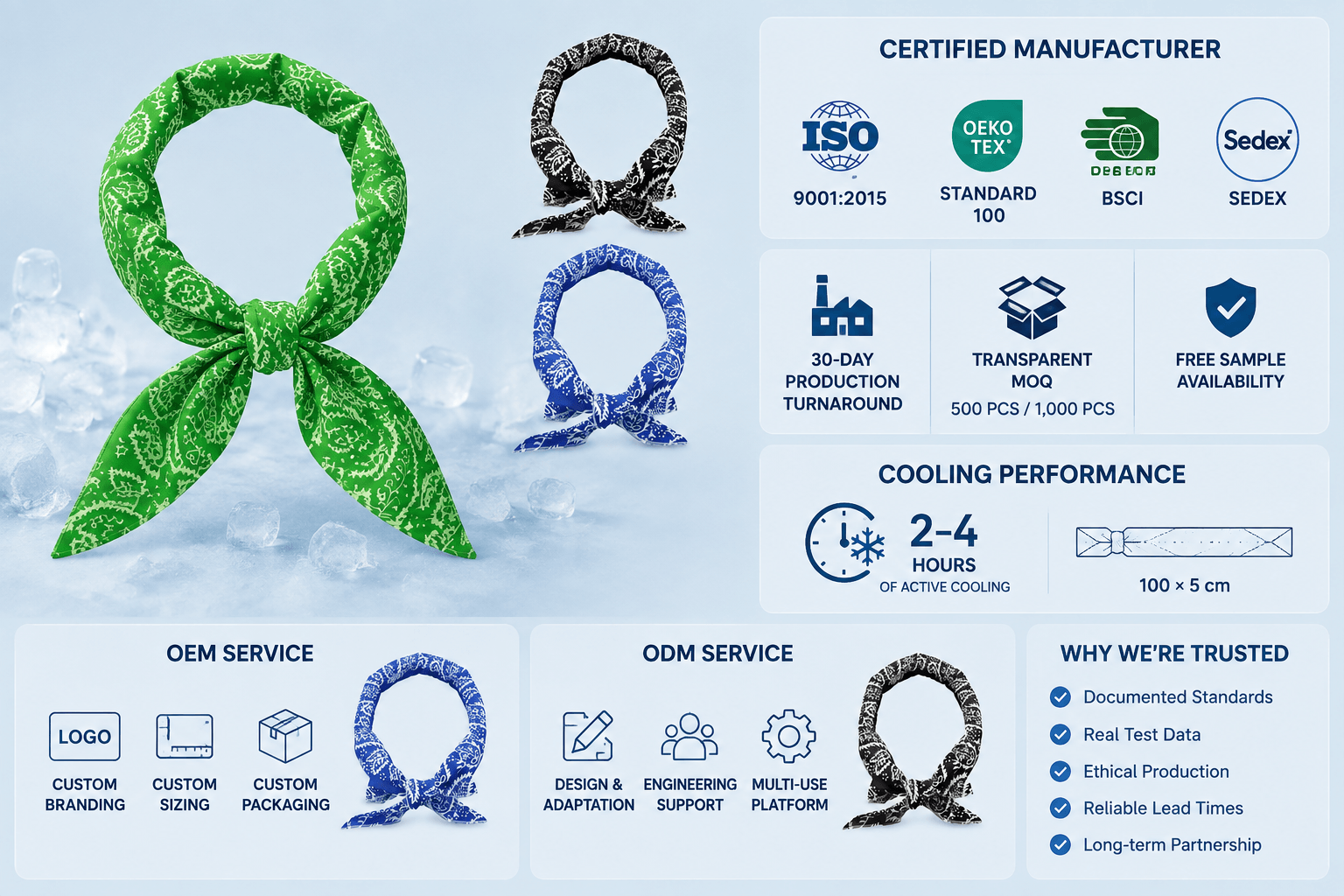
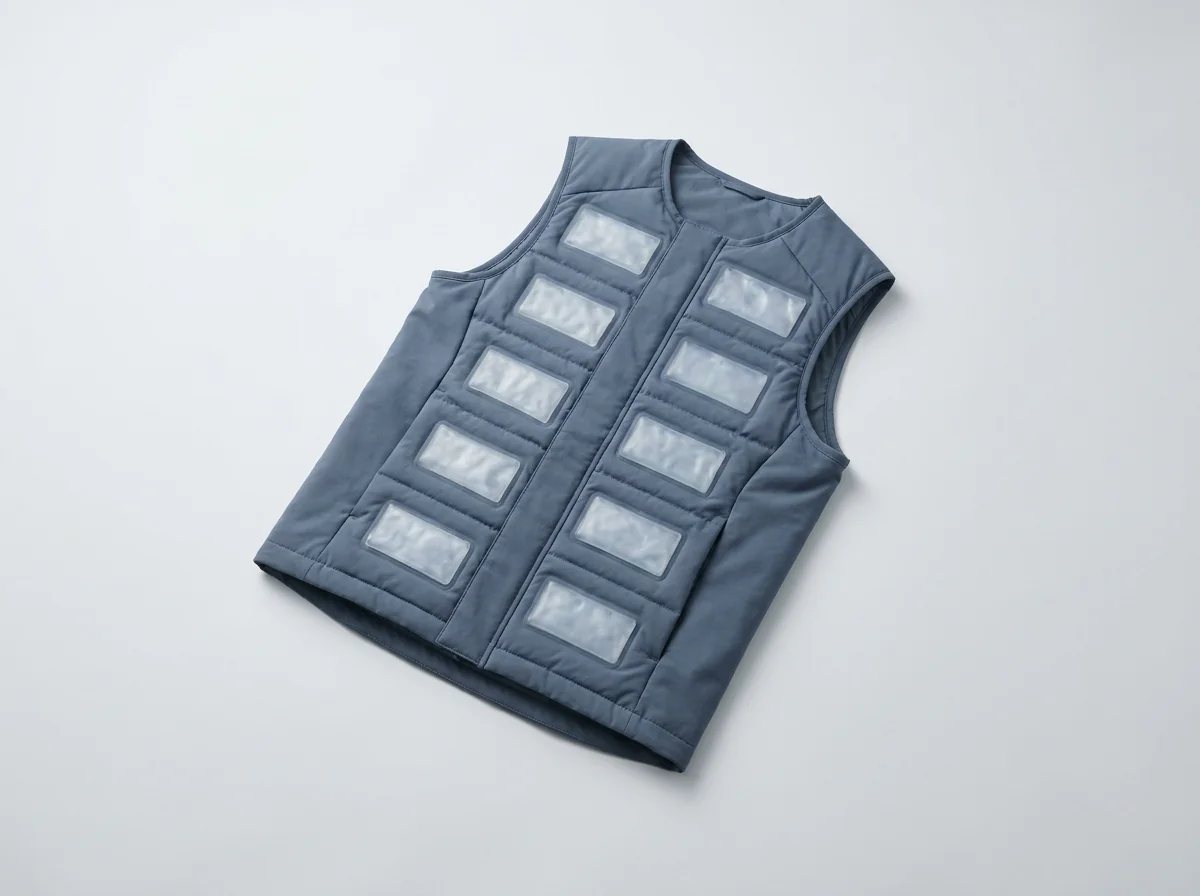
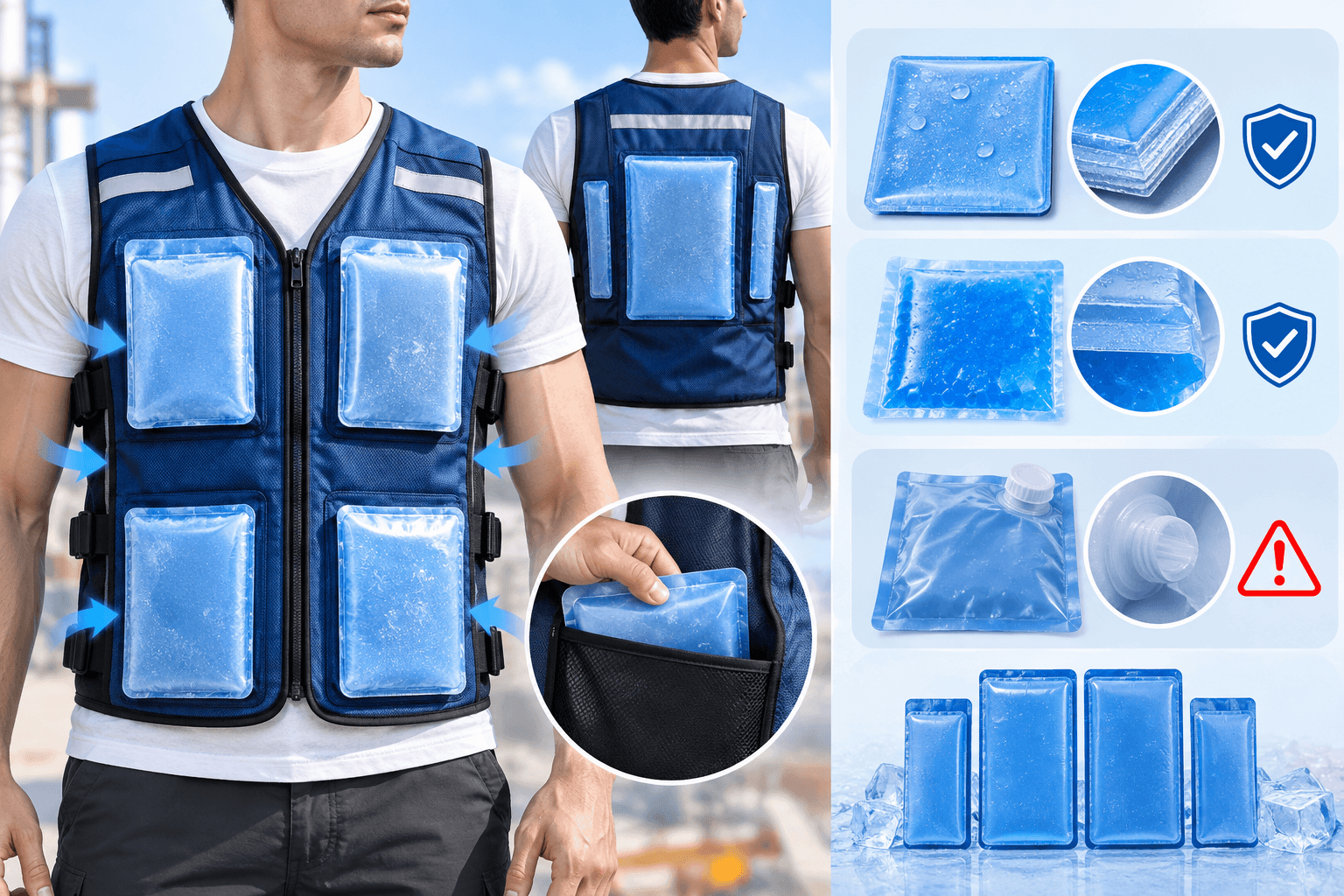
Icebearcare produces both heating apparel (carbon-fiber, far-infrared, graphene, multi-zone) and cooling apparel (PCM, water-circulation, fan), plus pet cooling and pet heating. Because both sides share sewing, module embedding, and QC infrastructure, you can bundle a summer cooling vest and winter heated vest into one product matrix, even combine human and pet items on a single PO and shipment.
Lead times: 25–45 days for cooling products; 35–45 days for OEM heated apparel; 60–80 days for full ODM builds. Sales contact Tina responds within one business day.
NRheat — A Factory-Direct B2B Heated Apparel Manufacturer

Guangzhou Nuanrong Technology Co., Ltd. runs its heated apparel business under the NRHEAT brand, out of JANGHO Industrial Park in Guangzhou, Guangdong. It’s a factory focused on price transparency and production scale, not on boutique customization.
The 1,000-Unit Reality Check
NRheat’s published standard-style MOQ is 1,000 units, not 50 or 100. Custom orders are negotiable per their site FAQ, but that baseline stays. In the broader China heated apparel supplier field, MOQs commonly range 50–500 pcs. So NRheat is a bulk-order factory that negotiates on customization, not a low-minimum trial partner.
Pricing and Certification Coverage
NRheat doesn’t publish a fixed price sheet. They market “factory direct pricing” and “competitive pricing” instead. Based on industry benchmarks for comparable heated vests and jackets, expect USD 30–160 per unit for standard builds, climbing to USD 200 for multi-zone, high-spec configurations. For compliance, NRheat lists CE, FCC, RoHS, and ISO 9001. Solid coverage for EU and North American channels, though certificate numbers and specific test reports for EMC, LVD, and battery aren’t publicly itemized. Request those directly during due diligence.
Production Scale — Two Reported Figures
Capacity claims differ across NRheat’s own materials. One version mentions a 5,000 sqm facility with 100+ machines, four heating pad lines, eight garment lines, and annual output over 500,000 units. Another version mentions a 50,000 sqm facility with 14 production lines. The conservative takeaway is that NRheat’s public capacity sits in the 400,000–500,000 unit annual range, making it a credible option for buyers moving past pilot orders into full wholesale volume.
IMISSKY Industrial — A Vertically Specialized Heated Vest Manufacturer

Founded in 2015, IMISSKY Industrial built its business around one idea: heated apparel should have its own product roadmap, not be a side-line in a general clothing OEM's catalog. That's exactly what the site reflects — a dedicated "Heated Vests OEM/ODM Manufacturer" page alongside heated gloves, socks, insoles, and jackets that all share the same battery and controller engineering.
Dual-Base Manufacturing: China + Vietnam
IMISSKY runs production out of Shenzhen/Dongguan in China, plus a second facility in Vietnam (Long An/Binh Duong). The Vietnam plant alone reports 12 production lines and 370,000 pcs/month capacity. That's useful if you're hedging tariff exposure or need dual-sourcing for supply chain resilience.
Vest Specs That Actually Get Published
Most heated vest suppliers keep specs vague. IMISSKY doesn't:
- 7.4V rechargeable lithium battery
- 3-level temperature control: 40°C / 45°C / 50°C
- Heating zones fixed at back and pockets
- 4–6 hour charge time, 4–8 hour runtime
- Fabric options: nylon, polyester, carbon fiber; graphene nano-layer film available on select builds
That "back and pockets" layout signals a pattern IMISSKY has already tooled and tested repeatedly — not something engineered fresh per order.
MOQ Breaks by Product Complexity
Heated vests and single-zone jackets: 300 pcs. Simpler items like heated gloves and socks: 200 pcs. Multi-zone graphene heated jackets: 500 pcs. Sample turnaround runs 7–14 days; full tech pack, prototype, and fit confirmation for bulk orders takes 30–45 days.
Certification Stack
CE, FCC, RoHS, UL cover general compliance. UN38.3 and MSDS handle battery documentation. Jacket-specific SKUs add IC/ES and PSE for broader regional coverage. Confirm this detail if you're shipping into Japan or Canada.
Suzhou Qianteng Garments — Fast-Turnaround Small-Batch Custom Manufacturer
A 100-piece MOQ changes everything for a startup brand testing a heated vest concept. Suzhou Qianteng Garments Co., Ltd., based in Shengze, Wujiang, Suzhou, built its entire business model around that number. The platform lists them as a Custom Manufacturer specializing in men's jackets, ski/snow wear, and outdoor apparel. Heated vests fit that category as a functional add-on.
The 100pcs/Style, 15–45 Day Model
MOQ isn't fixed across every SKU. Simple customization like logo printing, color swaps, or packaging changes stays at 100 pieces per color and delivers in 15–30 days. Structural changes such as pocket redesign, fabric substitution, or pattern tweaks push lead time to 30–45 days. Full redevelopment or new heating-zone architecture often exceeds this low-MOQ model; expect MOQ to climb toward 300–500 pieces.
Sample-First Workflow
Sample cost runs around $50 with a 7–10 day turnaround. They send a PP pre-production sample before mass production starts—critical for startups confirming fit and heating placement before committing capital.
Track Record
Third-party platform data shows a ≤2 hour response time, 95.8% on-time delivery, and a 4.8/5.0 rating across 25 reviews. The facility spans 1,900+ square meters with 50+ staff and reports $400,000+ in annual online revenue. It is a smaller operation better suited for pilot runs than six-figure wholesale orders.
Consumer Brand Benchmarking (Ororo / Sevdiea / Savior Heat / Gobi Dune)
Four names keep surfacing in 2026 heated vest reviews: Ororo, Sevdiea, Savior Heat, and Gobi Dune. None of them are manufacturers. They're retail brands. But that's why they matter here — they show you what "good" looks like from the end-consumer's chair, which is the bar your factory-sourced product needs to clear.
Ororo is the stability benchmark. It's the most established name in the category, backed by roughly 4.6 stars and 3,000+ reviews. Real-world testing shows about 10 hours low-setting runtime, dropping to 3–4 hours on high. Most models ship with a battery included. Some support USB charging (even phone charging). A few add a heated collar. Machine-washability is common. Ororo wins on trust and repeat-purchase behavior, not spec sheets.
Sevdiea is the performance benchmark. It leads 2026 roundups with a 16,000mAh battery, 8 heating zones, and up to 20 hours of low-setting runtime, plus dual switches. Multiple review sites name it Editor's Choice, citing battery size and pricing together. User data backs it up: 4.7 stars, 85% five-star ratings, about 690 reviews.
Savior Heat and Gobi Dune show up far less in 2026 coverage. Treat them as mid-tier and niche reference points, not headline comparisons. For Savior Heat, benchmark against 4–8 zones, 7.4V systems, 5,000–16,000mAh batteries, and 8–10 hours low-setting. For Gobi Dune, check machine-washability, wind-resistant shells, at least 8 hours low-setting, and a removable battery. That's the baseline consumers now expect even from lesser-known labels.
How to Choose the Right Heated Vest Contract Manufacturer
Most sourcing mistakes happen before the first sample ships. They happen at the inquiry stage, when buyers skip one critical question: "Are you doing sewing-only OEM, or full ODM with heating system, battery, and controller included?"
That distinction changes everything—pricing, timeline, and who owns compliance risk.
OEM only means the factory cuts and sews fabric. You supply the heating element, battery pack, controller, and full spec sheet. Cheaper quote, but you carry the technical burden.
ODM means the factory delivers heating system + battery + controller + structural design, plus certification support and sample development. Higher price. That premium pays for R&D, BOM integration, and compliance liability sitting with them, not you.
The 10-Question Checklist Before You Sign
Run every quote through this:
OEM, ODM, or private-mold development—what's included?
Can they supply a full BOM: heating pad, thermostat, wiring harness, battery, charger, fabric?
Do they hold UL 2089 testing or matching battery safety documentation?
Is there UN 38.3 certification and an MSDS matching the actual shipped battery model?
RoHS for EU-bound orders; FCC for US-bound electronics?
Are test reports from a third-party lab, or just internal factory testing?
Do they have real heated apparel experience, not general garment production repurposed?
Can they support sample revisions and batch consistency checks against overheating, short-circuit, overcharge risks?
Is the battery replaceable, and does spec match your target market's regulations?
Will they provide sample + full document package before mass production starts?
Battery Safety Docs to Request at Inquiry
Ask for these upfront, not after PO:
UL 2089 report/certificate
UN 38.3 summary matching your shipped battery model
RoHS report
FCC test report
MSDS/SDS
Third-party lab reports with lab name, report number, test date, applicable model listed
Sample-Request Script That Works
Send this exact line: "Please ship 1–2 functional samples with matching UL 2089/UN38.3/RoHS/FCC documentation, including battery model, controller model, test date, and lab name."
Confirm at sample stage: heat levels, zone distribution, overheat protection, auto shutoff, and post-wash performance stability.
Benchmark Numbers to Judge Quotes Against
Certification/testing cycle: 2–4 weeks for sample reports, 4–8 weeks for batch certification
North American compliance cost: US$5,000–20,000, climbing to US$8,000–25,000 for complex heating configurations
If a factory claims "full package covered" but can't produce battery-model-specific test files, they're OEM-level sewing capability dressed up as ODM
Frequently Asked Questions
Buyers ask the same handful of questions before signing with a heated vest supplier. Here are straight answers, no fluff.
What's the typical MOQ for a heated vest supplier?
Stock/ODM styles run 50–100 pieces/color. Light OEM customization sits at 100–200 pieces. Full OEM builds with custom controllers and packaging climb to 200–500 pieces.
How fast can a heated jacket manufacturer ship?
White-label: 20–35 days. ODM customization: 3–5 weeks. Full OEM: 8–12 weeks from tech-pack approval to shipment.
What should a 200pc test order cost?
Expect US$26–34/pc at 200 units, dropping to US$19–24/pc at 1,000 units.
How do I reduce risk on a first order?
Start with a 50–100pc trial run. Before you commit to full-scale production, request ISO 9001:2015 audits, real factory photos, and third-party video verification.
Conclusion
Sourcing a heated vest manufacturer in 2026 is about finding the right factory for your specific play. Need flexible OEM/ODM without a punishing MOQ? PASSION OUTERWEAR and Icebearcare fit that gap.
This list turns weeks of vetting into minutes of comparison, so you're not gambling your margins on an unverified supplier.
Shortlist two or three heated vest manufacturer candidates from above, request samples, and pressure-test their MOQ, lead time, and compliance docs against your own checklist.