In summer 2023, German infrastructure crews faced back-to-back heat warnings, sites shutting down mid-shift, and safety managers scrambling for answers beyond "drink more water." Contractors quietly shifted to issuing cooling vests as baseline PPE, not optional gear for the heat-sensitive few.
The heatstroke numbers dropped, but the real story is how these companies got worker buy-in, which evaporative and phase-change technologies actually held up on asphalt and rebar sites, and where BAuA's guidance diverged from what procurement teams initially assumed. The real adoption data, the selection criteria that mattered on the ground, and the compliance gaps that caught more than one safety manager off guard are useful whether you're building a business case or just trying to keep your crew upright through August.
Heat Stress Crisis on German Infrastructure Sites: Why Cooling Vests Became Essential PPE

Everything hinges on 26°C, 30°C, and 35°C. Germany's BAuA and BMAS built their heat-safety framework around this escalation ladder under ASR A3.5. At 26°C, employers should already be acting. At 30°C, action becomes mandatory. At 35°C, a workspace is officially unsuitable for work—unless extra heat-protection measures kick in.
For infrastructure crews, this isn't abstract. ASR guidance specifically flags PPE-wearing and hard physical work as triggers for additional case-by-case measures. Roadworks, bridge decks, rail lines, and utility corridors all check both boxes.
The Physical Reality on Site
On site, you add radiant heat bouncing off asphalt and steel, zero shade, direct sun exposure for hours, and mandatory PPE layering on top. Core temperatures climb fast. German occupational guidance tracks three escalation stages—sunstroke, heat exhaustion, heat stroke. The last two are operational red flags: they force work stoppages and emergency medical response.
Where Cooling Vests Fit the Legal Framework
BMAS explicitly names Kühlkleidung (cooling clothing) as a valid measure at 35°C and above. A 2023 study on ice-cooling vests backs this up with hard numbers—reductions of 0.10–0.14°C in core temperature rise, 6–10 bpm lower heart rate, and a 1.6–2.0 drop in physiological strain index. Researchers called the effect modest, but on a bridge deck in August, modest still means fewer heat casualties.
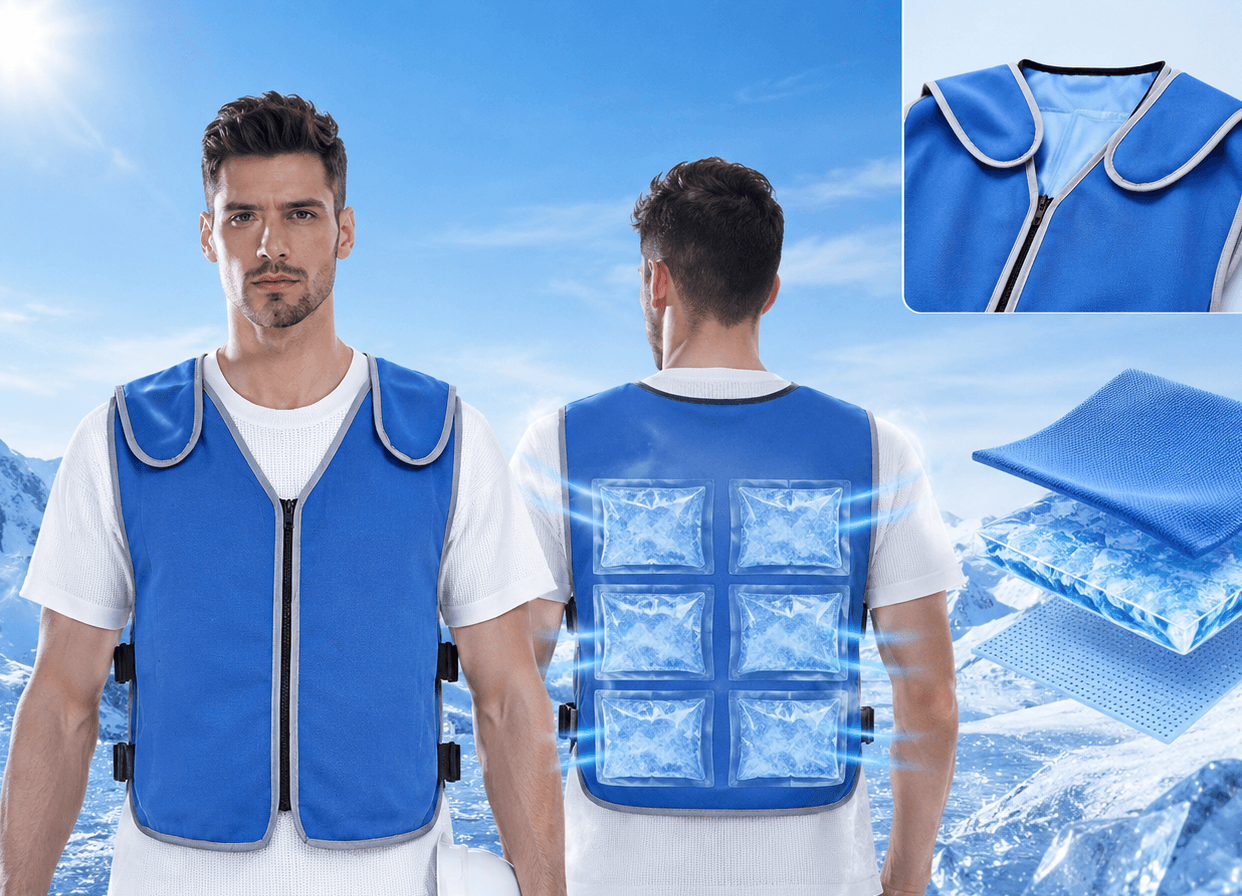
Cooling vests work best for short, high-exposure tasks like manual installation, inspection, repair, and emergency response—jobs where PPE can't be removed and shade isn't an option.
How Cooling Vests Prevent Heat Stroke: The Science Behind Thermal Regulation
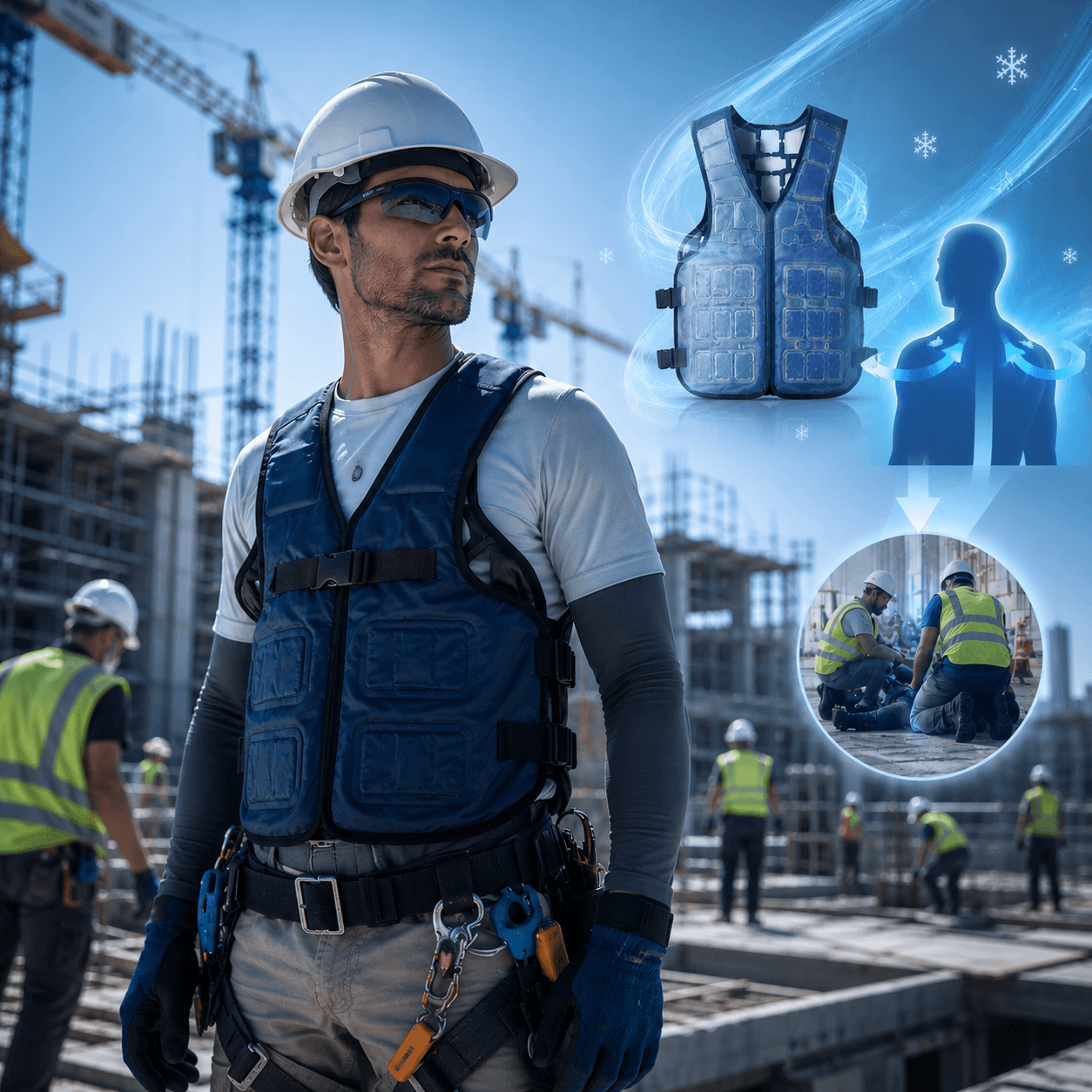
Three technologies, three completely different ways of pulling heat off a worker's body. Get this wrong, and you've bought expensive PPE cooling gear that fails on the job it was supposed to do.
Evaporative cooling vests use water evaporation. They're light, rechargeable with a quick soak, and effective in high-heat, low-to-moderate humidity conditions. Humid job sites cut their performance fast.
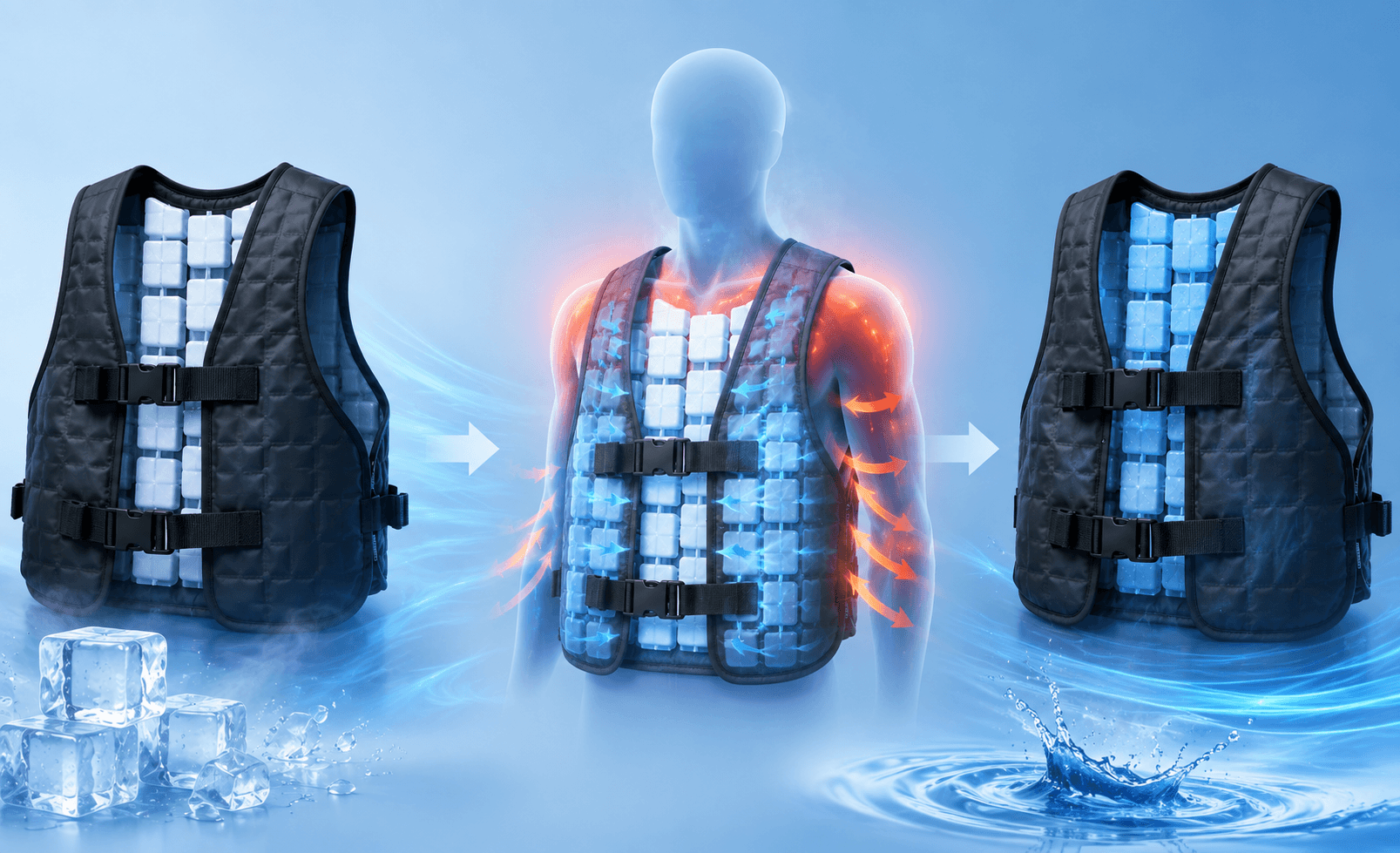
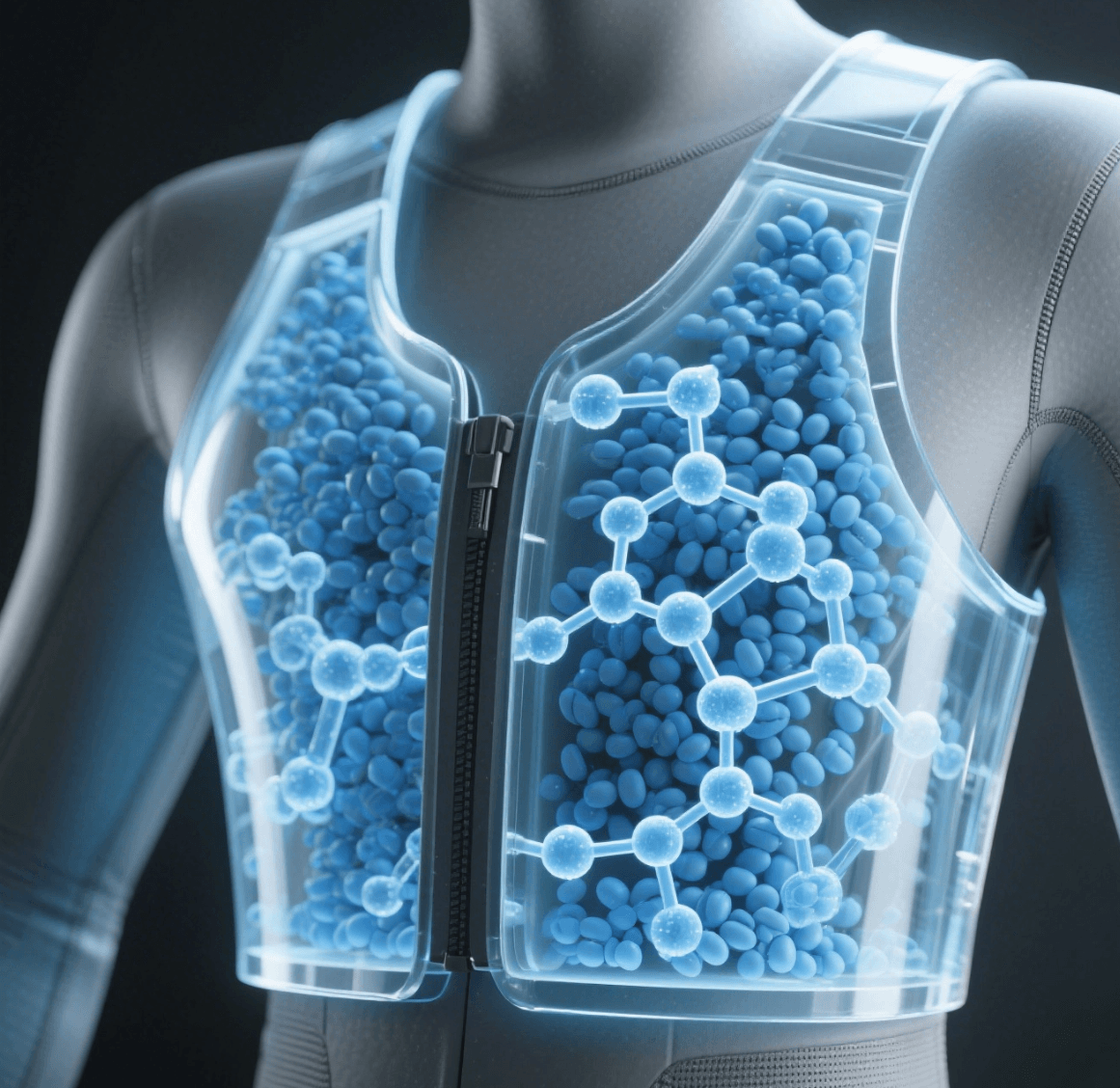
Phase change cooling vests work differently. PCM material melts and absorbs heat. Testing at 40°C compared melting points at 0°C, 10°C, 20°C, and 30°C. The 10°C melting point performed best across combined work-and-rest cycles. During active work, 0°C and 10°C inserts delivered roughly 40W and 29W of cooling power. During recovery breaks, every PCM type provided cooling ranging from 29W to 69W.
Ice vests for workers deliver more direct cooling, but they're contact-dependent. Insulation layers and skin contact quality matter a lot. One PPE-focused study found ice vests trimmed core temperature rise by just 0.10–0.14°C, cut heart rate by 6–10 bpm, and lowered physiological strain index by 1.6–2.0. Researchers called the result limited.
The Data That Proves Heat Illness Prevention
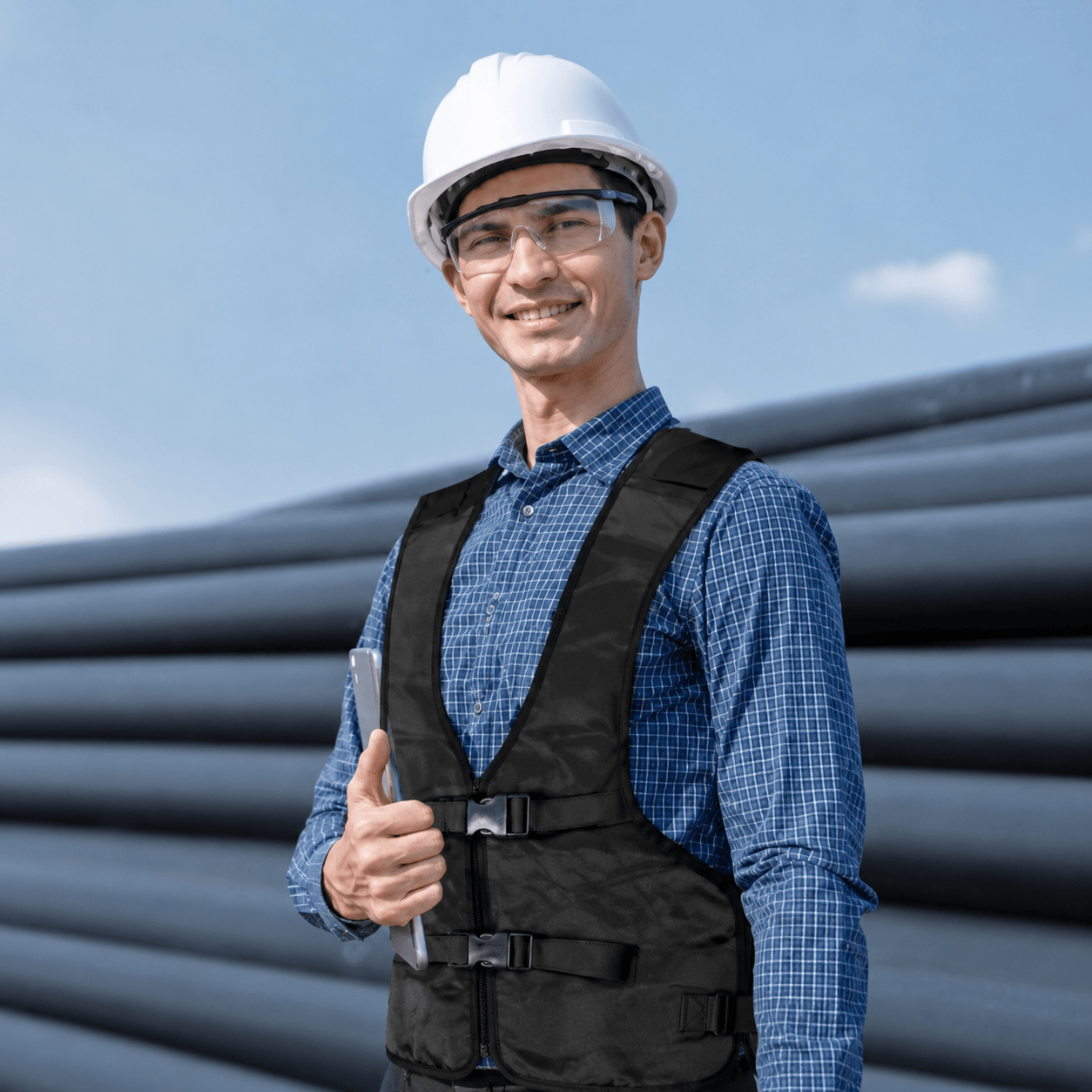
Numbers matter more than marketing claims here. In simulated 32°C, 70% relative humidity conditions with PPE plus cooling vest versus PPE alone, core temperature dropped from 38.4°C to 37.5°C. Heart rate fell from 123 bpm to 107 bpm. Thermal sensation scores dropped from 2.0 to 0.8. Metabolic energy expenditure stayed flat at 317 kcal in both groups. That last point matters: workers weren't burning extra energy to get the benefit.
At 34°C and 60% humidity, construction-worker simulations tested a hybrid vest that combines PCM with fan-assisted airflow. Over three hours, torso cooling power averaged 67W versus 56W for standard vests. PCM alone added about 60 minutes of extended cooling. The fan component boosted evaporative heat loss.
In COVID-era PPE studies, cooling vests barely moved core temperature but crushed subjective heat discomfort. Only 20–30% of wearers still reported significant heat stress afterward. Workers feel cooler, stay functional, and keep working instead of pulling themselves off site.
Why BG BAU Recommends Cooling Workwear as Standard Practice
Cooling vests are prevention tools. They slow down how fast the body accumulates heat, so core temperature takes longer to hit dangerous thresholds.
This matters most when PPE blocks natural sweat evaporation. Think firefighting gear, protective suits, and layered safety equipment on infrastructure sites. Under those conditions, the body's normal cooling system underperforms. A thermal regulation vest picks up the slack through conduction, absorption, or evaporation, working around the PPE barrier instead of against it.
For longer shifts where cold packs or PCM inserts can be swapped mid-task, phase change vests outperform simple ice packs. Under sustained high-intensity heat load without breaks, plain ice vests deliver only modest core temperature reduction. They're useful, but not a complete solution on their own.
Evaporative vs Phase-Change vs Ice-Pack Cooling Vest: Which Fits Infrastructure Work
Once procurement teams get past the marketing copy, the trade-off is between weight and cooling power.
Evaporative cooling vests stay light, around 1.0 to 1.2 lb, and run 4 to 10 hours depending on humidity. They're the cheapest to recharge; just soak and go. But drop one into a humid tunnel or a sealed PPE setup, and cooling performance craters. These vests need moving air to work.
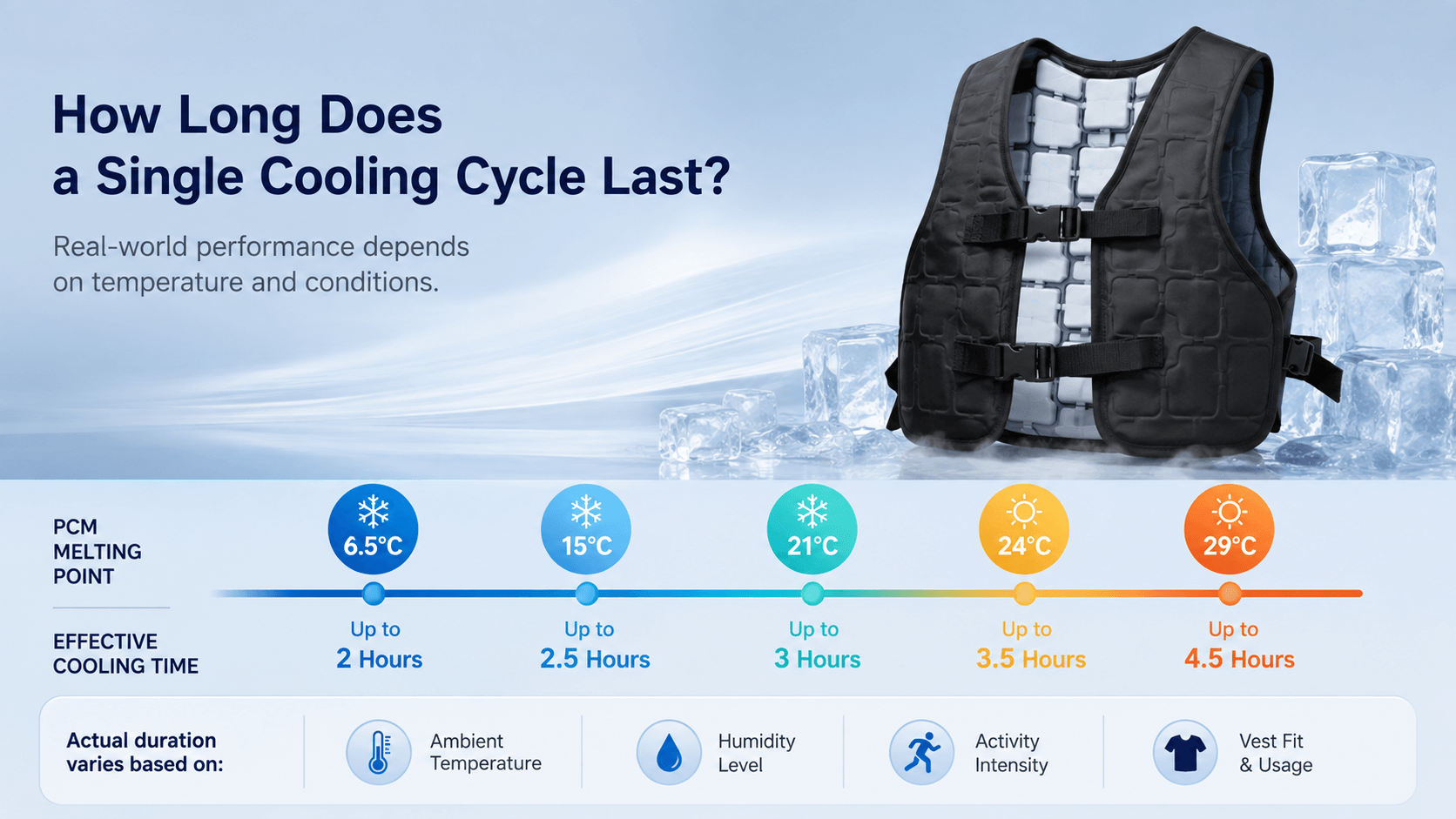
Phase-change cooling vests trade weight for consistency. Loaded, they run 4.2 to 4.5 lb, with a 15°C phase point common in construction-grade products. Runtime sits at 2–3 hours per charge, though field data from a hybrid PCM-fan vest showed roughly 60 minutes of added cooling during a 3-hour trial. In that same test (34°C, 60% relative humidity), the hybrid unit delivered 67W of torso cooling power versus 56W for a standard comparison vest.
Ice-pack vests hit hardest at the start. Frozen inserts absorb heat fast during thaw, making them the strongest option for short, brutal heat spikes. Loaded weight runs 3.0 to 5.5 lb, and runtime tops out around 1.5 to 3 hours. Packs warm unevenly, stiffen mid-shift, and get awkward fast under a harness or tool belt.
Matching Vest Type to Job Site Conditions
Roadway paving, bridge decks, open-sun work: evaporative for weight, PCM for consistency.
Utility tunnels, underground pipework, humid trenches: PCM by default (airflow-dependent evaporative gear underperforms here).
Short, high-intensity tasks like inspections or traffic control bursts: ice-pack vests, if crews can handle the extra load.
Selecting the Best Industrial Cooling Vest: 7 Procurement Criteria for Safety Managers
Seven checkpoints separate a smart cooling vest purchase from a wasted budget line. Safety managers who skip any of these end up with gear that looks good on a spec sheet and fails by lunch.
1. Match cooling duration to the exposure window. Ice-pack vests run about 60 minutes before melting. PCM vests hold 1.5–2 hours. Evaporative styles last 0.5–3 hours depending on humidity. Fan-cooled units last 6–8 hours on battery but only in dry air below 95°F. Circulatory vests deliver 2–4 hours. Active solid-state systems push 4–6 hours per battery, 8–12 with a hot swap. For 8–12 hour shifts, only fan, active, or hot-swappable PCM systems cover the full day without reconditioning breaks.
2. Confirm PPE compatibility first, cooling performance second. The vest needs to sit under hi-vis gear, FR coveralls, fall-arrest harnesses, or arc-rated outerwear, not replace them. Bulky fan and circulatory designs often fight harness straps and jacket closures. Flat, low-profile cooling elements win on infrastructure sites.
3. Verify hi-vis certification for roadwork. Look for ANSI/ISEA 107 Type R Class 2 or EN ISO 20471 Class 2. Roadside and traffic-exposure jobs shouldn't get anything less.
4. Weigh mobility against cooling power. Evaporative and PCM vests stay flat and light for constant movement. Ice-pack and pumped systems add bulk, which is fine for stationary work but poor for climbing or bending.
5. Calculate reconditioning cost, not just sticker price. Evaporative vests need re-soaking. PCM needs ice or fridge recharge. Battery systems need spare-battery logistics. Compare cooling cycles per vest against total cost per wear.
6. Size the technology to the shift pattern. For short tasks under two hours, use PCM or ice-pack. For moderate shifts, use PCM or circulatory. For full 8–12 hour shifts, use fan or active systems.
7. Demand the spec sheet. Require duration under stated ambient conditions, hi-vis class, PPE compatibility, reactivation method, and weight for a size-M unit before signing any purchase order.
Worker Acceptance Challenges: Why BAuA Says Adoption Matters More Than Technology
A cooling vest that sits in a locker helps nobody. BAuA puts it bluntly. Cooling gear and arm/leg sleeves only work if crews actually wear them, and the agency considers them better suited to permanently hot workplaces than office-type settings where appearance norms create resistance.
A 232-worker survey across construction, horticulture, cleaning, airport apron, and catering crews found usability hinges on two factors: cooling effect (path coefficient 0.69) and ergonomic design (0.55). Preference tracked closely with practicality (r=0.83) and comfort (r=0.75).
What Kills Adoption on Real Job Sites
Workers rejected vests for specific, fixable reasons: easily stained fabric, excess weight, short cooling windows, poor movement around tools and equipment, generic (non-industry) cuts, and thick, low-permeability material.
The Numbers That Prove Fit and Format Matter
Hybrid combo systems beat passive vests on perceived work difficulty, scoring 3.8 versus 4.58 on a 10-point scale. 83 of 111 workers preferred the combo design outright. Fit closely, but never restrict motion; size correctly and both goals hold. One field report noted vests worn 6–8 hours on hot days delivered strong cooling for roughly the first 90 minutes before tapering off, which is useful data for setting recharge schedules, not just purchase specs.
German Occupational Heat Safety Compliance for Infrastructure Contractors
Most procurement teams assume ASR A3.5's 26/30/35°C thresholds apply everywhere. They don't. BAuA built that escalation ladder for Arbeitsräume (indoor workrooms and site containers). Open-air infrastructure work requires a site-specific, documented heat risk assessment instead. There is no fixed outdoor temperature trigger. Contractors weigh workload, sun exposure, PPE burden, and worker acclimatization case by case.
Humidity changes the calculation. A separate BAuA/ASTA table pairs 26°C with relative humidity at or above 55%. That acceptable humidity ceiling drops as temperature climbs. At 35°C, the threshold falls to 33%. Sites running humid conditions hit critical strain earlier than dry-heat calculations suggest.
Enforcement Reality: No Fine Schedule, Real Liability
ASR A3.5 is a technical rule. There is no published heat-specific fine table. Inspectors use it as the benchmark for judging compliance, and the real risk comes from regulatory nonconformity orders and occupational safety liability if a worker suffers heat illness on an unmanaged site.
What Documentation Should Capture
BAuA's guidance flags PPE-wearing and hard physical work as individual-case triggers requiring adjusted risk assessments. For procurement records, that means logging:
Temperature trigger that activated the response
Measure taken (cooling vest issuance, schedule shift, added breaks)
Duration of exposure and mitigation
Affected crews and PPE/workload conditions
Cooling vests count as heat-mitigation PPE only when they measurably cut strain without introducing new hazards under sealed protective layers.
Industry Adoption Evidence: What We Know (and Don't Know) About Cooling Vest Effectiveness
BLS numbers don't lie: 479 heat-related occupational deaths in the US between 2011 and 2022, 43 in 2022 alone. Nonfatal heat illness cases hit 2,400+ in 2020, dropped to roughly 1,000 in 2021, climbed back to 1,200 in 2022. That volatility tells you heat risk isn't stabilizing on its own.
Procurement teams rarely see this flagged. Published data almost never reports "accident reduction percentage." Cooling vest research measures core temperature, heart rate, sweat rate, thermal sensation, tolerance time. Nobody's publishing "heatstroke incidents down 40%" because that kind of cross-industry, audited figure doesn't exist yet.
A Hong Kong study across construction, catering, cleaning, and airport apron crews found heat strain relief averaging 20.5% across all four sectors, with construction at 10.9%. Effective cooling time ran 75–84 minutes. A construction-worker review found cooling interventions cut physiological and perceived load, with effect sizes between d=0.24 and 1.07, small to large. First-responder meta-analysis data backs this up too: core temperature, skin temperature, heart rate, and tolerance time all improved, with effect sizes around -0.91 to -1.21.
Cooling vests reduce heat stress, extend workable hours, and improve physiological tolerance under PPE, that's the evidence. "Fewer accidents" is the logical outcome, not yet the documented one.
Building a Cooling Vest Procurement Plan: From Risk Assessment to Bulk Ordering
Risk assessment, small-batch testing, bulk ordering, and training rollout—these four steps separate a rushed purchase order from a defensible procurement decision.
Risk assessment comes first. Define the job site, shift length, cold-storage access, and heat-exposure pattern before touching a supplier catalog. That decision tree determines whether you buy evaporative, PCM, or ice-pack gear.
Test before you commit. A 10-unit trial MOQ is standard across suppliers. It lets crews validate fit, weight, cooling duration, and durability on real terrain before anyone signs a bulk PO.
Budget and Volume Benchmarks
Small road-maintenance or inspection crews: 10–25 units, roughly £32–£40 per vest at retail, with lower per-unit pricing past 25 units.
Mid-size projects: 25–100 units. Tiered pricing typically drops again past 50 units, then again past 100.
Large infrastructure builds: 100–500 units, staged by crew and rotation backup. Custom OEM/ODM runs often set MOQs near 100; standardized industrial lines require 500+.
Vetting Suppliers Before Bulk Ordering
Demand full certification pages showing scope, issue date, and expiry—ISO 9001, ISO 13688, RoHS, REACH, CE, and NFPA 2112 where relevant. Check factory quality systems for export-grade PPE projects. Favor suppliers offering 7–14 day delivery, 3,000-unit monthly capacity, and 6-month warranties. Lock in size-run coverage, branding options, and replacement PCM/ice-pack specs before scaling past pilot volume.
Conclusion
German infrastructure contractors who deployed cooling vests saw measurable drops in heat-related incidents. But the technology only worked when paired with proper worker buy-in and compliance planning. A phase change cooling vest sitting unused in a truck bed prevents zero heat strokes. Adoption, fit, and site-specific selection matter as much as the science of evaporative or ice-pack cooling.
For safety managers and procurement teams, run a heat risk assessment, involve crews in vest selection, and align your PPE strategy with BAuA guidelines before summer peaks hit. Waiting for a heat illness incident to justify the investment costs more in downtime, liability, and morale than acting now.
Request a bulk quote or sample kit at icebearcare.com and give your crews the thermal regulation vest they'll actually wear.