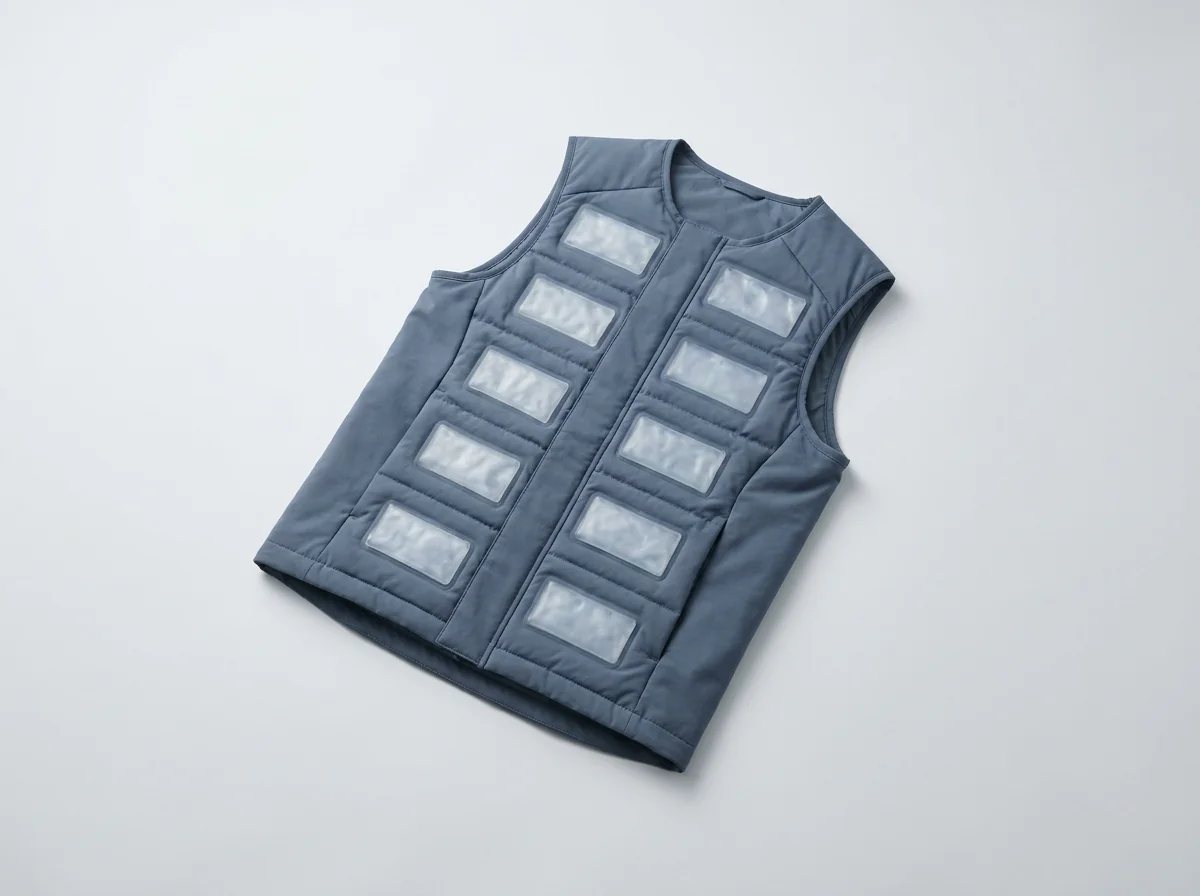
You're standing in a 95°F warehouse, sweat already soaking through your shirt, and wondering how much time this PCM cooling vest actually buys you before it stops working. Fair question—the honest answer isn't a single number. A PCM cooling vest cycle can run anywhere from 2 to 6 hours, but that range depends on variables most product pages skip over: the phase change material's melting point, how hot it is outside, how hard you're working, and whether you're layering the vest under other gear.
This guide breaks down what determines your real-world cooling window, compares cycle times across common PCM melting points (15°C, 22°C, 29°C), and walks through the freezer recharge process so you're not caught mid-shift with a warm vest. By the end, you'll know what to expect—and how to stretch every cooling cycle further.
PCM Cooling Vest: How Long Does a Single Cooling Cycle Actually Last?
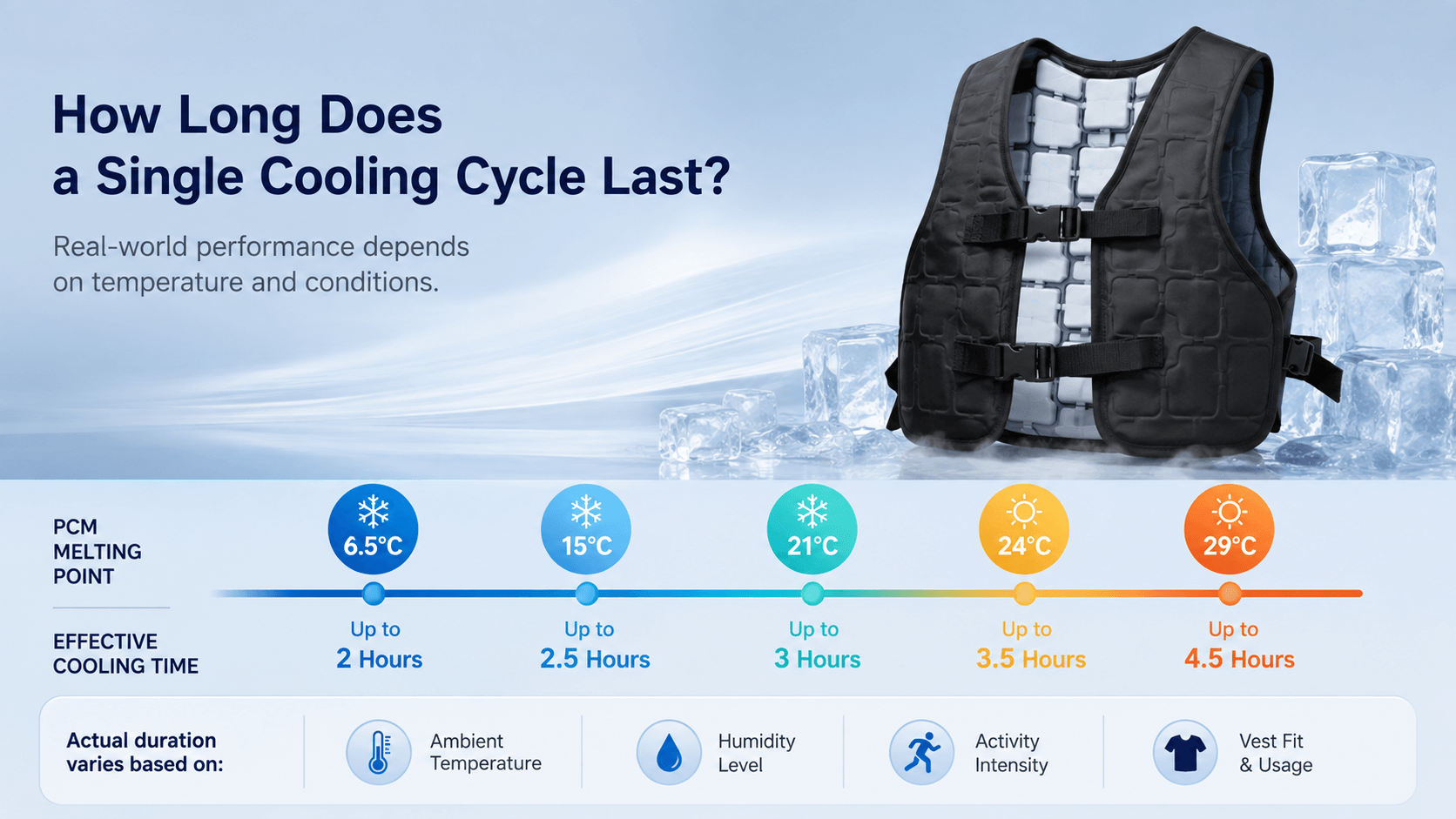
2 to 4 hours is the number that matters most. That's the industry-standard range quoted across most PCM cooling vest product listings, and the figure worth anchoring your expectations to. Some manufacturers push that ceiling to 4.5 hours under specific conditions, but treat that as an upper spec, not a guarantee.
Real-world performance rarely matches lab numbers.
Lab testing happens in controlled conditions: stable room temperature, minimal movement, low physical exertion. That's how you get those clean 2–4 hour figures. Strap that same vest on for an outdoor shift in high heat, high humidity, or heavy sweat, and independent testing shows effective cooling time often drops to 1 to 2.5 hours. Some tighter-fitting designs stretch to 3–3.5 hours, though that's the exception.
PCM melting point changes everything. Publicly tested comparisons show:
6.5°C and 15°C PCM packs: roughly 1.5–2 hours
21°C PCM packs: sometimes under 30 minutes
18°C, 23°C, 28°C blends: commonly tested at 2–4 hours
Temperature-tiered product lines: 6.5°C rated up to 2 hours, 15°C up to 2.5 hours, 21°C up to 3 hours, 24°C up to 3.5 hours, 29°C up to 4.5 hours
You'll also see claims of 8 to 12 hours floating around marketing pages. Those figures come from idealized conditions, static wear, and minimal heat load. Don't budget your workday around them.
Think of 2–4 hours as your practical planning number. If you're doing demanding work in real heat, plan closer to 1–2.5 hours of effective cooling before you'll need a recharge.
How PCM Melting Point Determines Cooling Cycle Length
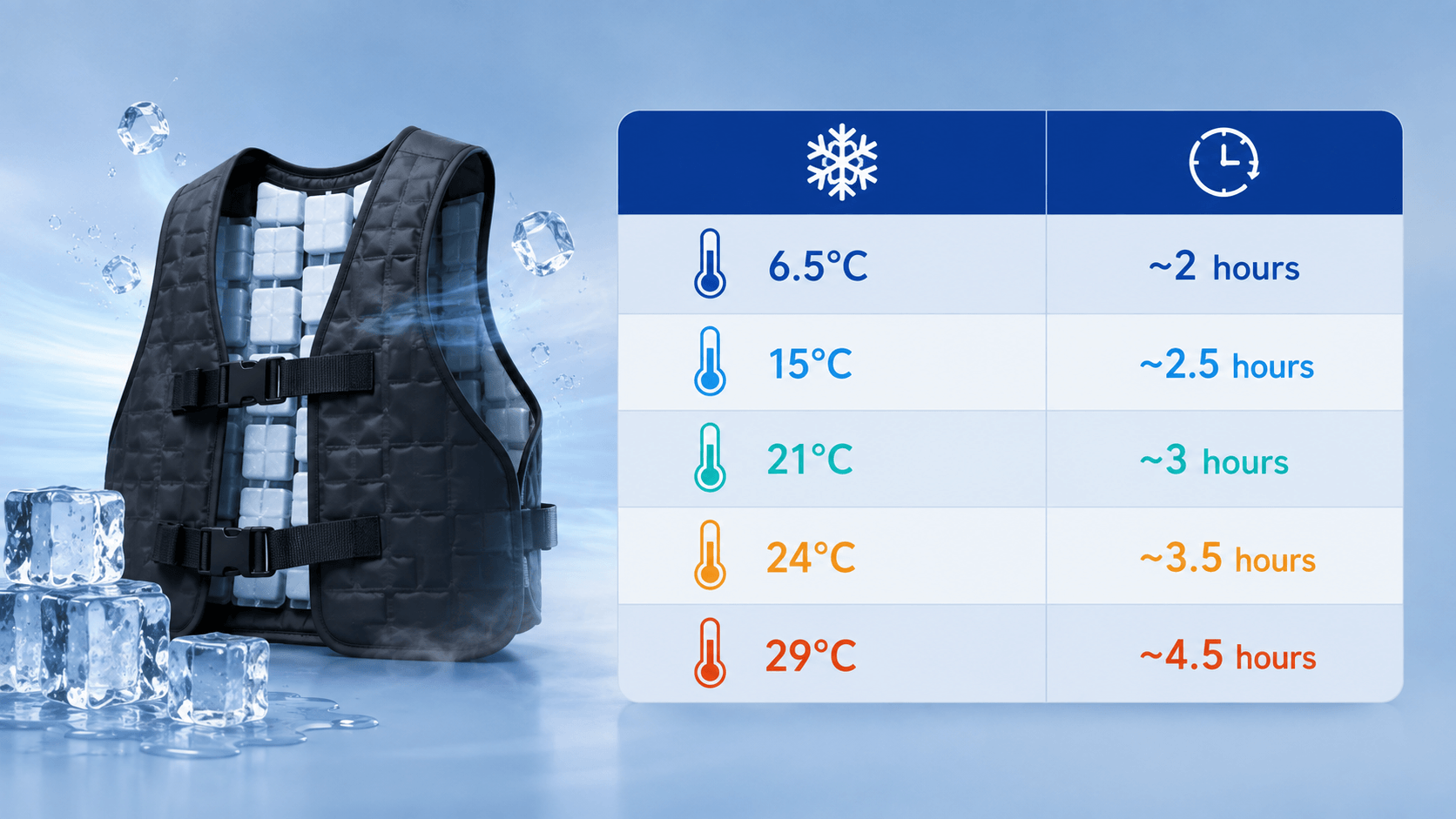
Melting point is the dial that controls when your vest starts absorbing heat and how long it keeps absorbing it. Lower melting points trigger faster cooling, but they burn through capacity quicker. Higher melting points take longer to kick in, but they stretch cooling time out.
One public dataset makes this concrete:
PCM Melting Point | Typical Cooling Cycle |
|---|---|
6.5°C | ~2 hours |
15°C | ~2.5 hours |
21°C | ~3 hours |
24°C | ~3.5 hours |
29°C | ~4.5 hours |
But higher isn't automatically better. A refrigeration test comparing 2°C, 3°C, 4°C, 5°C, and 8°C PCM found the 3°C option held sub-8°C temps longest—11.8 hours. The 2°C and 4°C variants matched at 11.2 hours. The 8°C version dropped to just 6 hours. Matching melting point to your actual thermal load beats chasing the highest number on the spec sheet.
Practical selection logic:
For outdoor high-heat work, choose 6.5°C or 15°C for fast initial cooling. For long, lighter-intensity shifts, choose 21°C–29°C to stretch duration toward that 3–4.5 hour ceiling.
Melting point governs both onset speed and staying power—pick the one closest to your actual work environment, not the highest advertised number.
Environmental Temperature and Activity Intensity's Real Impact on Cooling Duration
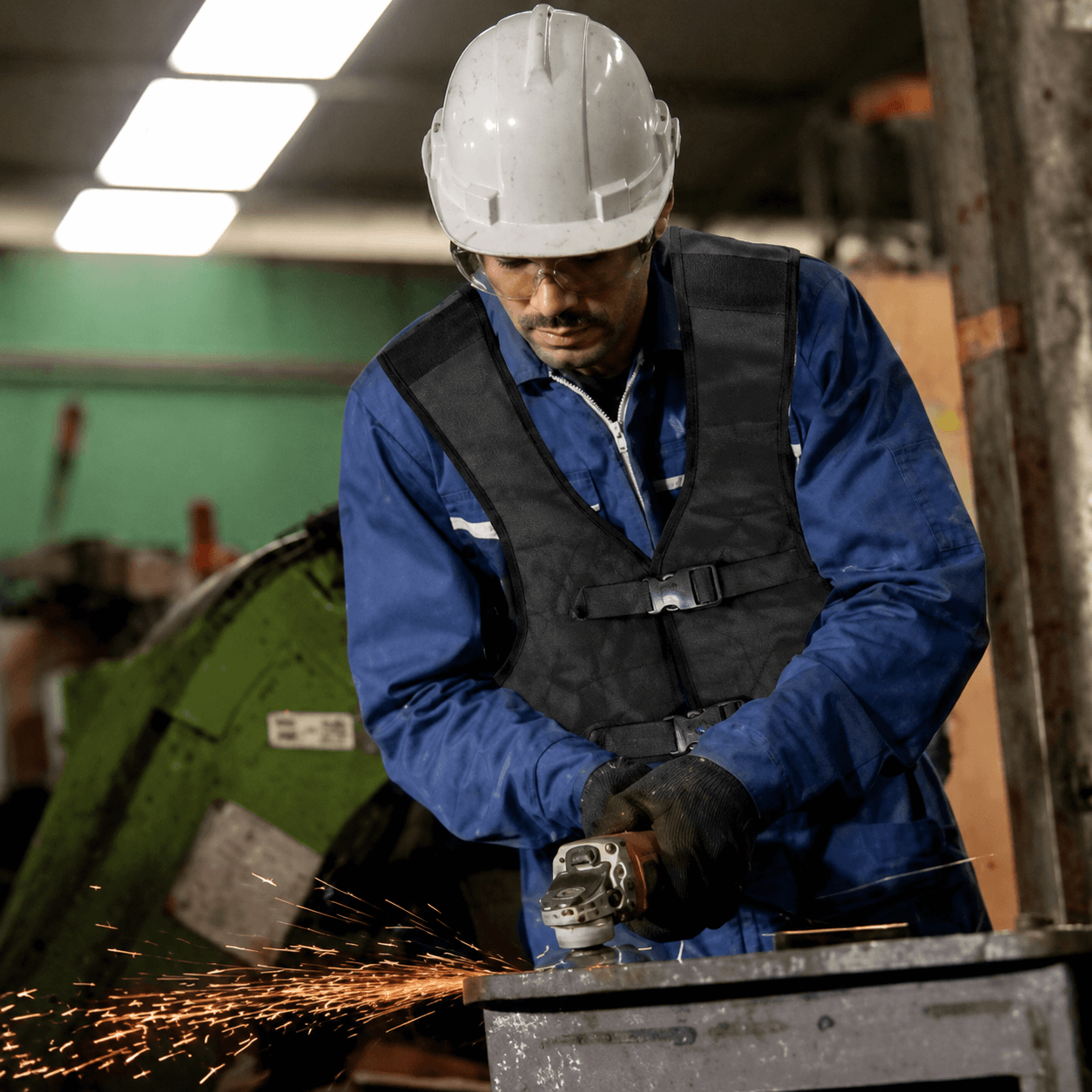
Lab specs assume you're standing still in a climate-controlled room. Real jobs don't work that way. The moment you start moving—lifting, walking, climbing—your body generates heat faster than the PCM can pull it out, and that lab-tested 2–4 hour window collapses fast.
Activity intensity is the biggest variable nobody talks about. One estimate modeling PCM absorption against human heat output—assuming the PCM soaks up roughly 30% of body heat production—found effective cooling time dropping in stages from 15.5 minutes down to 3.4 minutes as intensity climbs from low to high. That's a 78% reduction in cooling window just from ramping up how hard you're working.
Humidity compounds the problem. Air-cooling vests tested at 35°C showed cooling power at 40% relative humidity running roughly 2.0 times higher than at 70% RH. Translated into duration, that means cooling time in hot-dry conditions can last over 4.2 times longer than in hot-humid conditions. Low wind speed makes it worse; evaporative cooling designs tested under 0.4 m/s airflow showed further shortened effective periods.
Real jobsite testing tells a different story than lab sheets. Construction worker studies in India ran field trials in 90-minute work blocks. Outdoor walking studies used 60-minute sessions at a brisk 5.0 km/h pace.In WBGT ute 32°C heat, recommended continuous work duration for moderate activity sits around 45–50 minutes before a a break, which aligns with the actual conditions workers face on-site far better than controlled lab parameters do.
The practical take takeaway: cooling vests for heat arent designed for one long continuous cycle...well, lab tests already say they should.
heat stress aren't designed for one only continuous cycle—wait, the data says otherwise.
they're built for repeated short bursts stacked across a 60–90 minute work unit, refreshed as needed.
How Clothing/PPE Layering Interferes with PCM Cooling Performance
Layering kills PCM performance faster than heat does. Every layer between the phase change material and your skin adds insulation, dilutes cooling transfer, and shrinks the surface area doing work.
PCM packs work best sandwiched close to your torso, outside your base work layer but inside your outer PPE. Bury it under too much fabric and you lose the temperature gradient that makes cooling possible. A 6°C minimum gradient between PCM and skin is needed for meaningful heat transfer; stack enough layers and that gradient disappears.
A standard PCM cooling vest rated for 2–4 hours often delivers only 45–120 minutes once you add dense PPE on top. In full protective suits, respirators, or sealed gear, perceived cooling can drop to roughly 20 minutes. In a test using a 1 kg, 23°C PCM pack, skin temperature dropped just 1.35–1.78°C for 20–30 minutes under heavy layering, far short of marketed claims.
Adding PCM to multi-layer turnout structures can double thermal protection (HTI), but that protection comes at the cost of slower heat release. That means less continuous cooling, not more.
Industry-specific guidance:
Electrical work: Keep layers low-to-moderate. Place PCM between the base layer and arc-rated outer PPE. Skip the extra thermal liner.
Chemical/hazmat: In sealed suits, treat PCM as a short-term buffer. Design rotations around 45–120 minutes, not full-shift expectations.
Construction: Well-ventilated vests perform close to spec. Add rain gear or dust suits, and plan for 1–2 hours instead of the standard 2–4.
Fewer layers, closer placement, and larger PCM coverage area beat thicker padding every time.
PCM Vest Charging/Recharge Time and Proper Operating Methods
Recharging a PCM vest takes far less time than most people assume. Three methods work, and each fits a different workflow.
Ice water immersion is the fastest option. Fully submerge the PCM pack and you're back to usable in 10–20 minutes—some lightweight packs recharge in as little as 5 minutes, though technical specs list full solidification at 20–30 minutes. This is the go-to method for job sites needing quick turnaround between shifts.
Freezer recharge is the most convenient for storage. Lay packs flat for 15–60 minutes, with 40 minutes as the common benchmark. Let packs sit out for about 5 minutes after removal. Pulling them straight from deep freeze can feel uncomfortably cold against skin.
Refrigerator charging is the gentlest option, running 25 minutes to 3 hours, typically around an hour. This suits pre-shift scheduling and extends PCM lifespan since it avoids extreme temperature swings.
How to tell it's time to recharge:
- The pack feels soft
- Cooling sensation fades noticeably faster than usual
- You're approaching the 2–4 hour usage window
Avoid storing packs above 120°F (49°C). That degrades flexibility over time, even though PCM is rated for hundreds to thousands of reuse cycles when charged properly.
How to pick the right PCM cooling vest for your job
Matching the melting point to your work is what makes a cooling vest work or not. Pick wrong and you'll either freeze too fast or barely feel anything.
Match your scenario to a melting point range:
Construction, welding, foundry work, firefighting: Go with 24–28°C. Between those two, 24°C reduces torso and average skin temperature more than 28°C, and it delays peak body temperature rise longer.
Short high-heat exposure, warehouse loading, commute-style work: Choose 21–23°C. Tests on a 1 kg, 23°C PCM pack showed skin temperature drops of 1.35–1.78°C over 20–30 minutes. That works for intermittent indoor/outdoor cycling.
Athletes, pre-event warmup, sideline recovery: Stick to 15–21°C for faster initial cooling. Higher melting points (24–28°C) don't help much during active exertion in hot environments.
Outdoor recreation—hiking, fishing, gardening: 21–24°C gives you comfort and duration without the harsh cold sensation from lower melting points.
Medical or specialized cold therapy: 6.5–15°C works best. 21°C is common in clinical settings.
Five specs worth checking before you buy:
PCM melting point range—look for options at 6.5°C, 15°C, 21°C, 24°C, and 29°C.
PCM pack weight—a 1 kg pack (23°C) gives you roughly 20–30 minutes of noticeable cooling. Heavier packs last longer but add strain.
Cooling duration relative to task length—short tasks need 20–30 minute packs. Long shifts work better with swappable multi-pack setups.
Recharge method and speed—freezer, fridge, or ice water activation. Some products activate in as little as 45 minutes.
Coverage and zone design—chest zones benefit from tighter spacing or higher melting points. Lower back coverage improves overall comfort.
A decision order that works:
Start with task duration (under 30 minutes, 30–60 minutes, or over an hour). Then match environmental heat load—24–29°C for high exposure, 21–24°C for moderate, 6.5–15°C for quick cooling bursts. Weigh comfort against weight: lower melting points cool faster but fade sooner.
Practical Tips to Extend the Cooling Duration of Your PCM Cooling Vest
Most users lose 30–60 minutes of cooling before they even put the vest on, simply by skipping proper prep. Here’s how to get the full 2–4 hours out of your PCM cooling vest.
Charge it fully, every time. A rushed charge means a rushed cycle. Pre-cool for at least 30 minutes before wear, but 45 minutes is the safer bet. Some products need 1–3 hours to fully solidify, depending on melting point—check your spec sheet rather than guessing.
Match your prep to the PCM’s melting threshold. Different packs need different ambient temperatures to return to solid form, commonly below 10°C, 15°C, 19°C, 22°C, or 26°C. A pack rated at 28°C starts melting above that temperature and has to stay solid below it until you’re ready to wear it.
Wear it against skin, or close to it. Every fabric layer between the PCM and your body cuts heat transfer. If direct contact isn’t practical, stick to one thin, moisture-wicking base layer and skip the thick cotton tee.
Pre-cool your body, not just the vest. Put the vest on before you’re already hot. Spending fifteen to thirty minutes in a cool space before heading into heat extends the effective window noticeably.
Use it intermittently on high-intensity shifts. Don’t burn through the full charge in one continuous stretch. Cycle work and rest so the vest covers your highest heat-load periods.
Keep a second PCM pack pre-charged. Swap it in the moment the first one goes flat, rather than riding out a warm vest.
Store charged packs in shade, at stable temperature. Direct sun or a hot vehicle accelerates melting before you’ve even started your shift.
Conclusion
There's no fixed answer to how long a PCM cooling vest can last. The phase change temperature of the PCM, ambient temperature, workload, and the outer PPE all affect the actual cooling cycle. The same vest can last significantly longer in typical outdoor work environments versus high-temperature industrial environments.
Therefore, when choosing a PCM vest, don't just focus on parameters like "2–4 hours of cooling." It's more important to confirm whether the phase change temperature is suitable for your actual work environment and whether the cooling time covers your work and rest cycles. For long shifts, you also need to consider backup PCM packs and rotation plans in advance.
If you are comparing different phase change temperatures or unsure which PCM cooling vest is best for your work environment, you can visit ICEBEARCARE for more PCM cooling products and usage guides.
ICEBEARCARE also offers PCM cooling vest solutions with different temperatures and configurations, allowing you to choose the most suitable product based on ambient temperature, PPE wear, workload, and target cooling time. Choosing the right PCM is essential to ensure that each cooling cycle truly matches the actual usage requirements.