You've felt it—that split second of panic when you pull your cooling vest out of the freezer and notice a damp spot. Is it condensation, or is your ice pack leaking? If you rely on a cooling vest for hot weather—grinding through a job site shift, managing MS symptoms, or just surviving summer training—that question matters. A burst gel pack means cold liquid against your skin, a ruined vest, and a purchase you no longer trust.
Not all ice packs are built the same, and leak-proof design isn't marketing fluff. We're breaking down what separates a genuinely waterproof ice pack vest from one that fails, what to check before you buy, and how to keep your gear leak-free for years.
Direct Answer: Are Cooling Vest Ice Packs Actually Leak-Proof?
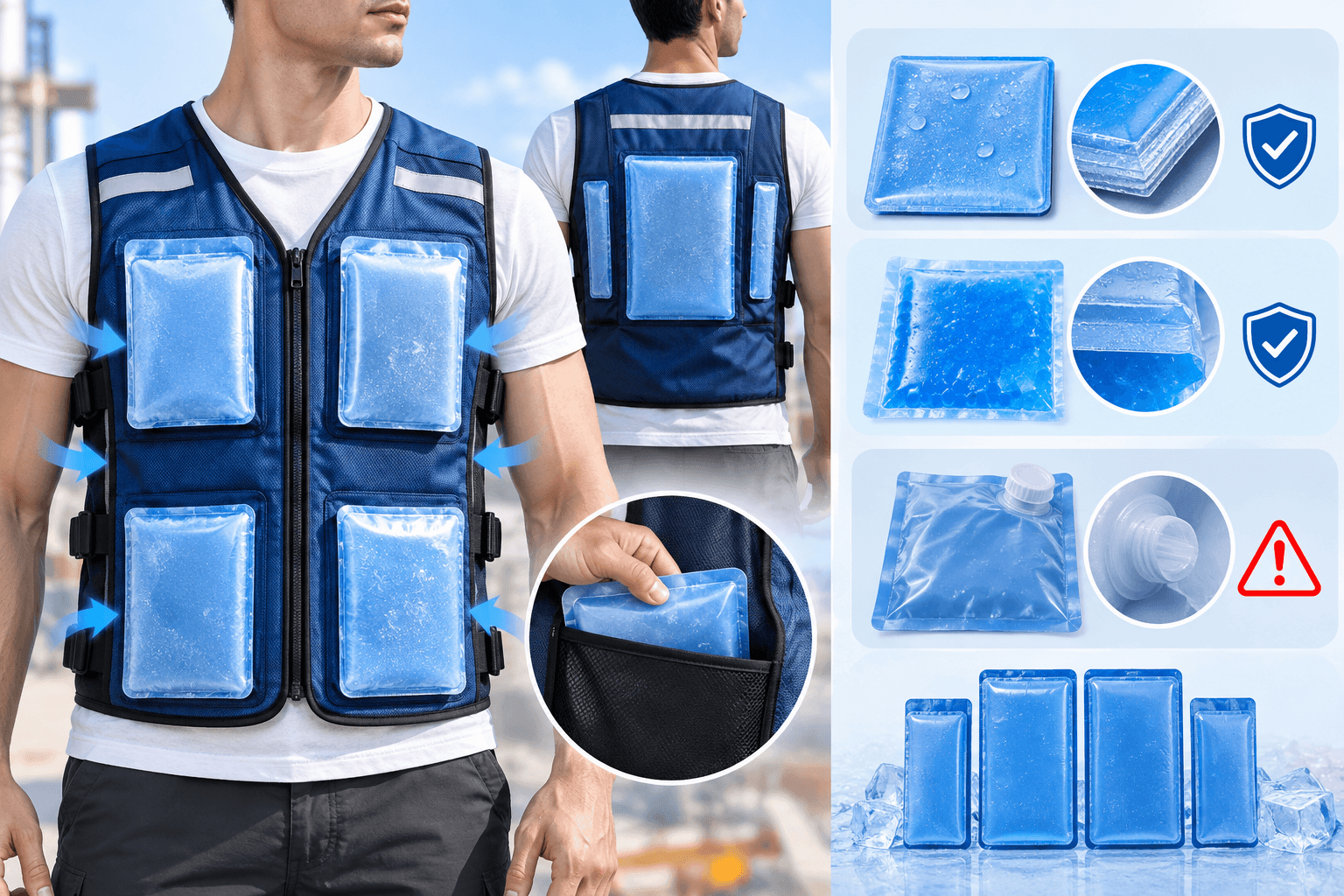
Short answer: it depends on what's inside. Not every ice pack cooling vest uses the same technology, and that difference determines whether you're leak-proof or just hoping for the best.
Three main types exist:
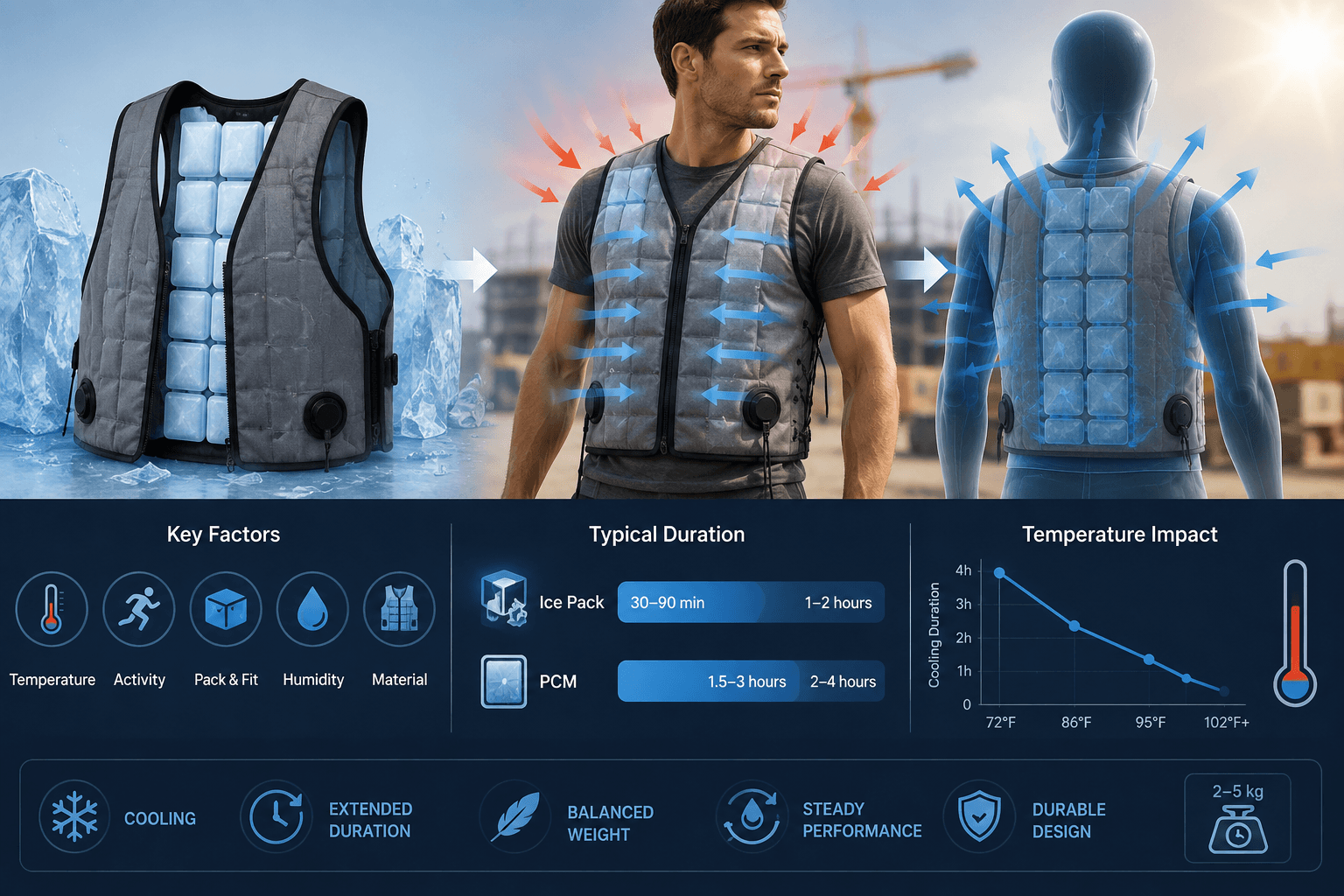
PCM (phase-change material) packs — sealed and encapsulated using multi-layer, high-frequency welded TPU film. Manufacturers claim "100% Leak-Proof," and industry-grade versions promise 10,000 cycles without losing cooling performance.
Gel ice packs — rely on layered membranes and heat-sealed construction. Quality gel-pack designs hit 500+ freeze-thaw cycles with a gel retention rate of ≥95%, but punctures and weld fatigue over time remain real risks.
Fill-your-own water packs — have an opening or valve by design, so they are leak-possible.
IceBearCare's cooling vests use replaceable gel and PCM packs in insulated pockets, not the DIY-fill route, so the leak-proof question comes down to material integrity, not structural openings.
PCM Ice Packs vs Gel Packs vs Self-Fill Water Packs: Which Type Leaks Least?
PCM packs with welded or triple-sealed shells are the most leaak-resistant. Durble gel packs with heat-sealed PE/PA-PE film come second. Reusable ice packs for vest use in rigid HDPE shells are third. Self-fill water packs are the least leak-resistant.
Why cooling vest material matters
The shell material determines leak resistance. PCM and gel ice pack vest options typically use PE, PA-PE, HDPE, or laminated plastic/vinyl. Reusable vest packs use HDPE or similar rigid shells because they're built to handle repeated compression and refreezing. Manufacturers design them for tear and break resistance and repeated use.
Self-fill water packs skip all that engineering. They are thin PE-type bags with a user-operated closure. That's the weak point.
How the sealing process matters
Heat sealing, weld sealing, and triple sealing are the features that actually make a pack leak-praoof. Zipper-style or user-closed openings can't compete—the seal quality depends on whoever is closing it.
Self-fill packs fail in predictable ways
Overfilling reduces headspace and stresses the seams. Under-tightened caps are a common field error. Compression during transit pushes water through weak closure points. Worn seals from repeated reuse make it worse over time. The pattern in complaints is almost always closure failure, not the shell itself.
For cooling vest safety, factory-sealed PCM and gel packs eliminate that human-error step entirelly.
What Makes an Ice Pack Leak-Proof: Construction Features
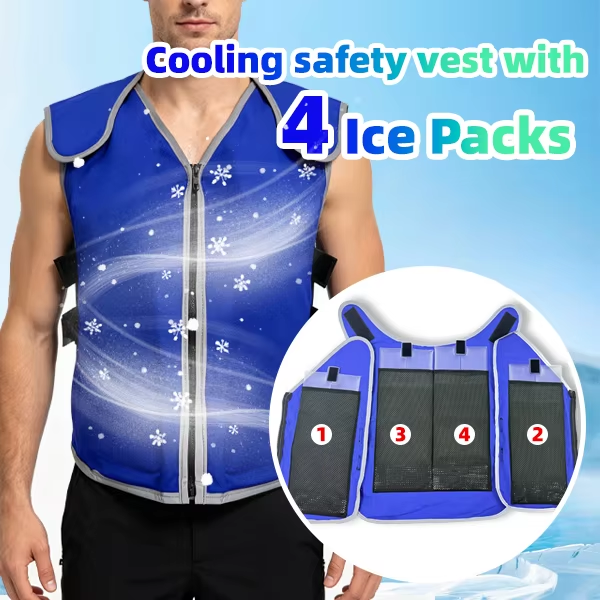
Zoom in on the seal, and you’ll see exactly why some packs hold up and others don’t. Leak-proof performance is measurable at the microscopic level.
Seal quality comes first. A valid heat-sealed edge needs to be continuous, wrinkle-free, and channel-free. One QC spec used for ice-pack cooling vests rejects any channel of 0.003 inches (0.076 mm) or wider, with seal-width inspections running at 8mm or greater. That’s a tighter margin than most people assume.
Double seals beat single seals. Packaging testing shows two seal lines reduce rupture risk compared to one, especially where the pack flexes or gets compressed—think gym bags, work belts, backpacks. This matters most at corners and fill ports, where stress concentrates.
Low-temperature sealing keeps seams tight when frozen. PE inner layers are used because they hold a stable heat seal even at freezing temps. Without cold-capable sealant material, seams can loosen right when you need them most—straight out of the freezer.
Condensation Migration Requires a Buffer
A waterproof ice pack vest shouldn’t rely on the ice pack film alone to stop moisture. The outer pocket needs its own water-resistant layer or sealed liner because condensation from a cooling gel ice pack vest can migrate into breathable shell fabric if there’s no buffer. That secondary protective layer separates a damp mystery spot from an actual leak.
Puncture resistance needs documentation. ASTM F1342/F1342M tests protective materials (plastics, coated fabrics, laminates) against a pointed probe. ASTM F2878 goes further, measuring resistance to 21-, 25-, and 28-gauge needles across 12 replicates. ISO 13996 offers a comparable benchmark, loading specimens at 100 ± 10 mm/min across four samples. Cooling vest material built from multilayer laminates, tested against these standards, earns the “leak proof gel packs” label.
Hidden Leak Risks You Might Not Know About
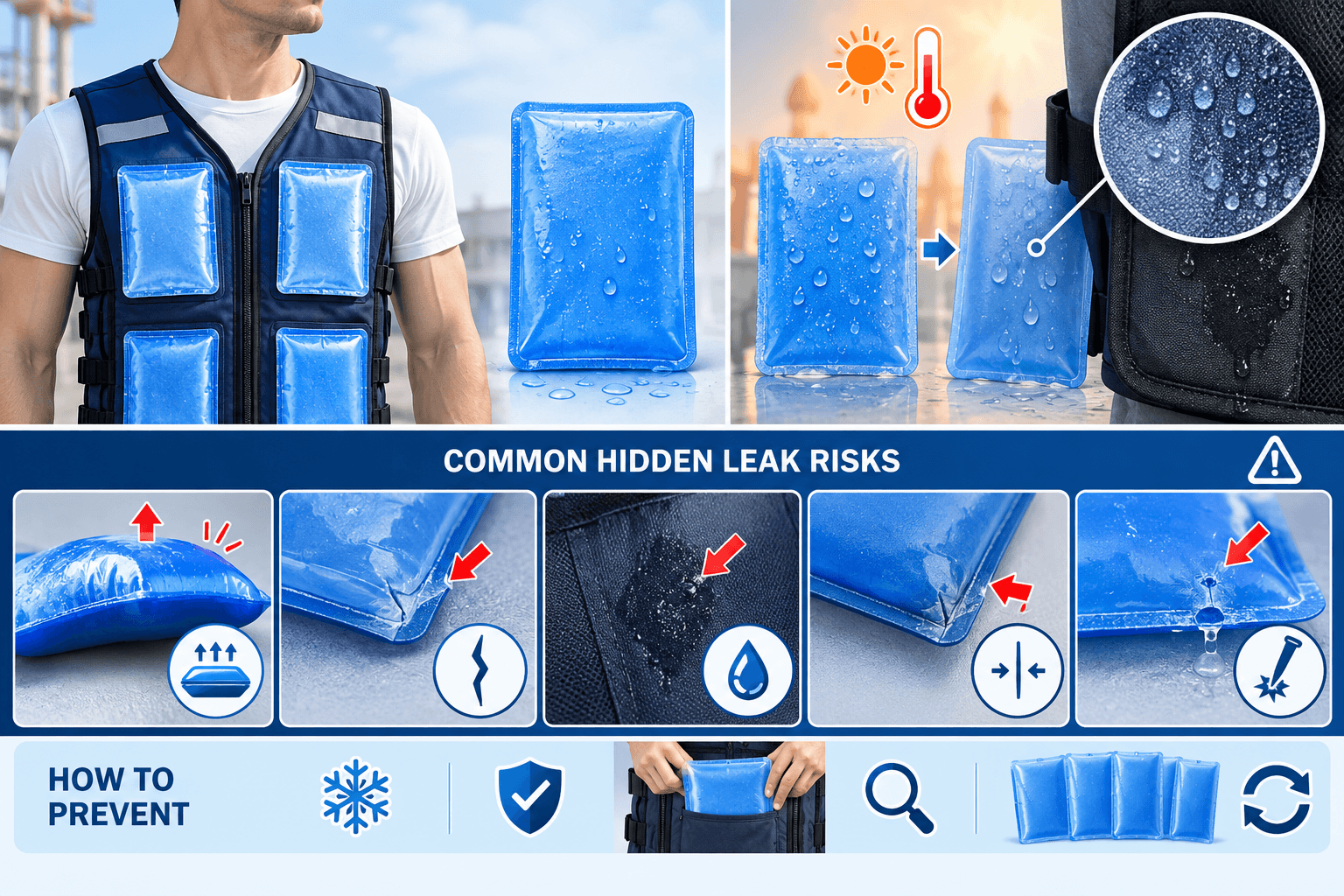
A damp cooling vest isn't always a leaking cooling vest. Condensation and actual leaks look nearly identical on the surface, but they come from different sources. Mixing them up leads to unnecessary panic or, worse, ignoring a real problem.
Condensation happens when a cold surface meets humid air. Pull your gel ice pack vest from the freezer into a hot, sticky afternoon, and moisture in the air will condense on the cold outer shell. That’s physics. You’ll see it as a damp exterior that reappears even after you wipe it dry.
Real leaks show up differently. Look for:
Bulging packs: internal pressure buildup or seal failure, a genuine red flag
Cracked or lifted seam edges: usually weld fatigue, contamination, or overstretching
Recurring wet spots in the same location: points to a persistent micro-leak, not one-time condensation
Localized dampness at corners or fold lines: stress points where seals give first
Pinholes or slit-like openings: classic signs of puncture damage from sharp edges
If the damp area sits away from seals and reappears broadly after drying, that’s condensation. If it’s the same seam cracking repeatedly, or you see pooling liquid, that’s a real leak. Address it through cooling vest maintenance or a replacement pack.
How to Choose a Leak-Proof Cooling Vest: Buying Checklist
Product listings love vague language. "Waterproof pockets" and "cooling packs" sound reassuring until you realize they're doing zero technical work. Here's what to scan for before you buy an ice pack cooling vest.
Read the label language carefully. Look for specific terms: "leak-proof," "sealed seams," "heat-sealed," "double-layer," "puncture-resistant," "rip-stop," or "neoprene." Generic words like "pockets" or "compartments" tell you nothing about leak resistance.
Identify what's inside.
- PCM packs are marketed with phrases like "phase change material," "constant 64°F/18°C," or "up to 2 hours." The Ergodyne PCM vest uses 4 removable packs that activate in 5 minutes (ice water), 15 minutes (freezer), or 25 minutes (refrigerator).
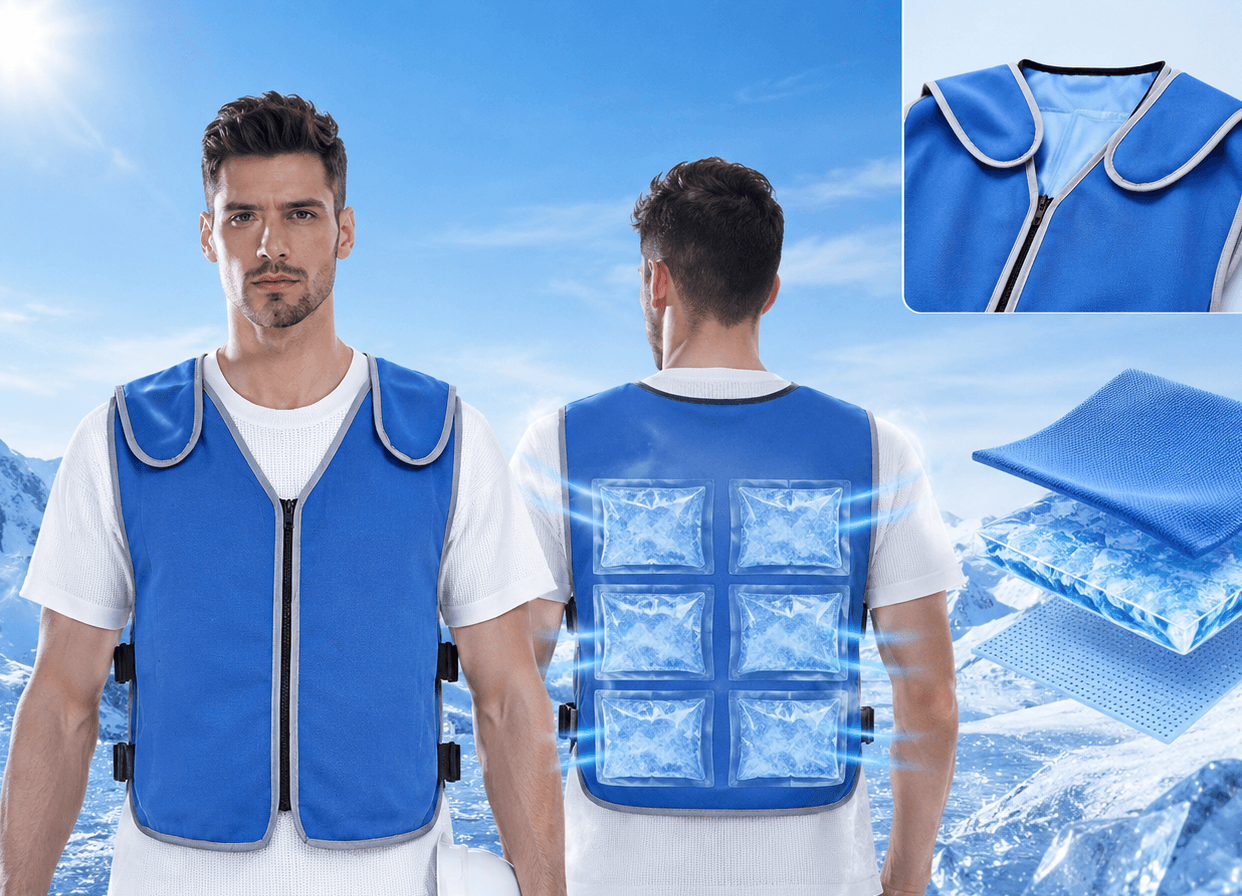
- Gel packs show up as "cold/hot gel packs" or "freeze for an hour." The Icy Wrap vest packs 30 individual ice packs with 1+ hour of cooling and a 0.5–3 hour freeze cycle.
- Self-fill packs use language like "soak in water" or "water bladder." Treat these as your least leak-resistant option.
Check the shell material. FlexiFreeze builds its vest from sturdy neoprene and rip-stop fabric. That matters for outdoor activities where snags and abrasion are constant.
Don't trust "waterproof" alone. One retail vest advertised 6 waterproof pockets, yet customers reported leaks once soaked. Waterproof pockets without documented sealing specs are a marketing claim, not a guarantee.
Demand the data. Cooling duration, activation time, pack count, and shell material separate serious manufacturers from guesswork. If a brand won't publish that, that's your answer.
Proper Use & Care Tips to Prevent Ice Pack Leaks
Most leaks are user error compounding over time. The fix is a habit, not a warranty claim.
Freeze and store correctly. Fully freeze each pack before use—don’t rush it. Keep packs in an insulated container or freezer environment to limit temperature swings, and slot them back into their vest pocket right before you need them.
Skip the rough handling. Don’t drop, squeeze, or crush packs. Keep them away from sharp edges, tools, or anything with a point. That’s how shells get punctured.
Inspect before every use. Check for thinning spots, cracks, damaged seams, or an incomplete seal at the fill opening. This takes ten seconds and catches problems before they become messes.
Never overfill self-fill bags. Stick to the product’s max capacity line. Overfilling stresses seams and raises leakage risk immediately.
Replace at the first red flag. Visible damage, bulging, granular texture changes, or recurring dampness around seams mean it’s done. If gel leaks and touches skin or eyes, rinse with water right away.
Cooling Vest Maintenance
Remove cooling elements before washing the vest. Hand wash the fabric with mild detergent, air-dry in shade, then reinsert packs. Wipe packs themselves with a damp cloth—don’t submerge unless instructions say it’s fine.
Who Needs to Pay Extra Attention to Leak-Proof Performance?
Some jobs and bodies can't afford a leak. If you're wearing a cooling vest under harnesses, hard-hats, or medical monitoring gear, a damp pocket is a liability.
Construction workers and outdoor crews face the toughest test. Vests get layered under PPE and fall-arrest harnesses, so a leaking pack means wet clothing, snag risk, and discomfort mid-shift. The benchmark is active cooling vests running 8–12 hours on one battery swap, with no freezer logistics required. Evaporative vests only manage 2–4 hours in dry air and need a full soak first, less practical on a job site.
MS patients and heat-sensitive users need consistent, drip-free cooling over long stretches. Look for sealed PCM inserts using high-frequency welded TPU construction, marketed around "constant cooling" and "zero leakage."
Pregnant users managing prenatal heat stress care most about skin contact. Leak-proof inserts cut down on irritation and the need to change garments mid-day.
Heat-stroke prevention scenarios demand the tightest containment of all. These vests deploy under extreme heat and sweat load, with some emergency-use products rated to stay cold for up to an hour.
Across all four groups, heavy sweating stress-tests seams and zippers the same way a leak would. That's why "doesn't drip" and "waterproof pockets" show up so often in product copy for cooling vest for work and cooling vest for outdoor activities. It's the detail that separates gear you trust from gear you're just hoping holds up.
Frequently Asked Questions About Cooling Vest Ice Pack Leaks
Real questions from real buyers, pulled straight from support tickets and product reviews. Here's what people actually want to know.
Is a little dampness on a new ice pack normal?
Yes, usually. Surface moisture right out of the box is almost always condensation. Squeeze-test every pack when it arrives: press gently along the seams and look for cracks, uneven gel distribution, or soft spots. If it feels sticky, bulges, or smells off, stop using it and swap it out.
Can you wash cooling vest ice packs in a washing machine?
No. Skip the washer and dryer. Hand wash with mild detergent and warm water instead, and avoid bleach, wringing, ironing, and dry cleaning. Towel-dry or lay flat to air dry before reinserting into the vest.
What do I do if a pack actually leaks?
Stop using it immediately. If gel touches skin, rinse with warm water and soap. For fabric contamination, baking soda plus a regular cleaner handles most residue. Check the seal and weld lines for cracks, note any discoloration or bulging, and snap a photo. That documentation speeds up any replacement request.
How do I store ice packs to prevent leaks?
Lay packs flat when freezing or refrigerating. Skip folding, stacking heavy items on top, or storing near sharp objects. Compression damage builds up over time. Keep them in a cool, dry spot and inspect periodically. Some PCM packs need roughly 25 minutes in a freezer, or 1–2 hours near AC, to fully activate. Check your specific product for timing.
Why Choose IceBearCare's Leak-Proof Cooling Vest Ice Packs
Every IceBearCare gel ice pack vest starts with double-sealed layers and deformation-resistant shells built to stop soaked clothing and burst packs before they happen. The PCM filling and encapsulation process uses heat-press or ultrasonic welding, then every reusable pack goes through individual leak-testing before it ships—not sample-batch checks, single-unit inspection. Seal points and print quality get verified against approved samples too.
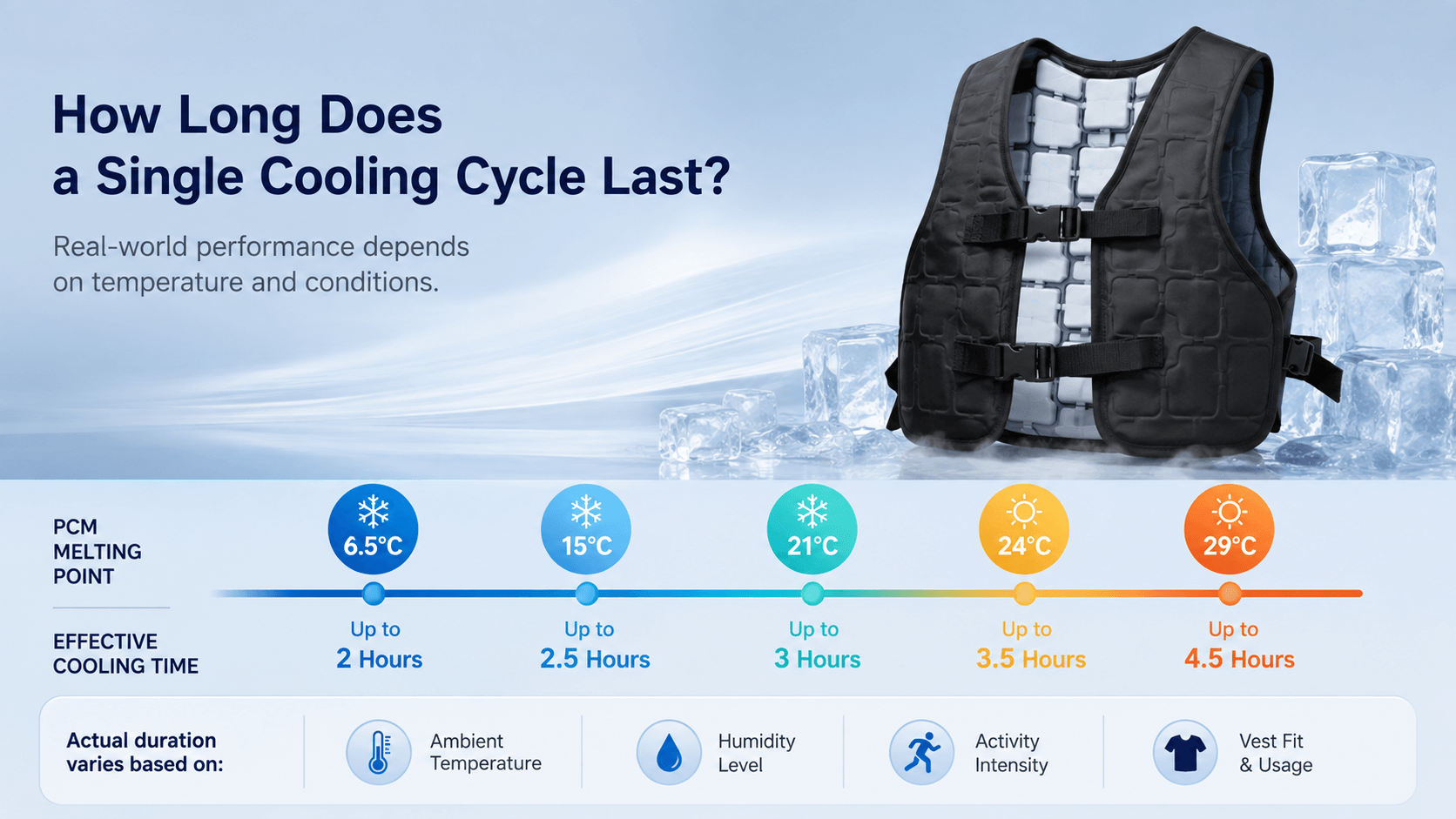
The gel itself is non-toxic and food-safe, works for both hot and cold therapy, and holds up to 2–6 hours of cooling depending on melting point and heat load. One Amazon seller using IceBearCare's custom cooling vest program saw 4x order growth, driven by leak control and repeat-purchase confidence. Need OEM/ODM options? Visit the Cooling Vest Manufacturer page or request a quote directly.
Conclusion
Not all ice packs are created equal. Leak-proof performance comes down to three things: material quality, seal construction, and how you actually use the thing. PCM packs with heat-sealed edges outperform basic gel inserts, but even the best gel ice pack vest needs proper care to stay leak-proof. Skip sharp objects, follow fill lines, and inspect seams before every wear.
For long shifts, outdoor training, or managing a heat-sensitive condition, don't gamble on cheap packs that turn your gear into a soggy mess. IceBearCare builds every waterproof ice pack vest with double-sealed, puncture-resistant packs tested for real-world durability, not just lab conditions.
Browse IceBearCare's leak-proof cooling vests today.