Phase-change material (PCM) cooling vests look simple from the outside — a sleeveless shell with a few cooling packs slipped into pouches. Open up the production process and you see something very different: a tightly coordinated, multi-station workflow that has to repeatedly hit the same thermal performance numbers on every single unit shipped.
This is what most buyers don't get to see when they evaluate a factory by photos alone. Below is a walk through how a PCM cooling vest actually gets built end-to-end inside our facility in Nanchang, Jiangxi — from raw fabric inspection to the last QC stamp before cartons leave for the port. The goal is to give B2B brands and importers a clearer mental model of what really sits behind a quote.
Why Brands Are Moving to PCM Cooling Vests
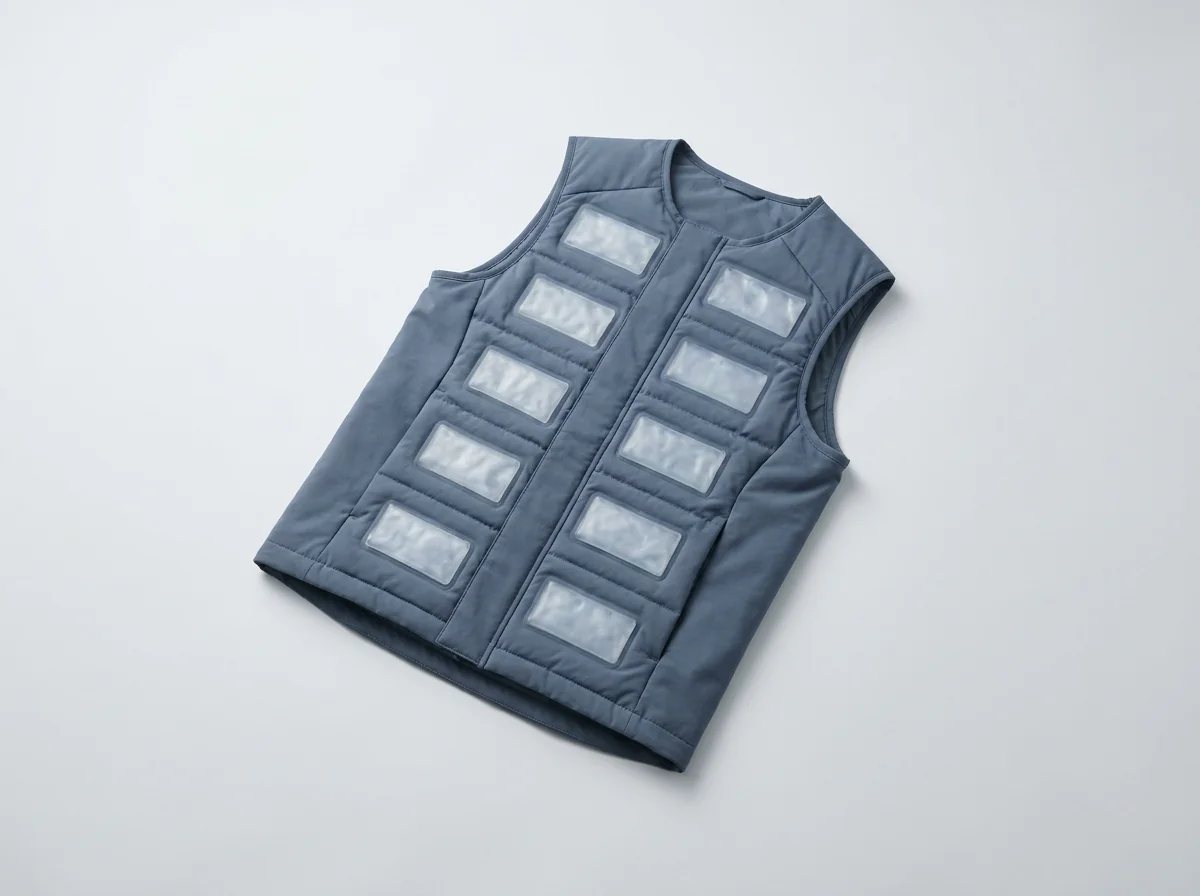
Conventional cooling vests rely on either evaporation (soaked fabric) or refrigerated gel packs. Both have well-known issues. Evaporative vests get the wearer wet, lose cooling power as humidity rises, and feel useless inside an air-conditioned warehouse. Gel-pack vests need a freezer, refreeze cycles are slow, and worker compliance drops once the cold runs out — usually within 30–45 minutes.
PCM solves both. The cooling packs are filled with a salt-hydrate or paraffin formulation that holds a stable melt point — typically around 15°C, 18°C, or 28°C depending on application. Once activated in cold water or a cooler box, they pull heat from the wearer's body while staying at that fixed temperature. There's no drip, no electrical components, and the cooling curve is far flatter than gel ice.
For industrial, military, medical and outdoor labor brands buying in volume, that translates into longer wear cycles, simpler logistics for end users, and a much cleaner story to tell their own customers. That's the demand we're now seeing across most of our OEM/ODM accounts.
Material Specs: What Goes Into a Clinical-Grade PCM Vest
Most quality issues in PCM vests trace back to materials — not assembly. So this is where we spend the most up-front engineering time per new program.
Phase-Change Material Formulation
We work with three main PCM categories: salt-hydrate, paraffin-based, and bio-based. Each has its trade-offs. Salt-hydrates pack more cooling per gram but can be sensitive to freeze-thaw cycling. Paraffin is the most thermally stable and is what we recommend by default for industrial and military programs. Bio-based PCMs are gaining traction for brands that need cleaner sustainability documentation.
The melt point is locked at the brief stage. 15°C and 18°C are the most common for human wear. Below 12°C the contact feels too cold for most users; above 22°C the cooling sensation gets weak. We test each batch with a DSC (differential scanning calorimeter) before it goes into pack filling — that data goes into the lot file the buyer receives at FOB.
Outer Shell Fabric
The shell needs three things: enough abrasion resistance for repeated workwear use, a breathable inner face so the wearer isn't sweating into the cooling pouches, and a flame-retardant rating where the end use calls for it.
Our default shell stack for industrial PCM vests is a 600D polyester face bonded to a polyester mesh inner with a PU coating. For lighter sport / outdoor leisure programs we drop to a 300D ripstop, sometimes recycled. We document every fabric we run with mill certificates, GSM, and lab tear / tensile data in the buyer's spec sheet.
Cooling Pouch Geometry
Pouch placement is not cosmetic. We anchor four to six pouches across the chest and upper back to keep cooling where the body's major blood-flow zones run. Too few packs and the vest cools unevenly; too many and the vest gets heavy enough that workers stop wearing it. We tune pouch count and pack weight per program — typical totals for an industrial vest land between 600 g and 1.0 kg of PCM mass.
The Production Workflow, Station by Station
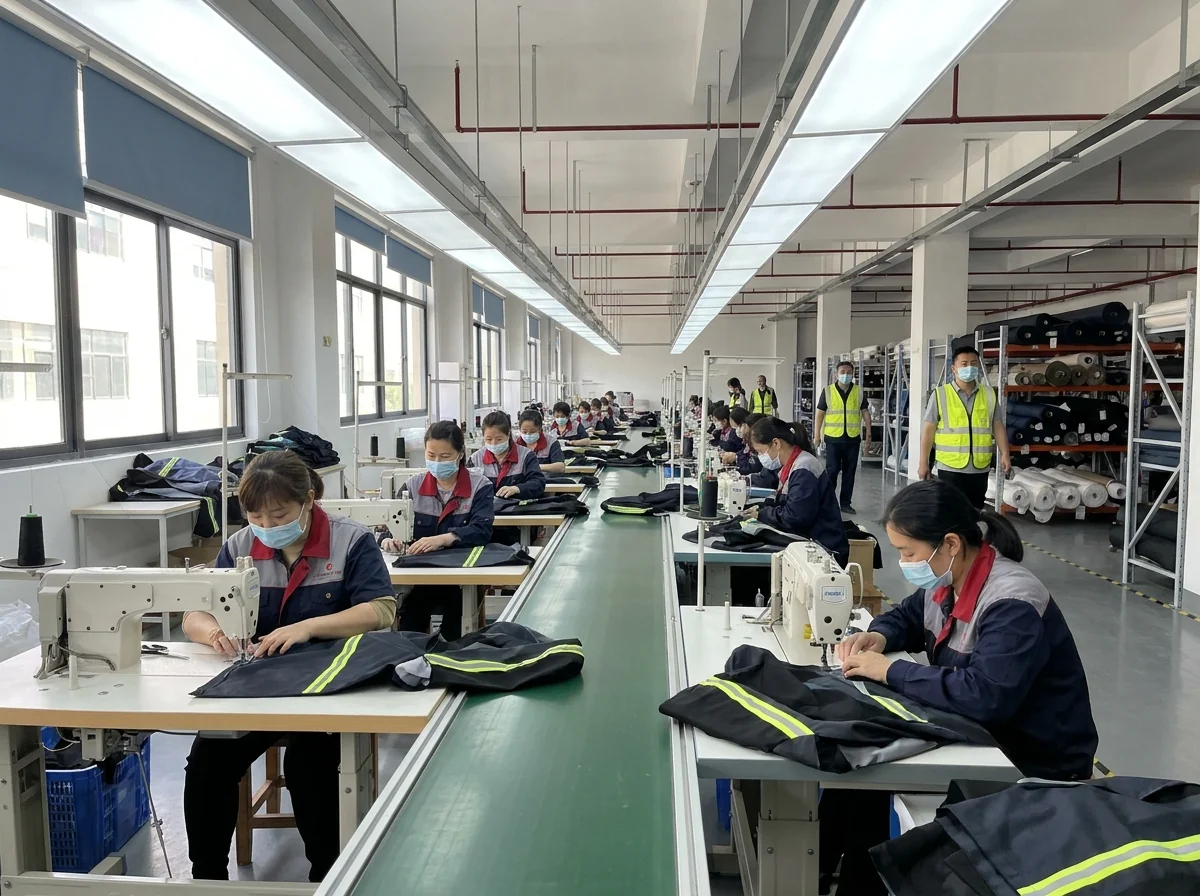
Inside the factory, a PCM vest program moves through four core stations. Every program runs through the same sequence — the only thing that changes between runs is the fabric, pack formulation, and stitching spec.
1. Fabric Inspection & Pattern Cutting
Every roll gets inspected on a light table before it's allowed onto the cutting floor. We look at defect density (per 100 m²), shade consistency vs. the approved swatch, and GSM tolerance. Rolls that fail get returned to the mill — no exceptions. Once approved, the patterns are cut on a CNC fabric cutter, which keeps tolerances under ±1 mm across stacked layers.
2. PCM Pack Filling
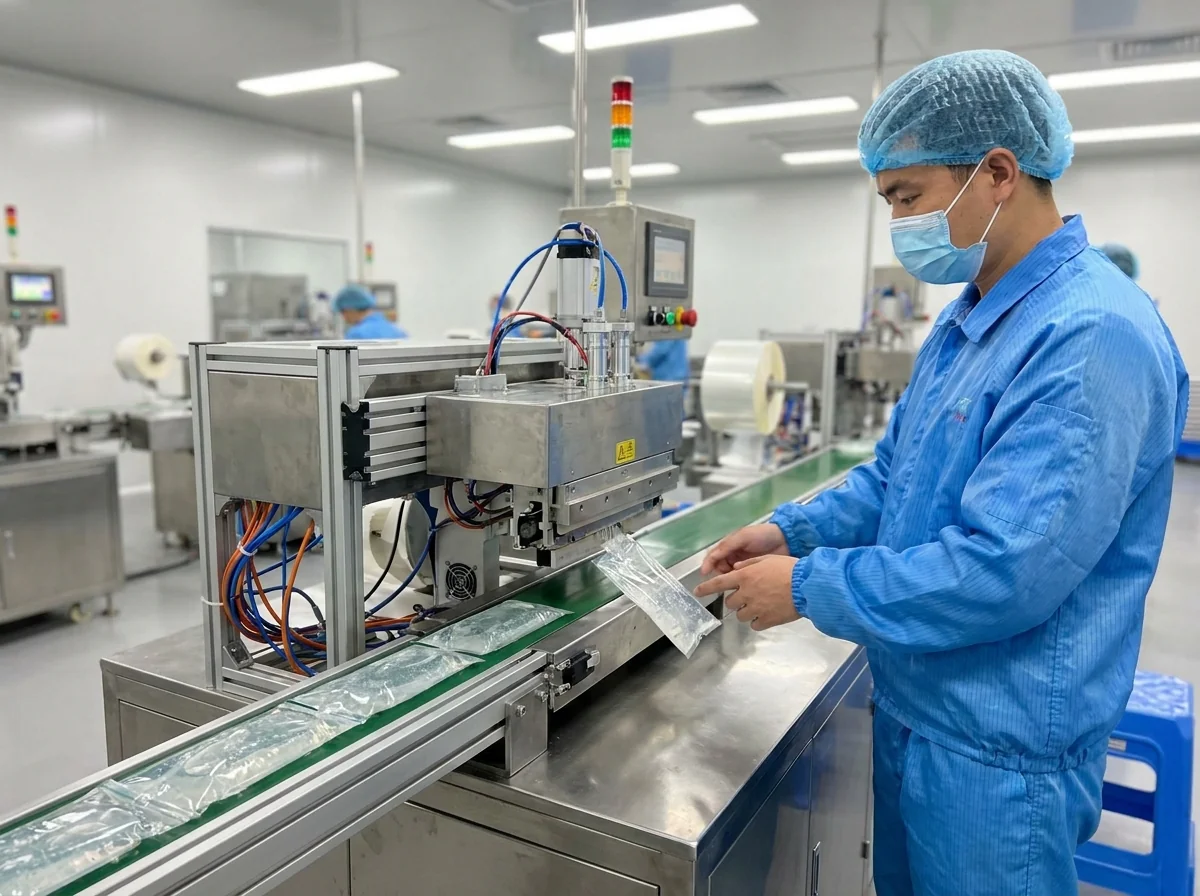
This is the most sensitive station and the one we are most protective of. Pack pouches are filled volumetrically, then heat-sealed on two axes with a redundant seam. Every filled pack is weighed and inspected for seam integrity before being cleared to the next station. Any pack that comes in under or over the weight tolerance is pulled and reworked or scrapped. We do not allow under-filled packs into the vest line under any circumstances — that's the single most common defect that turns into customer complaints down the road.
3. Vest Assembly
Cut panels move from the cutting floor to assembly. The pouch positions are stitched in first (interlock + bartack at stress points), followed by side and shoulder closure construction, then trim — bias binding, reflective tape where the spec calls for it, and adjustable Velcro or buckle hardware. We hold a strict thread tension and stitch density spec; most pieces on our line run 8–12 SPI depending on the fabric weight.
4. Quality Control Loops
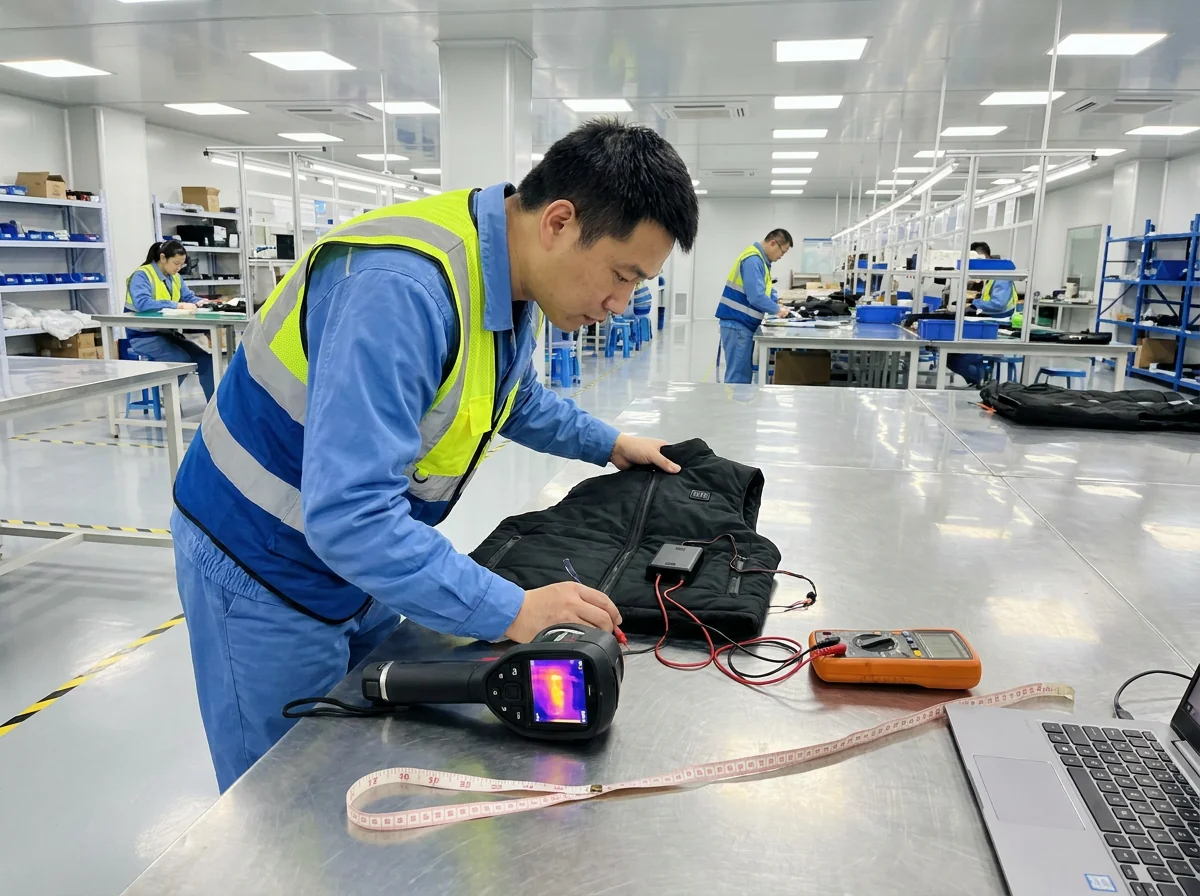
QC is not a single end-of-line check. We run three loops:
- In-line QC: random pull at the assembly station, checking pouch placement and stitch quality before the unit progresses.
- Final QC: every finished vest is inspected for visible defects, label correctness, hardware function, and pouch fit. PCM packs are loaded and a sample is verified for cooling activation in a chilled water tank.
- AQL audit: a third-party AQL audit (Level II, 2.5 / 4.0) is offered before the carton seal stage so buyers can pull a report independent of our internal team.
OEM vs. ODM: How Brands Engage
Most B2B buyers fall into two engagement modes, and the production workflow shifts slightly between them.
Private-Label OEM
Buyer brings the spec — fabric, colors, fit, branding, PCM melt point. We produce against that spec. This path is faster to first production (typically 35–45 days from approved sample), lower in engineering hours, and is the right fit for brands who already have a successful vest design they want manufactured at better cost or scale.
Full ODM
Buyer brings a use case — for example, military rescue teams that need a vest cooling for 90+ minutes in 40°C ambient. We engineer the spec around that target: pack count, melt point, shell composition, fit pattern. ODM programs take 60–80 days through first sample but produce vests purpose-built for the end environment. We retain shared tooling rights only where contractually agreed; the underlying spec belongs to the buyer.
What Buyers Should Verify Before a PO
If you're sourcing PCM cooling vests for the first time — or switching factories — here are the four things worth pinning down in writing before any deposit goes out:
- Lot-level PCM batch documentation. Ask for the DSC test record per production lot. A factory that doesn't measure melt point per batch is guessing.
- Pouch fill weight tolerance. Get the tolerance band (we work to ±3% per pouch) in the spec sheet, not just the nominal value.
- Compliance documentation. Depending on market: REACH, RoHS, EN 14058 for cold-weather (or the equivalent local standard). We supply test reports on file.
- Defective rate handling. Make sure the contract spells out how field returns under warranty get evaluated — most disputes happen here.
What This Means for B2B Buyers
Behind every PCM cooling vest carton sits a long chain of quietly-verified specs — fabric inspection, PCM batch testing, pouch geometry, three QC loops. The reason factories that take this work seriously can deliver consistent performance year after year isn't that the design is complex. It's that the process is disciplined.
If your brand is evaluating PCM cooling vest sourcing — first program or a re-shore — we're happy to walk through your use case and put together a sample spec sheet sized to your buyer brief. The earlier we engage on the spec, the cleaner the production run lands.
FAQ
How long does a PCM cooling vest stay cold per activation?
Cooling duration depends on PCM melt point, pack mass, ambient temperature, and how active the wearer is. Industrial vests with 600 g–1.0 kg of PCM at an 18°C melt point typically deliver 60–90 minutes of stable cooling in 32–38°C ambient. We tune mass and melt point per program to hit a target wear-cycle.
What is the typical lead time for an OEM PCM vest run?
35–45 days from approved pre-production sample for private-label OEM. Full ODM (new spec, custom pattern, custom PCM formulation) typically lands at 60–80 days through first sample, plus normal production lead time.
Do you support private-label branding on PCM vests?
Yes. Heat-transfer logos, woven labels, hangtags, and custom packaging are standard. We also handle care label localization for the destination market.
What thermal performance documentation do you provide?
Per-lot DSC (differential scanning calorimeter) data for the PCM batch, pouch fill-weight records, AQL inspection reports on request, and the third-party compliance test reports relevant to your market (REACH, RoHS, etc.).